

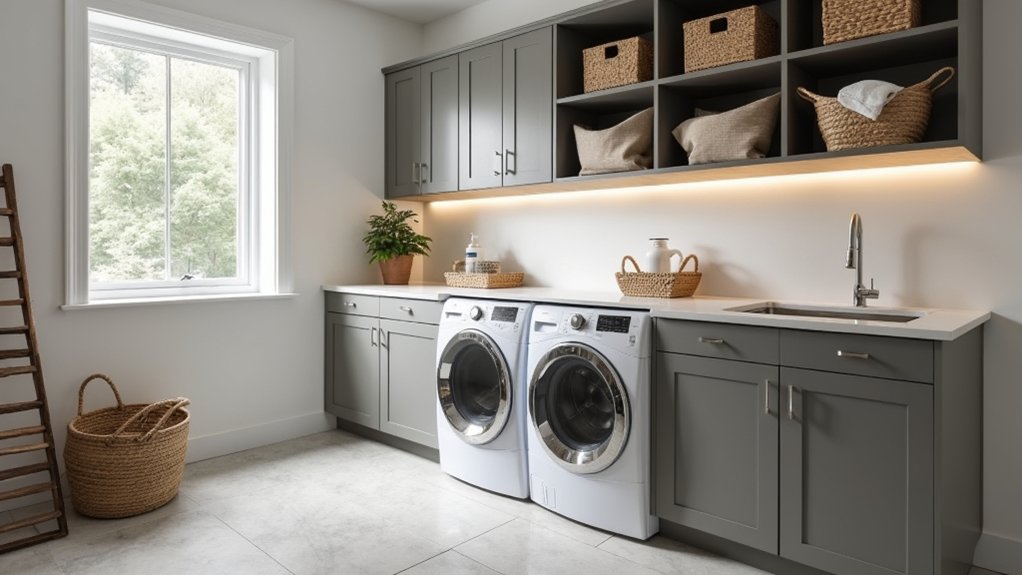
You don’t need a full remodel to make your utility room work harder and last longer. Start by tightening the layout so the washer, dryer, sink, and folding zone sit in a clean sequence, with storage moving up the walls to free the floor. Then choose finishes that shrug off moisture and scuffs—sealed flooring, wipeable walls, and a tough countertop. The payoff shows up fast, but only if you plan the next step right…
Plan a Utility Room Layout That Flows
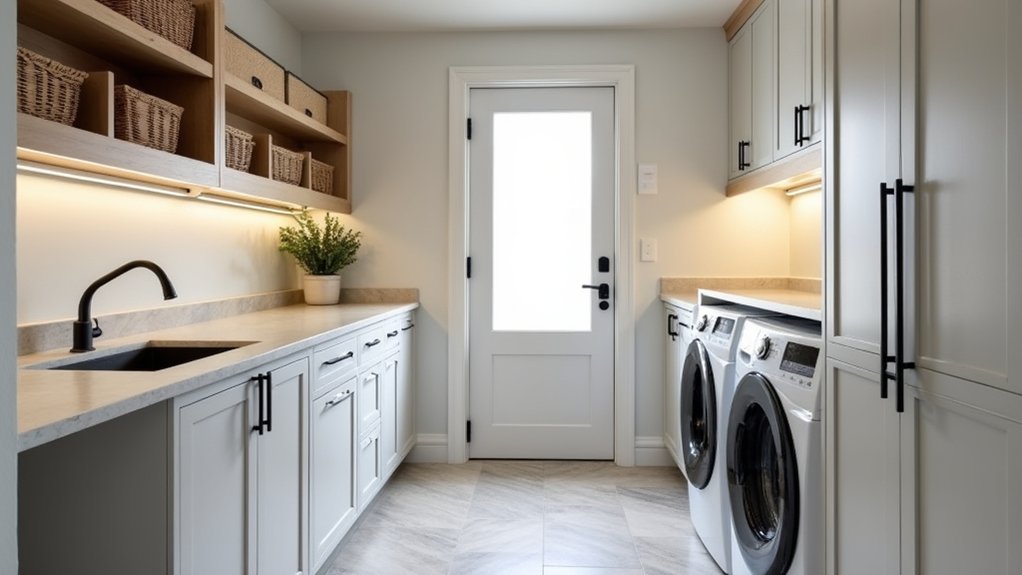
Before you buy a single cabinet or hook, map a layout that lets you move laundry, cleaning, and storage tasks in one smooth loop. Start by measuring doors, swing paths, and clearances so nothing blocks access. Then zone walls for hanging, shelving, and fold-down surfaces.
Choose durable finishes where traffic hits: PVC trim, washable semi-gloss paint, and sealed porcelain or LVP flooring to cut maintenance costs.
Plan Lighting placement early—aim bright task light over counters and shadow-free illumination at storage—so you don’t waste money relocating fixtures later.
Build in Ventilation options, like a quiet exhaust fan or louvered door, to protect paint, adhesives, and stored linens from moisture.
A tight plan prevents rework and speeds daily routines.
Place Washer, Dryer, and Sink for Fewer Steps
With your zones and clearances mapped, lock in the “wet core” next—washer, dryer, and sink—so you’re not hauling heavy baskets across the room. Put the sink between or adjacent to the machines to streamline pre-treating, hand-washing, and drip-drying in one reach, boosting Laundry efficiency.
Keep the washer closest to where hampers enter, then stage a landing surface beside the dryer for folding or sorting without backtracking.
For Space optimization, align units on one wall to preserve a straight walkway and reduce door-swing conflicts. If you can, share plumbing with an exterior wall or existing stack to cut install costs and leak risk.
Choose a deep, nonporous composite or stainless sink and a moisture-resistant backsplash for faster wipe-downs.
Add Wall-Mounted Storage to Clear the Floor
Where can you steal back floor space fast without shrinking your workflow? Go vertical with wall mounted storage and you’ll get immediate Floor clearance for sorting, folding, and rolling carts.
Mount a shelf-and-hook rail above the sink to keep spray bottles, brushes, and gloves reachable, not scattered. Add upper cabinets over the washer and dryer for detergents and backups, and use labeled bins so you’re not hunting mid-cycle.
Install a pegboard panel for tools and lint gear; you’ll see inventory at a glance and avoid duplicate purchases. Hang a wall-mounted drying rack to free up floor racks and speed turnover.
Set mounting heights around your reach zone, and leave a clear path between machines for safer moves.
Choose Durable Materials for a Utility Room Refresh
To protect your refresh budget, you’ll want materials that shrug off daily splashes and humidity, like moisture-resistant wall panels, paint, and countertops.
You’ll also get better long-term ROI by choosing scratch-proof flooring—think luxury vinyl, porcelain tile, or sealed concrete—so scuffs and dropped tools don’t show.
Pick finishes that clean fast and wear hard, and you’ll spend less time maintaining and more time using the room.
Moisture-Resistant Surfaces
How do you keep a utility room refresh looking new when splashes, steam, and detergent drips are basically guaranteed? Start by upgrading to moisture-resistant surfaces that wipe clean fast and don’t swell. Use PVC or fiberglass wall panels behind the sink and washer, and cap them with sealed trim so water can’t sneak in.
Choose epoxy paint or semi-gloss enamel on drywall, and run a continuous bead of mildew-resistant silicone at seams and around utility hookups. For counters, go with solid surface, quartz, or stainless—each shrugs off bleach, heat, and standing water with minimal maintenance.
Pair materials with ventilation strategies: a quiet exhaust fan and a timed switch cut humidity. That’s mold prevention you’ll actually see in fewer repairs and repaint cycles.
Scratch-Proof Flooring Choices
Even if your utility room stays spotless, grit under shoes, rolling laundry baskets, and appliance vibration will chew up soft flooring fast—so pick a surface that resists scratches and pays you back in fewer repairs.
Luxury vinyl tile (LVT) delivers strong wear layers, easy clicks, and solid stain resistance at a midrange cost, making it a high-ROI swap.
Porcelain tile ranks higher for scratch hardness and heat tolerance under dryers, but you’ll spend more on prep and grout sealing.
If you want a warmer feel, choose rigid-core vinyl with an embossed texture; it boosts slip resistance without trapping lint.
Skip soft pine or low-grade laminate—one dropped detergent bottle can chip edges and invite water.
Add felt pads under machines too.
Pick Moisture-Proof Utility Room Flooring That Lasts
Because utility rooms see constant splashes, detergent drips, and the occasional overflow, your flooring needs to shrug off moisture without swelling, peeling, or getting slick. Choose luxury vinyl tile (LVT) or sheet vinyl with a welded or tight-seam install for the best cost-to-durability ratio; it resists standing water and cleans fast.
For a harder-wearing upgrade, pick porcelain tile with epoxy grout so water can’t wick into joints. If you want Eco friendly options, consider linoleum with a factory finish, or cork tiles with a waterproof topcoat—both support healthier indoor air.
Protect your investment by running the material under appliances, using waterproof connectors, and adding a floor drain if feasible. Prioritize textured finishes for safety and aesthetic design.
Use Wipeable Utility Room Walls and Splashbacks
When you line your utility room walls with wipeable, water-resistant finishes, you cut down on scrubbing time and prevent moisture from creeping into drywall. That’s immediate ROI: fewer repaints, fewer repairs, and faster cleanups after muddy shoes, detergent drips, or pet messes.
Prioritize wall protection in the splash zone: use scrub-resistant satin or semi-gloss paint over a quality primer, or step up to fiberglass-reinforced panels (FRP) for impact and chemical resistance.
For a cleaner, more tailored look, choose large-format porcelain or ceramic tile with epoxy grout to resist staining. Consider peel-and-stick vinyl wall panels only for light-duty areas where budgets are tight.
Your Splashback options should extend higher than you think—at least 18–24 inches—to reduce streaking and protect corners.
Install Tough Countertops and a Hardworking Sink Setup
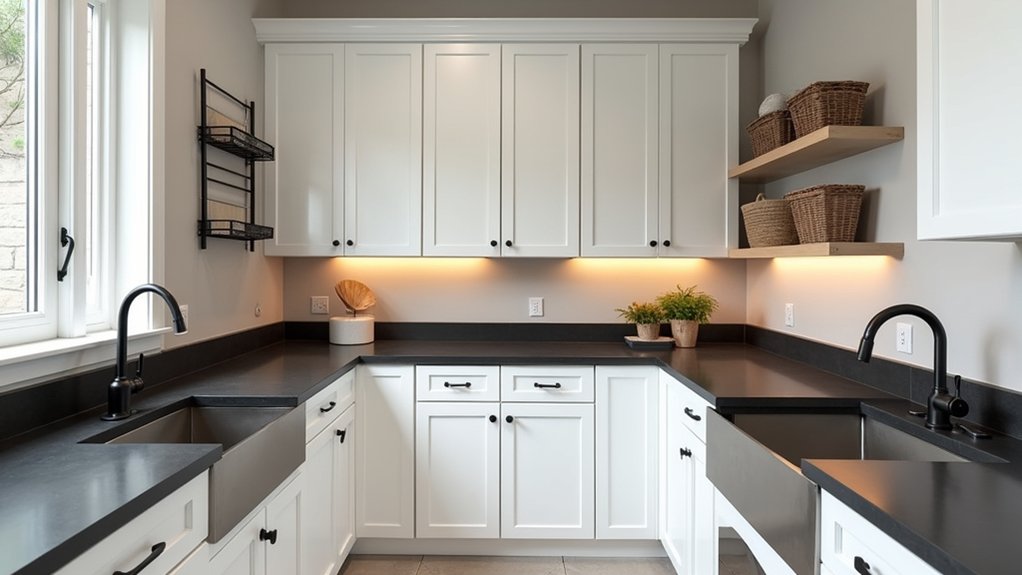
If your utility room countertop and sink can take daily abuse without staining, swelling, or cracking, you’ll spend less time maintaining it and more time using it. Choose compact laminate, stainless, or porcelain slab for high heat and chemical resistance; they outlast bargain particleboard and cut replacement costs. Seal edges, and add a short upstand to stop water wicking into cabinets.
Install a deep, single-bowl sink with a high-arc pull-down faucet so you can soak tools, rinse muddy boots, and fill buckets fast. Pair it with a drainboard or rolling rack to speed drying and protect the top.
For Eco friendly upgrades, specify recycled-content stainless or low-silica composites. For aesthetic design considerations, match finishes to hardware and lighting for a cohesive look.
Frequently Asked Questions
How Much Does a Typical Utility Room Refresh Cost?
You’ll typically spend $2,000–$8,000, but here’s the twist: finishes drive ROI. Your cost estimate jumps with cabinetry, flooring, and plumbing. Nail budget planning by prioritizing durable materials, then upgrade lighting and storage.
Do I Need a Permit to Move Plumbing or Electrical Outlets?
Yes—you’ll often need permits to move plumbing or outlets. Check local Permit requirements before any Plumbing adjustments. Permitted work safeguards resale value, avoids fines, and guarantees code-approved wiring, shutoffs, and moisture-rated boxes and finishes.
How Can I Reduce Washer Noise and Vibration Through the Walls?
You’ll reduce washer noise by leveling it, adding anti-vibration pads, and isolating it from studs with a rubber mat. Apply soundproofing techniques like MLV and resilient channel; use vibration dampening mounts for ROI.
What Lighting Is Best for Stain-Spotting and Safe Sorting?
Choose bright, high-CRI LED Task lighting (90+ CRI, 4000–5000K) aimed at your folding surface for reliable stain detection. Add shadow-free overheads plus an under-shelf strip. You’ll sort safely, cut rewash cycles, and save time.
How Can I Improve Ventilation to Prevent Humidity and Odors?
Open a window like lifting a lid on a simmering pot: add an exhaust fan, guarantee steady air circulation, seal gaps, and use dehumidification systems. You’ll cut mold risk, protect finishes, and keep laundry smelling clean.