

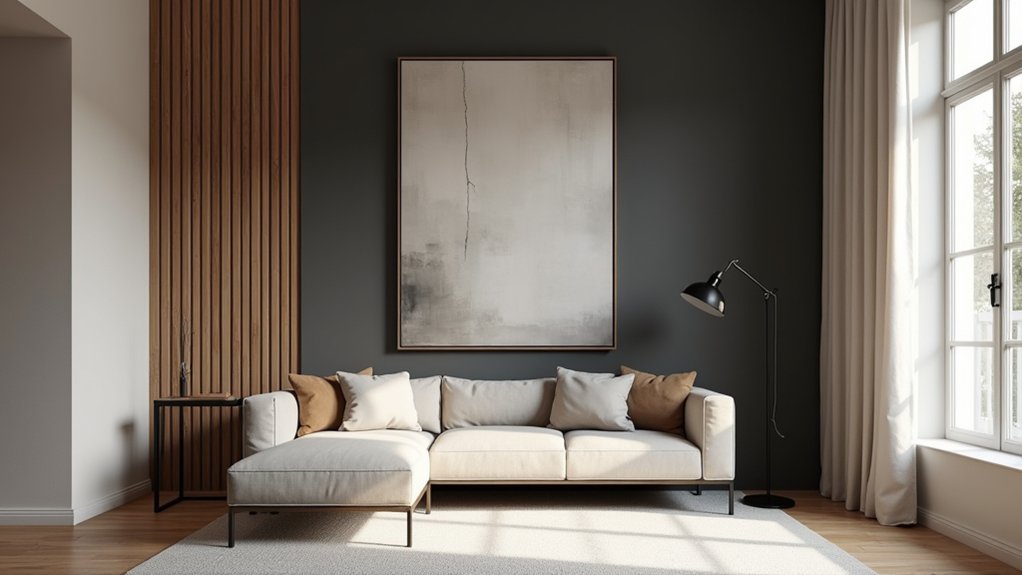
You don’t need a big budget to make a feature wall work, but you do need a plan. Start by picking a wall that already gets attention and isn’t chopped up by doors, vents, or busy shelves. Then choose a style and color that support the room’s palette, and test it in day and night light before you commit. Get the scale right, too, or it’ll feel off fast. Next, you’ll want to avoid the common traps that waste time and money…
Pick the Right Wall for Your Feature Wall
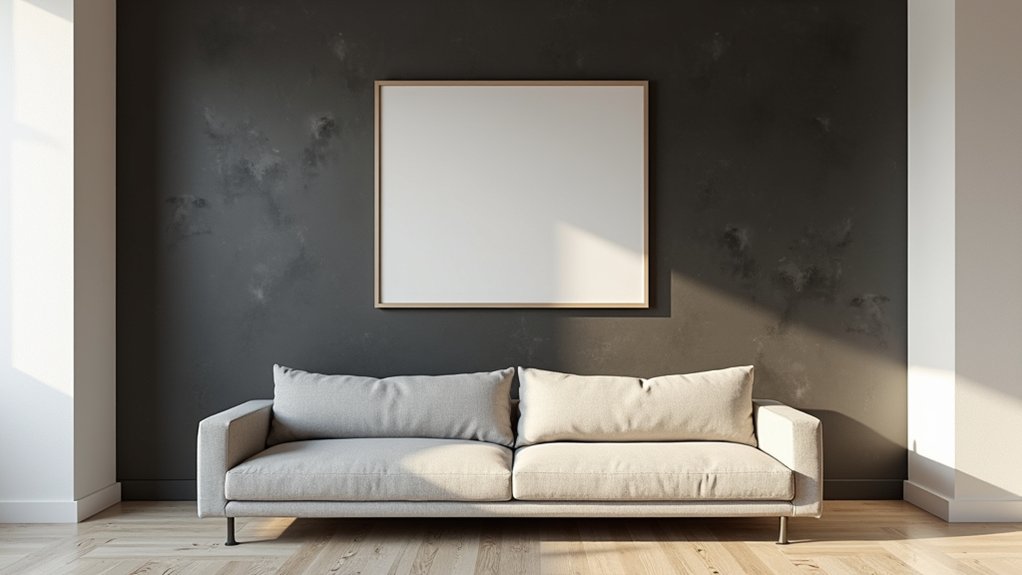
Before you buy paint or panels, choose the wall that’ll give you the most impact for the least effort. Pick the one you naturally face when you enter or sit down, so the upgrade reads instantly. Avoid walls broken up by too many doors, vents, or odd angles—those eat time and materials.
If you’ve got a focal point like a bed, sofa, or fireplace, use the wall behind it to anchor the room without adding extra decor.
Check Wall texture next: heavy orange peel, cracks, or waves can telegraph through thin finishes and raise prep costs.
Finally, weigh Material options against what the wall can handle—moisture, heat, and traffic—so you don’t pay twice replacing it later.
Choose a Feature Wall Style That Fits
If you want your feature wall to look intentional—not like a last-minute trend—match the style to your room’s bones and your budget. Start by reading what’s already there: clean-lined furniture suits simple paneling, slim battens, or a crisp grid; vintage pieces pair better with beadboard, picture-frame molding, or subtle texture patterns.
Next, choose material options that make sense for wear and install. Paint and trim give you high impact for low cost, and you can DIY with basic tools. Peel-and-stick wallpaper works for renters and quick upgrades, but check seam alignment and wall smoothness.
Wood slats or reclaimed boards add depth, yet they cost more and demand straight walls. If sound echoes, consider fabric panels for softness and value.
Plan Feature Wall Color Without Clashing
Before you buy paint, scan your room’s existing palette—floors, trim, furniture, and textiles—so your feature wall supports what you already own.
Pick a color with complementary undertones (warm with warm, cool with cool) to avoid that “almost right” clash that wastes money.
Then test large swatches in both daytime and ламplight, because the same paint can shift fast and change the whole wall.
Assess Existing Room Palette
Where does your room’s color story already sit—warm, cool, or somewhere in between? Before you buy paint, inventory what’s already “loud”: sofa fabric, rug, curtains, wood tones, and any artwork. Snap a photo in daylight and again at night; your lighting shifts perceived color and can make a feature wall fight the room.
Use Color psychology to decide what the space should do: calm down a bedroom, energize a workspace, or cozy up a living room. Then check finishes, not just hues. Matte walls beside glossy trim, woven textiles near smooth cabinets, and brick next to drywall create texture contrast that can carry the statement even with a budget-friendly, quieter shade.
Count repeats—three similar tones means it’ll feel intentional.
Choose Complementary Undertones
Why do two colors that look perfect on swatches clash on your wall? You’re probably mixing undertones. Paint isn’t just “blue” or “beige”; it leans warm (yellow, red) or cool (green, blue).
If your room reads warm—think honey oak, brass, creamy trim—pick a feature color with warm undertones, like terracotta or olive. If it reads cool—gray floors, chrome, crisp white—choose cooler shades, like slate, navy, or eucalyptus.
To stay cost-conscious, narrow options fast: compare your top paint cards against your sofa fabric, rug, and trim, and match undertone first, depth second. This simple filter boosts Color harmony and delivers reliable Mood enhancement without expensive trial-and-error.
Test Paint In Lighting
Undertones get you in the right color family, but lighting decides whether that shade looks polished or painfully off. Before you commit, test large swatches in the exact spot of your feature wall. Use poster board so you don’t waste paint, and move the boards around the room to compare.
Check the color in morning sun, afternoon glare, and at night with every bulb you use. Warm LEDs can muddy cool blues; daylight can sharpen beige into pink. Pay attention to paint texture, too—matte absorbs light and deepens color, while eggshell reflects and can exaggerate flaws.
Stand back and judge color contrast against trim, flooring, and nearby walls. If it only looks right in one lighting moment, skip it and save time and money.
Match Feature Wall Scale to the Room
Before you pick paint or panels, size up the room and choose a feature wall that fits it—because scale can make the space feel balanced or instantly “off.”
In a small room, a single, uninterrupted wall treatment (like one bold color or simple vertical slats) adds impact without visual clutter. Conversely, oversized patterns, heavy trim, or multiple competing textures can shrink the space fast.
In larger rooms, you can go bigger: wider battens, deeper trim, or layered Textured finishes that read well from across the space. Keep proportions simple—match panel height to ceiling height and align seams with doors and windows to avoid awkward cuts.
If you want Wall murals, choose one focal image and leave adjacent walls quiet so it doesn’t feel chaotic. When in doubt, mock it up with painter’s tape first—it’s cheap and revealing.
Use Lighting to Make a Feature Wall Pop
Even if your feature wall looks great on its own, the wrong lighting can flatten the texture, mute the color, and make the whole thing feel underwhelming. Start by deciding what you want to highlight: grain, pattern, artwork, or a bold paint finish.
Then add Accent lighting that aims across the surface, not straight at it, so shadows reveal depth. Plug-in wall sconces are a budget-friendly upgrade when you can’t hardwire; place them about eye level and space them evenly to avoid hot spots.
If you’re using LED strips, hide them behind trim or a floating shelf for a clean glow. Choose warm white (2700–3000K) for cozy rooms and neutral (3500K) for modern, crisp contrast.
Use dimmers to dial it in.
Avoid Feature Wall Mistakes You’ll Regret
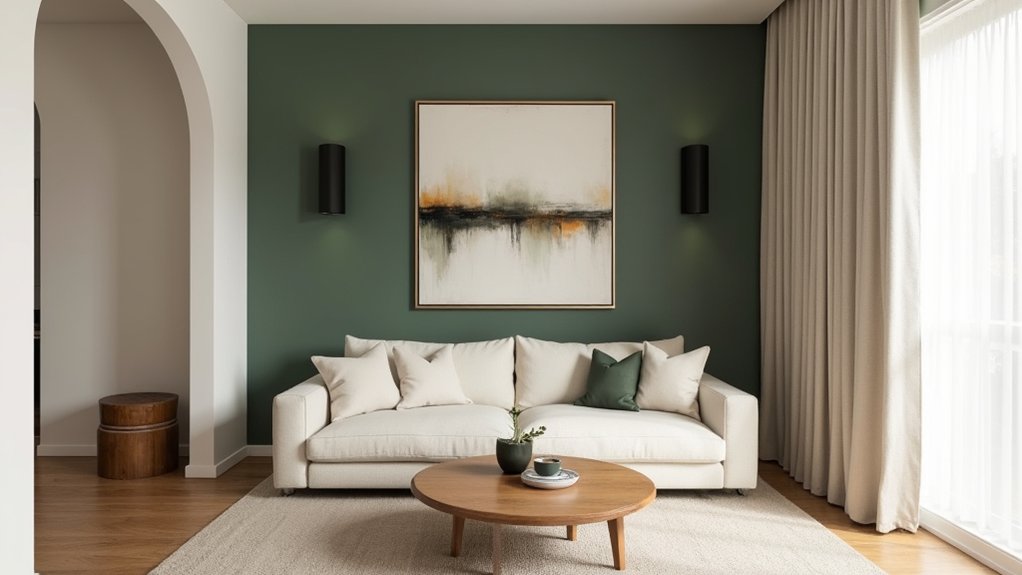
Once your lighting helps the wall look its best, make sure the design choices don’t create expensive regrets later. Don’t pick Wallpaper patterns that fight your room’s scale; oversized prints can overwhelm small spaces, while tiny repeats can look busy from across the room. Order samples, tape them up, and view them morning and night before you buy rolls.
Keep Textured finishes practical: heavy plaster, deep slats, or rough stone can collect dust and raise install costs fast. If you’re renting or might sell soon, avoid permanent materials and choose peel-and-stick paper, paint, or panels you can remove cleanly.
Check how the wall meets outlets, vents, and trim so you don’t pay for custom cuts. Finally, cap your budget with a 10% buffer.
Frequently Asked Questions
How Much Does a Feature Wall Typically Cost to DIY or Hire Out?
You’ll typically spend $50–$300 DIY, or $300–$2,000+ hiring out, depending on materials and labor. For a cost comparison, price paint vs. panels. Explore design ideas that maximize impact with minimal prep.
How Long Does It Take to Complete a Feature Wall Project?
You can finish in a day—or stretch to a weekend. First, prep and layout; then paint or panel. Color coordination slows decisions, Material durability affects curing. You’ll save time by planning, buying right.
Do Feature Walls Affect Home Resale Value or Buyer Appeal?
Yes, feature walls can boost resale value and buyer appeal if you choose timeless interior design and clean wall treatments. You’ll attract more buyers by keeping colors neutral, materials durable, and costs reasonable.
How Do I Clean and Maintain Different Feature Wall Materials?
You’ll clean feature walls by matching materials: dust wood/brick, vacuum fabric, wipe paint with mild soap. Use proper wall surface preparation first. Apply budget-friendly cleaning techniques: test spots, avoid soaking, reseal stone, refresh grout.
Do I Need Landlord Permission Before Installing a Feature Wall in a Rental?
Yes—you’ll likely need landlord permission, unless you enjoy paying for “surprise art removal.” Check your lease and local tenant rights, then get written renovation approval. Choose peel-and-stick or freestanding options to save money and deposits.