

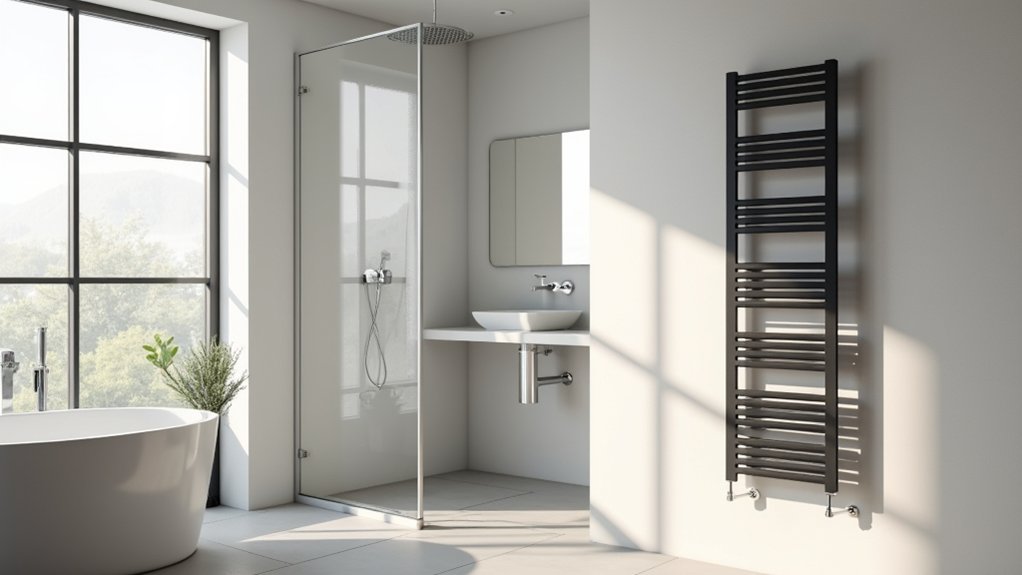
A well-chosen bathroom radiator can become the room’s quiet engine, providing warmth without wasting energy or space. Start by comparing heated towel rails, panel radiators, and dual-fuel models, then calculate the heat output your UK bathroom needs. Check your boiler, pipework, electrical supply, materials, finish, and budget before buying. Installation must protect against leaks, hidden services, and electrical hazards—but one compatibility detail could determine which radiator suits your bathroom best.
Compare Modern Bathroom Radiator Types
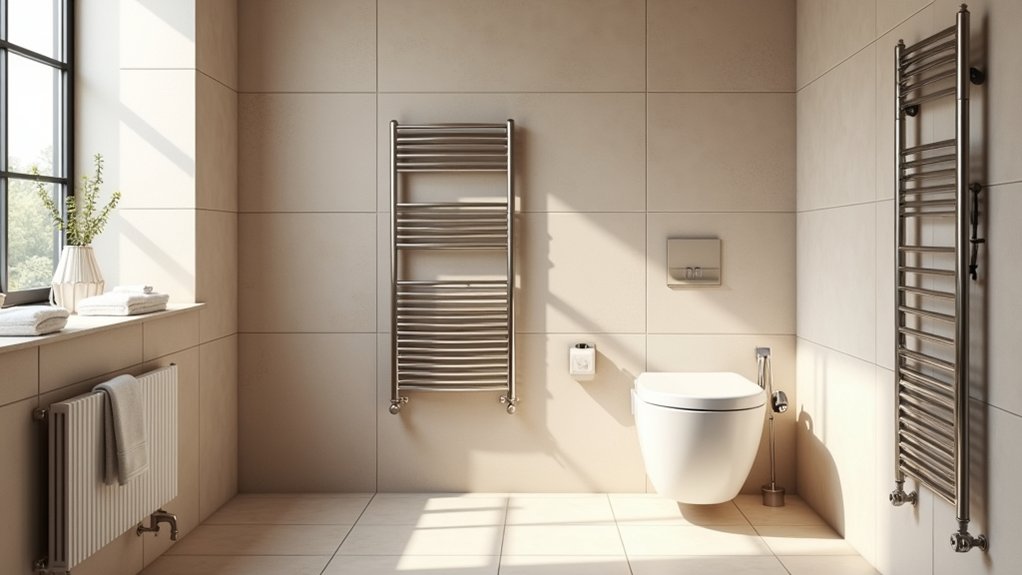
Modern bathroom radiators generally fall into three practical categories: heated towel rails, panel radiators, and designer models.
Heated towel rails keep towels dry while providing modest background warmth. Ladder styles offer affordable, widely available replacements, though output can be limited.
Panel radiators deliver stronger heat for their size and usually cost less, but they occupy wall space and don’t warm towels as conveniently.
Designer radiators give you distinctive shapes, finishes, and mounting arrangements, making them attractive design options. Yet premium materials and unusual valves can increase purchase and installation costs.
Compare each model’s stated output, construction, warranty, and compatibility with your heating system.
For energy efficiency, choose accurate thermostatic control, suitable pipe connections, and a corrosion-resistant finish.
Electric versions simplify installation but require safe bathroom zoning and may cost more to run.
Calculate Your Bathroom’s Heat Requirement
Once you’ve narrowed down the radiator type, calculate the heat your bathroom needs before choosing its size. Measure the room’s length, width, and height, then estimate its volume in cubic metres.
As a practical UK guide, multiply volume by around 50–60 watts for a standard bathroom; increase the figure for external walls, poor insulation, large windows, or a north-facing room. Reduce it slightly for effective insulation or significant solar gain.
A heating engineer can perform a more accurate heat-loss calculation, particularly in older properties.
Choose a radiator whose output meets or slightly exceeds your requirement, checking its wattage or BTU rating at the manufacturer’s stated temperature.
Correct sizing supports Energy efficiency, reduces running costs, and prevents condensation. Don’t oversize unnecessarily: it wastes money and can compromise your bathroom’s aesthetic appeal.
Compare Towel Rails, Materials, and Finishes
When comparing towel rails, focus first on heat output, usable hanging space, and suitability for your bathroom rather than appearance alone.
Choose a ladder rail with closely spaced bars for several towels, or wider spacing if you want faster drying.
Steel offers a practical, affordable balance of strength and performance, while stainless steel resists corrosion particularly well in humid rooms and may justify its higher price.
Aluminium heats quickly, weighs less, and supports Energy efficiency, although it can cost more.
Consider finishes carefully: chrome suits many Design trends and usually costs less, but it can show water marks.
Matt black, white, and brushed finishes create a distinctive look, yet may carry a premium.
Check coating quality and cleaning requirements, then compare guarantees before buying.
A well-chosen finish should complement fittings without compromising durability or practicality.
Check Your Heating System Compatibility
Check whether your heating system can support the radiator before you buy it. Confirm whether you have a wet central-heating system, electric supply, or dual-fuel arrangement.
Wet-system radiators need compatible pipe connections, operating pressure, and a heat output measured in watts or BTUs. Compare the radiator’s output with your bathroom’s heat-loss requirement; an undersized model won’t feel warm, while an oversized one can increase costs.
If you’re replacing a radiator, check your boiler’s capacity and existing pipe size, then match the new valve connections.
Electric models require the correct voltage, circuit protection, and a qualified electrician, especially in bathroom zones.
Consider radiator placement, as an unsuitable position can restrict circulation or interfere with doors and fittings. Choose thermostatic controls where appropriate to improve energy efficiency.
Verify specifications with the manufacturer before ordering, avoiding expensive adapters or returns.
Install and Test Your Radiator Safely
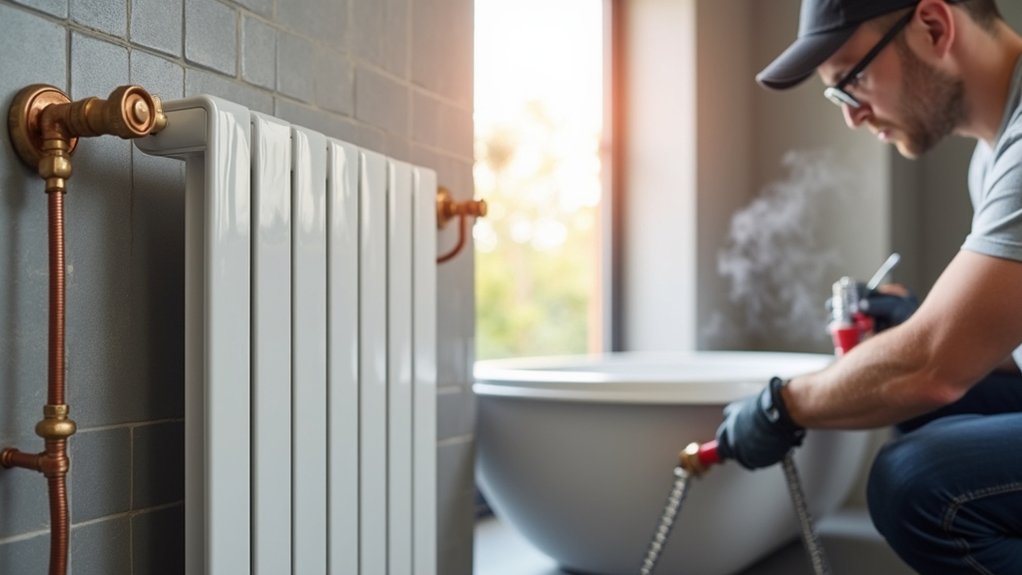
Before you begin, isolate the heating supply, let the system cool, and drain it if you’re replacing a wet radiator.
Confirm your radiator placement leaves clearance around valves, flooring, furniture, and electrical fittings.
Mark the brackets using a level, then check for pipes and cables before drilling.
Secure fixings into suitable masonry or studs; don’t rely on plasterboard alone unless you use rated anchors.
Fit valves with new seals, tighten carefully, and connect pipework without stressing joints.
For an electric model, use a qualified electrician and comply with UK bathroom zones and RCD protection.
These safety precautions reduce leaks, shocks, and expensive remedial work.
Refill a wet system slowly, bleed trapped air, and inspect every connection.
Restore power or heat, test operation, and recheck for leaks after cooling.
Frequently Asked Questions
How Often Should I Clean and Maintain My Bathroom Radiator?
Clean your bathroom radiator every two months, brushing away dust like clearing cobwebs. Follow a yearly maintenance schedule: bleed it, inspect valves and paint, and check leaks. Prompt repairs prevent corrosion and costly heating inefficiency.
Can I Paint My Radiator Without Affecting Its Heat Output?
Yes, you can paint your radiator without significant heat output impact. During radiator painting, use thin, specialist radiator paint, clean surfaces thoroughly, and avoid thick layers that reduce efficiency and increase costs.
What Warranty Should I Expect When Buying a Modern Bathroom Radiator?
You should expect a five-to-ten-year warranty, though coverage varies. Around 80% of radiator faults involve installation or corrosion, so check radiator material, exclusions, labour costs, registration requirements, and warranty coverage before buying.
Are Modern Radiators Safe to Use in Bathrooms With Young Children?
Yes, you can use modern radiators safely with children when you choose radiator safety features, maintain correct clearances, and add Childproofing measures. Prefer low-surface-temperature models, secure installation, thermostatic controls, and affordable protective covers.
How Can I Reduce Condensation Around My Bathroom Radiator?
Reduce condensation by improving airflow: use extractor fans, open windows briefly, and keep your radiator unobstructed. For Mold prevention, insulate cold surfaces, wipe moisture promptly, and consider humidity-controlled Ventilation solutions to lower energy costs.