

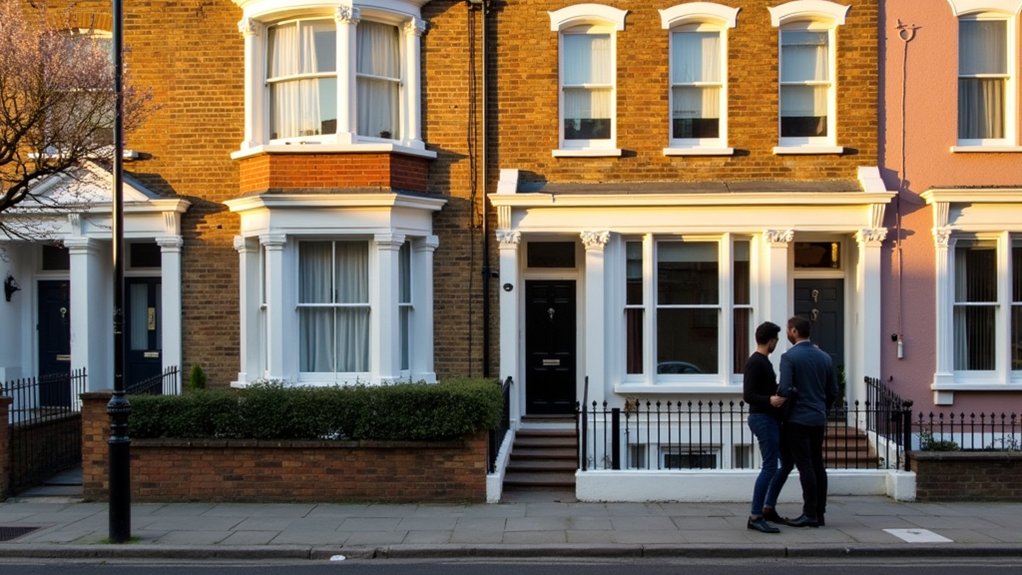
You’re buying character and charm, but you’re also buying risk and responsibility. In Crouch End, you can’t rely on a fresh coat of paint—check roof lines, damp patches, movement cracks, and window condition on the first viewing because repairs hit ROI fast. If it’s a conversion, you’ll need to test the lease, service charges, and who actually pays for the big-ticket works. The part that trips most buyers up comes next…
First Viewings in Crouch End: Spot Period Red Flags Fast
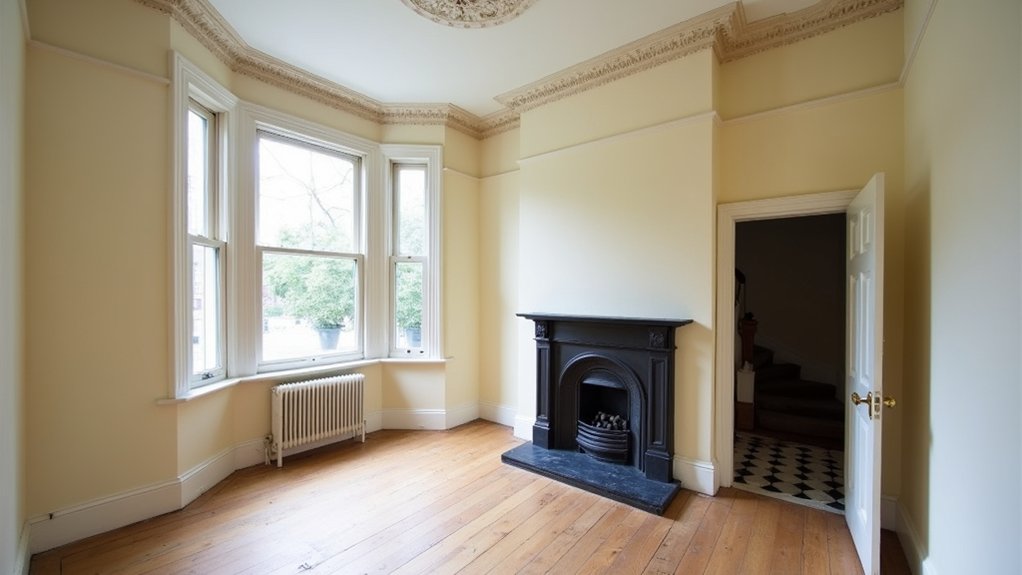
Because Crouch End’s terraces and Victorian conversions can hide expensive surprises behind fresh paint, you’ll get the best ROI by treating your first viewing like a rapid risk scan: focus on damp and ventilation clues (tide marks, musty odours, peeling), movement (stair-step cracks, sticking doors), roof and gutter condition, and any “newly refurbished” finishes that might be masking defects—then price those findings into your offer or decide to walk away before you pay for a survey on the wrong property.
Next, check paperwork signals: ask what’s been replaced and when, request guarantees, and verify planning/lease details for conversions.
Look for Historic architecture telltales—original cornices, sash windows, fireplaces—and note where interior design updates look superficial (painted-over woodwork, uneven flooring, fresh sealant lines).
Photograph concerns, estimate remedial costs, and negotiate hard.
Victorian Terrace Surveys: Roof, Damp, and Structure Checks
When you commission a survey on a Crouch End Victorian terrace, you’ll want the roofer’s view on tile/slate condition, ridge lines, and lead flashings because small failures can turn into big water-ingress bills.
You should also push for clear damp diagnostics—bridged DPC, defective gutters, subfloor ventilation, and any signs of rising or penetrating damp—so you can price remedial works accurately.
Finally, you need the surveyor to flag structural movement (stepped cracking, bowed walls, sagging rooflines) and separate historic settlement from active issues that could hit resale value and mortgageability.
Roof Coverings And Flashings
Although a Victorian terrace roof can look sound from street level, the coverings and flashings are often where expensive leaks start. You’ll want your surveyor to get close to the roof coverings: slipped or cracked slates, failed nail fixings, patch repairs, and mismatched replacements that hint at short-term work.
Check ridge and hip lines for loose bedding, and inspect valley gutters for corrosion, debris traps, and poor detailing. Around chimneys, parapets, and abutments, insist on seeing leadwork condition, correct laps, and secure soakers; quick mortar fillets rarely last.
Budget for proactive flashing maintenance, because small lead splits and lifted edges usually cost far less to fix now than after internal finishes are damaged. Ask for a repair schedule and realistic access costs (scaffold or tower).
Damp And Structural Movement
Even if the roof looks serviceable, damp and structural movement can quietly wipe out your renovation budget in a Victorian terrace, so you need your surveyor to treat them as linked risks rather than separate defects.
Ask for moisture profiling at chimney breasts, party walls, bay fronts, and below window reveals, not just a quick meter scan. Track salt staining, blistered paint, and rotten skirtings to probable sources: failed flashings, cracked render, bridged DPC, or leaking gutters.
Then connect those damp issues to structural concerns: softened joist ends, decayed wall plates, and differential movement around bays and rear outriggers.
Insist on crack mapping, level checks, and subfloor ventilation inspection. Budget for targeted opening-up, not blanket replastering, so you fix causes and protect resale value later.
Windows, Chimneys, and Fireplaces: Repair Costs to Expect
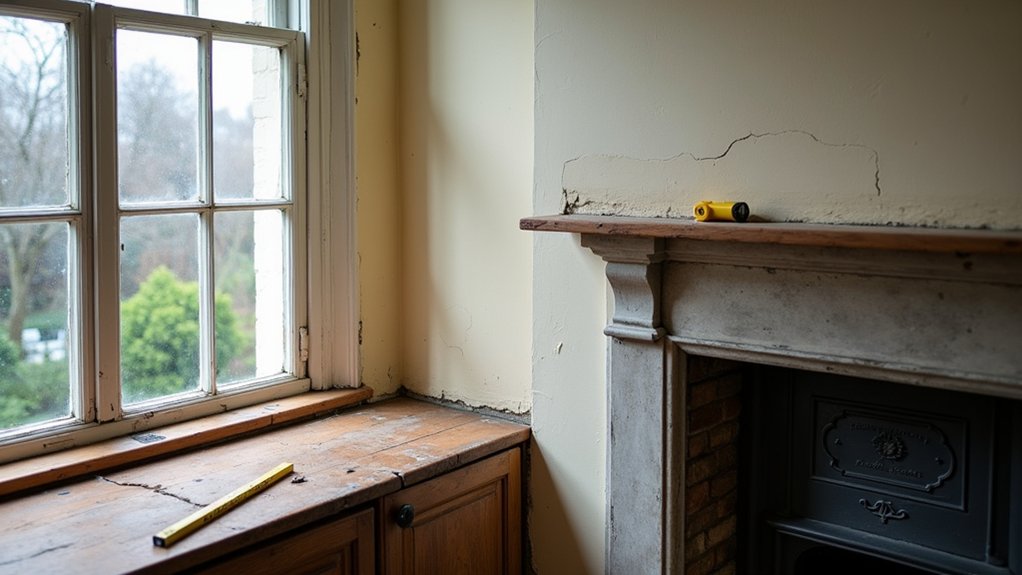
Because these homes often hide decades of piecemeal fixes, you’ll want to treat windows, chimneys, and fireplaces as early ROI items. Budget for window restoration first: overhauled sash cords, draught-proofing, and timber splice repairs usually beat full replacement for value and planning ease. Expect higher costs if frames have rot at cills or you need slimline double glazing.
Next, price chimney repairs with a roofer who understands Victorian stacks. Allow for repointing, flaunching, new lead flashings, and pot/cowl swaps; neglected stacks can leak and damage ceilings fast.
If you’re opening a fireplace, factor in a lintel check, flue lining, and a HETAS sign-off. A capped, sound chimney still adds saleability and heating flexibility.
Buying a Victorian Conversion in Crouch End: Lease Essentials
Once you’ve costed the visible fabric—sashes, stacks, and fireplaces—turn to the lease, since it dictates what you can change, what you must pay for, and how saleable the flat stays.
Check the unexpired term; lenders often want 80+ years, and extending below that threshold gets pricier, hitting resale ROI. Confirm ground rent terms and any review clauses that could spook buyers.
Read restrictions on subletting, pets, and holiday lets if you’re banking on flexibility. Look for alteration consents: can you move a wall, install soundproofing, or update interior decor without a licence?
Confirm rights of access, use of loft/basement, and bike/bin storage. Finally, verify shared parts and boundaries, plus how neighborhood amenities affect lettability and value.
Service Charges and Repairs: Who Pays for What?
You’ll want to pin down exactly what the lease makes you pay for versus what the freeholder covers, because small wording differences can shift thousands in costs.
Ask for the last few years’ service-charge accounts and any Section 20 notices so you can price in major works like roof, brickwork, or communal electrics before you commit.
Check whether there’s a sinking fund, how it’s funded, and whether it’s adequate—so you’re not hit with a sudden bill that wipes out your ROI.
Lease Vs Freehold Responsibilities
Even if the flat in a Crouch End Victorian conversion looks like a bargain, the lease vs freehold split of responsibilities will decide your real running costs and your resale appeal. Check the lease: you’ll typically pay a service charge for communal cleaning, lighting, insurance, and the managing agent, while you cover everything inside your demise—plaster, pipes serving only your flat, and your interior decor.
If you buy a freehold house, you control budgets and contractors, but you also carry full liability for roof, drains, and boundary issues.
In a share-of-freehold block, confirm who instructs repairs, how quotes get approved, and whether you must contribute to garden landscaping, gutters, and external paintwork. Verify covenants on subletting, pets, and alterations, because restrictions can cap rental yield and saleability.
Major Works And Sinking Funds
Because major works bills can land years after you’ve moved in, check how the Crouch End conversion funds roof renewals, repointing, window replacements, and external redecorations before you exchange.
Ask for the last three years’ service charge accounts, the Section 20 history, and the planned works schedule so you can price risk into your offer.
If there’s a sinking fund, confirm its balance, contributions, and whether it’s ring-fenced; a healthy reserve usually smooths cash flow and protects resale value. If there isn’t one, model your exposure per flat and keep contingency cash.
Clarify what you pay for versus the freeholder: structure, communal areas, and historical restoration often sit in the service charge, while your Interior redesign stays your cost.
Check major works clauses and caps too.
Planning, Building Regs, and Past Works: What to Verify
While the sash windows and cornicing might win you over, the real value check in a Crouch End period terrace or Victorian conversion sits in the paperwork: confirm what’s had planning permission, what’s been signed off under Building Regulations, and whether any past works (loft conversions, rear/side returns, basement digs, open-plan steel installs) were done properly.
Ask for decision notices, approved drawings, completion certificates, warranties, and party wall awards. If permissions are missing, price in regularisation, indemnity limits, or remedial works—and renegotiate.
Verify structural engineer calcs for steels, fire door/escape routes, insulation to roofs, and electrics (EICR). For ROI, check landscaping considerations (retaining walls, drainage, garden studios) need consent.
Don’t let interior decor distract you from compliance risk.
Frequently Asked Questions
What Are Current Victorian Terrace Price Premiums in Crouch End Versus Nearby Areas?
You’ll typically pay ~5–15% more for Victorian terraces in Crouch End versus nearby Hornsey/Stroud Green; Highgate can match/exceed. Historic architecture boosts resale, but renovation challenges can compress ROI—budget surveys, capex, and contingencies.
How Competitive Are Bids, and Should Buyers Expect Sealed Bids in Crouch End?
You’ll face competitive bids in Crouch End, and you should often expect sealed bids on well-priced homes. Track market saturation weekly, set disciplined bidding strategies, and move fast with finance ready to protect ROI.
What Are Typical Completion Timelines for Period Homes in Crouch End?
You’ll usually complete in 10–14 weeks, not the “always 6” myth—check leasehold, title quirks, and surveys. Interior renovation plans and Historical features can trigger extra reports, but faster lawyering protects ROI.
Which Local Schools Most Influence Victorian Terrace Values in Crouch End?
You’ll see values lift most around Coleridge Primary, Rokesly Junior/Infant, and Highgate Wood School. Local school reputation and tight Victorian school catchments drive premiums; you’ll pay more for in-catchment streets and stable Ofsted results.
Are There Conservation Area Restrictions Affecting Exterior Paint Colours and Front Gardens?
Yes—if you’re in a conservation area, you’ll face Historical preservation rules on exterior paint colours, railings, and paving, and limits on front-garden hardstanding. Check Article 4; compliant Exterior enhancements protect resale and avoid enforcement.