

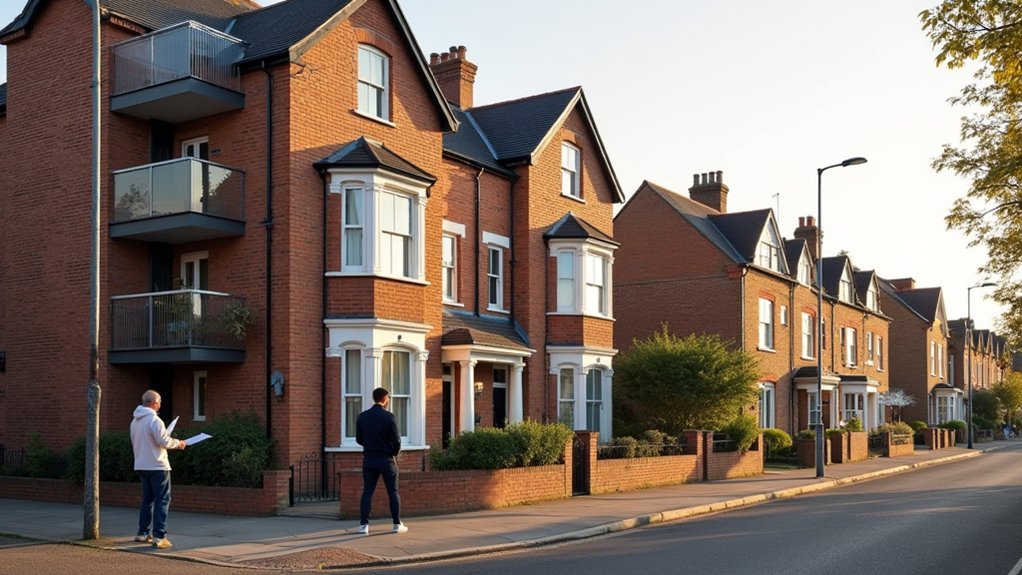
You’ll choose faster in Hornsey if you start with total monthly cost, not just the price. A flat can look cheaper until you add service charges, ground rent, and lease terms. A terrace shifts spending to repairs, insurance, and parking friction. A semi often costs more upfront, then more to heat and maintain, but you gain space and privacy. The question is which costs you can control—and which ones you can’t…
Start With Your Hornsey Budget and Monthly Costs

Where do you start when you’re choosing a house type in Hornsey? You start with a hard budget and a monthly cost cap, not property aesthetics.
Set your maximum purchase price after stress-testing rates, deposit size, and lender fees, then add predictable running costs: council tax band, service charges, ground rent, buildings insurance, and routine maintenance.
If you’re stretching, build in a contingency for repairs and energy bills, because older stock can surprise you.
Price in commuting and parking permits too, since neighborhood amenities can change how much you spend day-to-day.
Finally, compare total monthly outgoings across options on the same assumptions, and walk away from anything that breaches your cap.
Flat vs Terrace vs Semi in Hornsey: Space and Layout
Although flats, terraces, and semis can sit on the same Hornsey street, they deliver very different usable space per pound, so you should compare layouts the way you’d compare monthly costs.
In a flat, you’ll often get a compact footprint with less wasted corridor space, but storage can be tight and room sizes may cap flexible working-from-home setups.
Terraces typically trade width for depth: you may gain a separate kitchen and reception, yet the interior layout can feel chopped up by stairs, affecting how much space you’ll actually use daily.
A semi often gives you the best layout efficiency for families: wider rooms, easier zoning, and potential to extend later.
Check natural lighting too—corner aspects and bigger rear windows can reduce daytime energy use.
Leasehold Flats in Hornsey: Lease, Service Charges, Rules
If you’re weighing a leasehold flat in Hornsey, you need to price in the lease term because it can affect mortgage options and resale value.
You’ll also want to audit service charges and any sinking fund contributions, since they can swing your monthly costs and trigger surprise bills for major works.
Finally, check the building’s rules on pets, subletting, and alterations so you don’t buy into restrictions that block how you plan to live or improve the flat.
Understanding Lease Terms
Before you commit to a leasehold flat in Hornsey, you’ll want to treat the lease as a cost schedule, not a formality. Start with lease length: anything under 90 years can narrow mortgage options and inflate extension costs, so price that risk in early.
Check the ground rent clause for escalation triggers (doubling, RPI-linked rises, review dates) because lenders scrutinise it and resale buyers discount for it.
Confirm what you actually own: internal walls only, or also balcony, loft space, parking, or a garden strip.
Read restrictions like subletting, pets, alterations, flooring, and holiday lets; breaches can trigger legal costs and limit how you use the flat.
Finally, verify repair obligations and insurance responsibility split between you and the freeholder.
Service Charges And Sinking Funds
Where does the real running cost of a Hornsey leasehold flat show up month to month? It’s in the service charge: your share of cleaning, lighting, insurance, managing agent fees, and routine Maintenance costs for communal areas.
Ask for the last three years’ accounts and the current budget, then compare it to similar blocks nearby. Watch for steep uplifts, arrears, or vague “management” lines that hide inefficiency.
The sinking fund (reserve) matters just as much. If it’s well funded, you’re less likely to face sudden one-off demands for roofs, lifts, or exterior works.
If it’s thin, expect higher risk of major works bills.
Your Legal considerations include checking the lease allows the charge, how costs are apportioned, and whether consultation rules apply.
Restrictions And Alterations Rules
Service charges tell you what the building costs to run, but the lease’s restrictions tell you what you can actually do with your flat—and what it’ll cost to get permission.
Before you plan Home renovation or Interior design, read the alterations clause: many Hornsey blocks require written consent for removing walls, changing windows, adding hard flooring, or moving plumbing.
Expect admin fees for the landlord’s licence, plus your solicitor’s costs and the freeholder’s surveyor, sometimes £500–£2,500+ depending on complexity.
If the lease demands a deed of variation, budget more and allow weeks.
Check subletting, pets, Airbnb, and noise rules too; breaches can trigger legal costs and resale delays.
Practical tip: get permissions documented and transferable to buyers.
Terrace and Semi Ownership in Hornsey: Repairs and Insurance
How much will shared walls and close boundaries really cost you in Hornsey? With a terrace or semi, your Ownership responsibilities usually include the full structure: roof, brickwork, gutters, drains, and any boundary walls.
That means Maintenance costs can spike when a roof leak spreads across party walls or when shared drainage fails and you must coordinate access, quotes, and timings. Budget for periodic repointing, damp-proof checks, and chimney repairs, especially on older streets.
Insurance needs scrutiny: confirm your buildings policy covers party-wall damage, alternative accommodation, and trace-and-access for leaks. Ask whether you need a party-wall agreement or legal expenses cover before major works.
Finally, price in higher excesses and premium loadings after prior claims on the same building.
Lifestyle Fit in Hornsey: Noise, Parking, Garden, Commute
After you’ve priced the structural and insurance exposure that comes with shared walls, the next decision sits in day-to-day livability: noise, parking, outdoor space, and the commute.
In a flat, you’ll usually trade lower garden access for lift/service charges, and you’ll notice hallway noise and upstairs footsteps unless soundproofing’s strong. A terrace can mean more street noise and tighter parking; budget for resident permits, visitor friction, and delivery hassle.
A semi often buys you a driveway or easier bays, plus better side access for bikes and bins, but you’ll likely pay more for heating larger rooms. If you work central, map door-to-door times to Tube, Overground, and buses.
Weigh Local amenities and community vibe against the cost of daily convenience.
Resale in Hornsey: What Holds Value Best
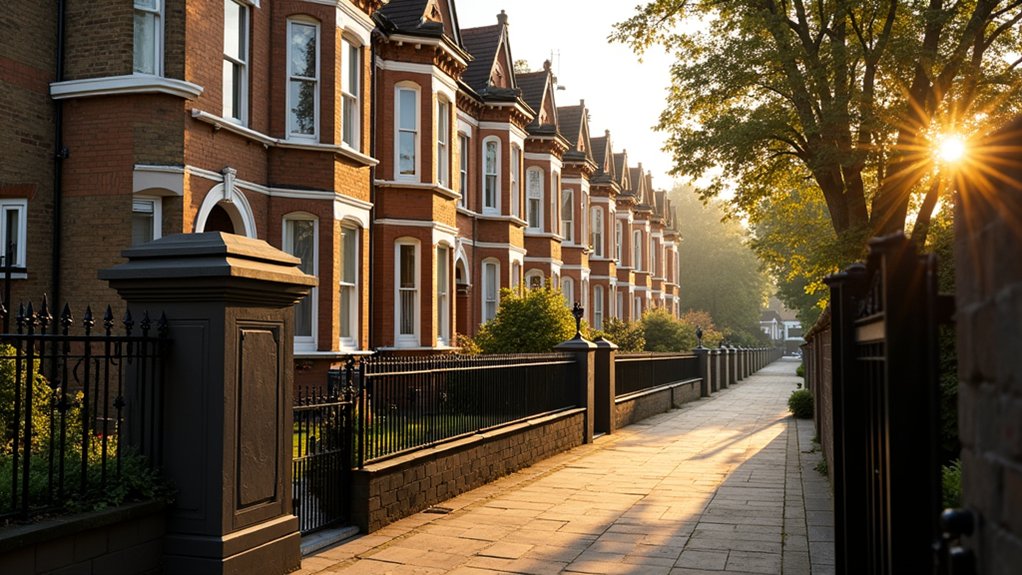
When you’re thinking about resale in Hornsey, you’ll usually pay a premium for period homes, so you need to check whether the extra cost is matched by stronger demand and tighter supply.
You should also price outdoor space realistically, because a usable garden or terrace can lift offers and shorten selling time more than an extra internal room.
Finally, you can’t ignore transport links—walkable access to stations and frequent bus routes typically protects value and reduces your downside if the market cools.
Period Home Premiums
Although Hornsey’s period streetscape carries strong emotional pull, the resale premium only holds if you’re buying the right fundamentals: original proportions, solid structure, and a layout that modern buyers won’t need to rework. Treat Historical architecture as a value signal, not a guarantee, and verify it with surveys, damp reports, and roof condition.
You’ll protect resale by prioritising intact ceilings, staircases, and sash windows, because they’re expensive to replicate and buyers price in authenticity. Watch Renovation costs closely: rewiring, replastering, subsidence remediation, and boiler replacement can erase the “period” uplift fast.
Pay attention to EPC potential, too—if upgrades require invasive work, expect a discount on exit. Choose homes where improvements add efficiency without sacrificing character, and you’ll keep demand broad when you sell.
Outdoor Space Value
Why does outdoor space hold up so well in Hornsey resale values? Because you’re buying scarce square metres that can’t be replicated inside later without major cost. A usable garden, terrace, or even a wide balcony widens your buyer pool and reduces price sensitivity, especially when indoor layouts are tight.
If you choose a flat, prioritise genuine external space over token ledges; valuers and buyers discount the latter quickly.
Garden privacy matters as much as size: overlooked plots feel like dead space, while screened, quiet areas command stronger offers. Budget for fencing, planting, and lighting; these are cheaper than adding internal floor area and show well at viewings.
Design for outdoor entertaining—level paving, power points, and storage—so buyers can picture year-round use.
Transport Links Impact
Outdoor space can widen your buyer pool, but transport links usually set the baseline price in Hornsey because they reduce commute time—a cost buyers feel every weekday.
If you’re comparing a flat, terrace, or semi, price in the walk to Hornsey or Turnpike Lane and the reliability of the Piccadilly line; buyers discount longer, awkward routes.
You’ll also see premiums near bus corridors to Crouch End and quick access to the A10, because that lowers taxi and parking spend.
Don’t overpay for Historical architecture if it sits far from stations; charm won’t offset time-costs.
Instead, weigh school runs, groceries, and gyms: strong neighborhood amenities plus short, safe routes to transport protect resale, especially in slower markets, and reduce void periods for landlords too.
Frequently Asked Questions
Which Hornsey Conservation Areas Restrict Extensions or Window Replacements?
In Hornsey, the Tower Gardens, Rookfield, and Crouch End conservation areas often restrict extensions and window replacements. You’ll face architectural restrictions for historic preservation, so budget for consents, specialist materials, and longer lead-times.
Are There Planned Transport or Regeneration Projects Affecting Hornsey Property Values?
Yes—keep watching Public transport developments and Regeneration plans, as they can lift demand and prices. You should track TfL upgrades, station capacity works, and council schemes, then budget for disruption and timing risks.
How Do Local School Catchment Boundaries Influence Demand on Different Street Types?
School catchment lines shift property demand street-by-street: you’ll pay premiums on in-zone terraces and semis, while out-of-zone flats lag. Check boundary maps annually, model resale risk, and budget for catchment-driven bidding wars.
What Are Common Hornsey Survey Issues Like Damp, Subsidence, or Roof Defects?
You’ll often find damp from poor ventilation, subsidence near mature trees, and roof defects like slipped tiles or failed flashing. Budget after a Building inspection; prioritise Property maintenance: drainage, repointing, gutters, and timber repairs to cap costs.
How Long Do Hornsey Purchases Typically Take From Offer to Completion?
You’ll typically complete in 8–12 weeks; one buyer I saw waited 14 when a Property valuation snag hit like a slipped cog. You’ll cut costs by chasing solicitors, tracking Market trends, and booking searches early.