


You’re choosing between a purpose-built flat and a converted terrace around Finsbury Park, and the ROI sits in the details: predictable bills, repair risk, noise, and usable space per pound. Rents in 2026 move fast, so you can’t just compare monthly figures—you need total cost, commute value, and street-by-street fit. If you miss a single viewing tell or contract clause, you’ll pay for it later…
Flats vs Converted Terraces in Finsbury Park
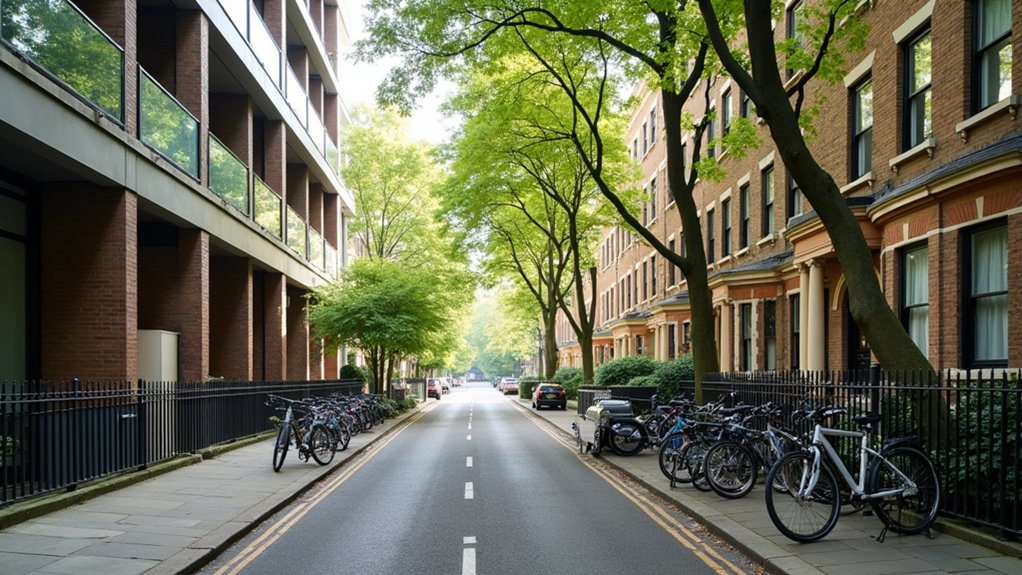
While both options can work in Finsbury Park, flats usually deliver more predictable costs and easier budgeting.
Conversely, converted terraces trade that certainty for extra space, period features, and potential value upside—so your best ROI depends on whether you prioritise lower running risk (service charges, maintenance, insurance) or higher liveability per pound (layout, storage, outdoor access) and how long you expect to stay.
If you’re optimising monthly cashflow, pick a well-managed block: you’ll see clearer cost lines, faster repairs, and bundled Property amenities like lifts, bike storage, and security.
If you’re optimising utility per square metre, a converted terrace can beat a flat by reducing compromises on room count, WFH separation, and garden access.
Yet Historic architecture often means higher upkeep, draughts, and slower fixes—price that risk into your budget and time horizon.
What Do Finsbury Park Rents Cost in 2026?
In 2026, you’ll typically see Finsbury Park rents spanning from entry-level studio/1-beds up to premium 2–3 beds, so you should benchmark listings against current comps to avoid overpaying.
You’ll also want to price the flat vs converted-terrace trade‑off—terraces can cost more up front but may buy you extra space and a better cost-per-square-foot.
Finally, run the true monthly number by adding bills and the upfront cash hit (deposit plus first rent) so you can judge affordability and ROI on your move.
2026 Rent Price Ranges
Three factors drive what you’ll pay in Finsbury Park in 2026: flat size, finish (newly refurbished vs. “liveable”), and how close you’re to the station, the park edge, and key arteries like Seven Sisters Road.
Studios typically rent for £1,550–£1,900 pcm; one-beds £1,900–£2,450; two-beds £2,400–£3,200; three-beds £3,100–£4,200.
New builds with Luxury amenities (concierge, gym, secure bike storage) sit 10–20% higher, but you often save time and costs on maintenance and commuting, improving your total value.
“Liveable” stock prices lower, yet you’ll budget more for bills, furnishings, and occasional repairs.
Pet policies can add £25–£75 pcm or narrow supply; confirm upfront to avoid wasted viewings.
Flat Vs Terrace Costs
Those 2026 price bands get more useful once you compare like-for-like property types: purpose-built flats usually price off service, efficiency, and location, whereas converted terraces price off space, layout, and shared-house compromises.
In Finsbury Park, you’ll typically see flats come in cheaper at the same bedroom count, but terraces can deliver better £/sqm if you’ll actually use the extra rooms.
A modern 1-bed flat often sits in the mid band, while a 1-bed terrace conversion with a separate kitchen and better storage can push a band higher.
For 2-beds, terraces win when you need WFH separation; flats win when you value lift access and predictable layouts.
Price premiums track finish level: strong interior design adds rent faster than it adds utility.
Check pet policies early; terraces sometimes flex more.
Bills And Deposit Costs
A £2,200/month Finsbury Park rent rarely costs £2,200 all-in in 2026: budget roughly another 12–20% for bills, then expect a cash hit up front of 5 weeks’ deposit plus your first month’s rent.
On £2,200, that’s ~£264–£440/month extra and ~£4,738 upfront (£2,200 + ~£2,538 deposit).
Your utilities costs drive most variance: electric-heavy flats can spike in winter, while terraces may add higher gas use and council tax bands.
Ask what’s included (broadband, water, service charge) and benchmark against EPC ratings to forecast running costs.
For ROI, negotiate where you can: longer terms can reduce rent, but security deposits stay capped, so lower bills deliver the real savings.
Which Streets Around Finsbury Park Feel Right?
You’ll get the best value on characterful Victorian side streets where converted terraces offer more space per pound than main-road flats. But you need to check street-by-street condition and layout.
You’ll want to balance that charm against transport ROI: being within a short walk of Finsbury Park station can cut commute time and widen your rental options, but it often raises monthly costs.
You should also audit noise—A503 frontage, bus routes, and late-night footfall—because quieter streets typically improve day-to-day liveability without a big price premium.
Characterful Victorian Side Streets
If you’re weighing Victorian side streets around Finsbury Park, prioritise the pockets that consistently deliver the best rent-to-livability ratio: the tree-lined roads off Stroud Green Road and the ladder streets running toward Harringay (between Green Lanes and Wightman Road). Typically, these areas offer larger split-level conversions, quieter frontage, and stronger tenant demand than the busier main-road stock—so you’ll spend less time compromising on noise, light, and layout for the same monthly budget.
Target streets with intact Historical architecture (bay windows, high ceilings, wider stairwells) because they correlate with better room proportions and fewer awkward box rooms. On viewings, benchmark storage, sash-window condition, and communal-areas upkeep—cheap fixes add up in time and hassle.
You’ll also get value from walkable Local eateries that lift day-to-day convenience and resale-grade appeal.
Transport Links And Noise
Transport convenience around Finsbury Park comes with a measurable “noise tax,” so the best-feeling streets sit one or two blocks back from the A503 Seven Sisters Road and A1201 Stroud Green Road while staying within a ~7–10 minute walk of the station.
Aim for flats on side roads like Woodstock, Ossian, or the quieter stretches off Endymion Road, where through-traffic drops and nighttime peaks soften. You’ll still keep fast public transport: Victoria and Piccadilly lines plus Thameslink, which protects resale and reduces commute risk.
Treat noise pollution like a cost line—if you can’t close windows or sleep, you’ll churn sooner and pay more in move fees. Check evening decibel apps, stand outside at 8–10pm, and prioritise double glazing and rear-facing bedrooms.
Commute Links From Finsbury Park You’ll Use
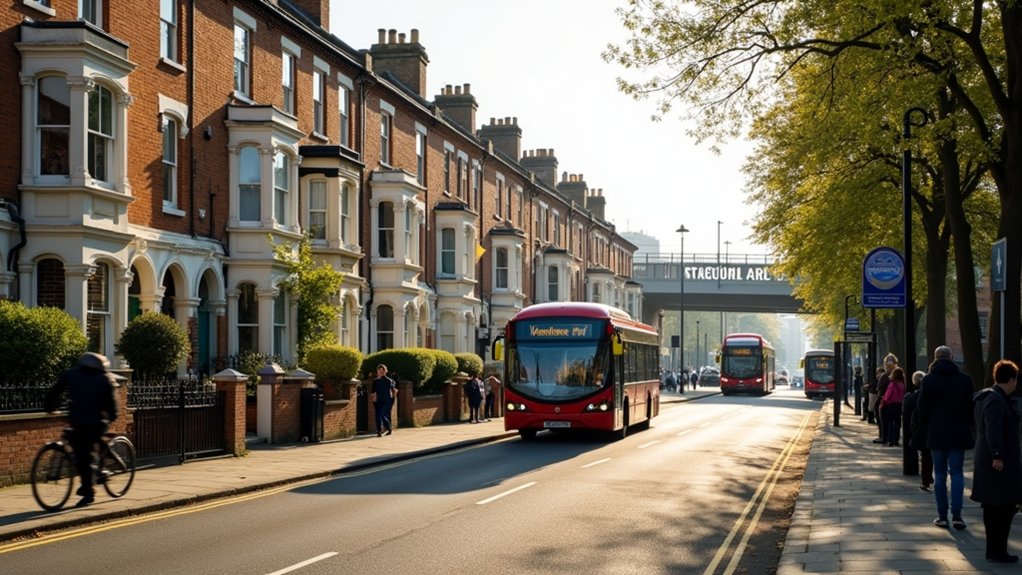
Because Finsbury Park sits on the Piccadilly and Victoria lines and has National Rail services, you can usually keep door-to-door commute times predictable—and that lowers the risk of paying extra rent just to buy back time.
You’ll lean on Public transport for fast hops south via Victoria line to King’s Cross/St Pancras and Oxford Circus, and west or Heathrow-bound routes on the Piccadilly line.
National Rail adds high-ROI commuting options: quick runs to Moorgate/Old Street (City) and connections toward Hertfordshire if you split office days.
Buses on Seven Sisters Road and Stroud Green Road fill gaps when the Tube’s disrupted, often beating transfers.
If you cycle, you can price in fewer travel zones and fewer peak fares across a month.
What to Check at Finsbury Park Flat Viewings
Although a Finsbury Park flat can look like a bargain on paper, you’ll only lock in real ROI at the viewing by spotting issues that turn into recurring costs or time drains. Start with light, heat, and noise: test taps, flush, boiler response, extractor fans, and mobile signal; a weak system adds £30–£80/month and hassle.
Check windows for drafts and condensation, and scan for damp by skirting boards and ceilings. Open cupboards and look behind furniture for mould or fresh paint patches hiding leaks.
For Interior renovation risk, note dated electrics, uneven floors, or DIY tiling—each can mean weeks of disruption.
Outside, map Neighborhood amenities: late-night noise, bins, bike storage, and walk time to supermarkets, gyms, and the park.
Contracts, Agents, and Red Flags in Finsbury Park Rentals
Once you’ve flagged the physical risks at a viewing, you’ll protect your ROI by pressure-testing the paperwork and the people behind it—contracts and agents can add hidden costs just as fast as damp or a failing boiler.
Ask for the full draft tenancy before paying a holding deposit, then quantify liabilities: break clause terms, rent review triggers, service-charge caps, and who pays for call-outs.
In Lease negotiations, push for written limits on fees, a clear repair timeline, and inventory photos to reduce deposit disputes.
Validate agent reputation: check Propertymark/ARLA membership, read recent Google reviews, and confirm they protect deposits in a government scheme within 30 days.
Red flags include “cash only,” missing EPC, vague landlord details, or pressure to sign same-day. Walk away fast.
Frequently Asked Questions
Are Pets Allowed in Most Finsbury Park Rentals?
No, pets aren’t allowed in most Finsbury Park rentals. Like a leash on your options, Pet policies and Animal restrictions vary; expect ~30–40% pet-friendly. You’ll boost ROI by filtering listings early, negotiating deposits.
How Competitive Is the Rental Application Process Near Finsbury Park?
You’ll face a highly competitive process near Finsbury Park: rental market trends show low supply and fast lets. You’ll win by submitting early, passing application screening processes, proving income, references, and paying holding deposits quickly.
What Council Tax Bands Apply to Flats and Converted Terraces Locally?
You’ll typically see council tax bands A–F for local flats and converted terraces, set by Band classification criteria like 1991 valuation, size, and layout. You can cut costs via Council tax exemptions or discounts.
How Do Utility Bills Typically Differ Between Flats and Converted Terraces?
Like a telegram, here’s the Utility cost comparison: you’ll usually pay less in flats—shared walls boost Energy efficiency—while converted terraces often mean higher heating and split meters. You’ll improve ROI by tracking kWh usage monthly.
Are There Restrictions on Bike Storage in Buildings Around Finsbury Park?
Yes—many buildings around Finsbury Park restrict bikes to designated areas under Bike storage regulations and Building security requirements. You’ll often need permits, lockers, or hallway bans; compliance reduces theft risk and avoids fines.