


Your material choices are the armor your renovation wears every day. You’ll get the best ROI when you set durability rules first—traffic level, moisture exposure, UV, and cleaning habits—then pick finishes that won’t demand constant resealing or touch-ups. Put high-performance surfaces where life hits hardest and save smarter options for low-impact zones. The real gains come from knowing exactly where to spend and where to hold back…
Set Your Durability Rules Before Picking Materials
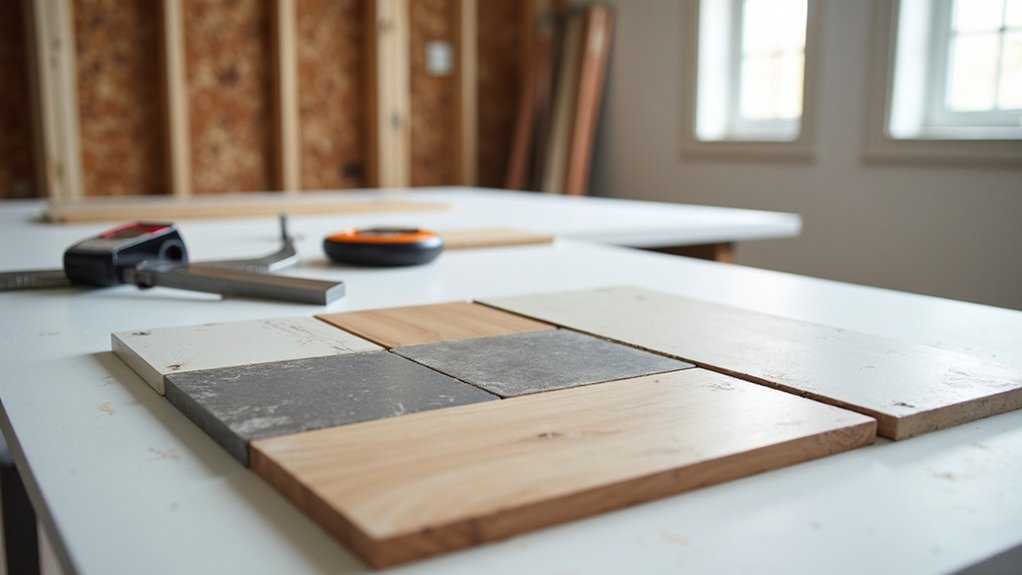
Before you fall in love with a finish, set clear durability rules based on how the space actually gets used—foot traffic, kids or pets, moisture, sunlight, and how often you’re willing to maintain it.
Define measurable thresholds: scratch resistance, water absorption, UV stability, and cleanability, then rank them by cost of failure (replacement, labor, downtime).
If you won’t reseal annually, eliminate high-maintenance surfaces now.
Build a shortlist that hits your minimum performance spec and your target lifecycle cost per year, not just the sticker price.
Require warranties and test data (Abrasion class, stain ratings) so you’re buying proof, not promises.
Filter for Eco friendly options that still meet your spec, then choose the best Aesthetic appeal within those rules.
Choose Interior Materials by Room and Wear Level
Because every room punishes materials differently, you’ll get the best ROI by matching finishes to wear level instead of chasing a one-size-fits-all look.
In entries and halls, pick abrasion-resistant floors, washable paint, and durable trim that won’t dent from bags and shoes.
In kitchens, prioritize stain- and moisture-resistant counters, high-scrub cabinetry finishes, and backsplash surfaces that clean fast.
In bathrooms, use nonporous wall panels or sealed tile, slip-resistant flooring, and moisture-rated cabinetry to prevent swelling.
In bedrooms and low-traffic offices, you can use softer finishes, but still choose fade-resistant fabrics and cleanable wall paint.
Maintain Textural contrast to hide minor wear, and use Color coordination to unify rooms while varying performance specs.
Document each room’s load: foot traffic, water, sun, and cleaning frequency.
Where to Splurge on Interior Materials (and Where Not To)
If you treat every finish like a “forever” upgrade, you’ll overspend fast and still miss the spots that actually drive durability and resale. Put money where touch and traffic are highest: flooring in main paths, solid-core doors, quality cabinet boxes, and durable counters. These upgrades reduce call-backs, wear, and buyer objections.
Splurge on plumbing fixtures you use daily and on good lighting that improves perceived space.
Save on items you can swap later without demolition: pendants, hardware, mirrors, and decorative tile accents. Use budget friendly options like standard-size cabinetry, quartz-look surfaces, and well-made LVP in low-visibility rooms.
Reserve luxury finishes for one “hero” element per room—like a statement slab or premium faucet—then keep everything else clean, consistent, and midrange.
Avoid Interior Materials That Age Badly or Need Babying
Smart splurges only pay off when the materials keep looking good with normal use, so your next job is cutting anything that ages poorly or needs constant maintenance. Skip soft marble in busy kitchens, high-gloss cabinets that show every fingerprint, and porous grout that darkens fast.
Avoid unlacquered brass if you don’t want patina management, and rethink trendy, thin veneers that chip at edges.
You’ll get better ROI by choosing finishes that tolerate water, UV, heat, and cleaners without special routines: engineered quartz over delicate stone, quality LVP or sealed hardwood over easily dented softwoods, and satin or matte paints over glossy.
Want Vintage charm? Use it in low-touch accents. Demand Modern durability everywhere else, especially floors, counters, and shower walls.
Frequently Asked Questions
What Warranties Should I Expect on Flooring, Countertops, and Cabinetry Materials?
You should expect 10–30-year flooring warranties, 10–25-year countertop coverage, and 5–20-year cabinetry guarantees. Verify transferability, labor inclusion, and exclusions to protect ROI, material durability, and aesthetic consistency long-term.
How Do Indoor Air Quality and VOCS Influence Interior Material Choices?
You’ll protect indoor air quality by choosing low/zero-VOC finishes, GREENGUARD-certified products, and formaldehyde-free composites, reducing indoor pollutants. You’ll also boost ROI by limiting odor callbacks, speeding occupancy, and preserving material durability over time.
Can I Mix Material Brands or Collections Without Voiding Warranties?
Yes, you can mix brands, but you’ll protect warranties only when you follow each maker’s install specs, confirm Brand compatibility, and maintain Collection consistency where required. Document approvals, keep receipts, and use certified installers to reduce risk.
What Maintenance Products Should I Avoid to Prevent Damaging New Finishes?
Avoid Chemical cleaners with bleach, ammonia, or strong solvents, and skip Abrasive products like scouring pads, powders, and steel wool. You’ll protect sealants, coatings, and sheen, reducing callbacks, refinishing costs, and downtime over time.
How Do Lead Times and Backorders Affect Material Selection and Renovation Scheduling?
Supply chain delays force you to pick in-stock materials or pad dates; you’ll protect cashflow with project timeline management. Like my sink that arrived 6 weeks late, you’ll avoid idle labor by ordering early.