

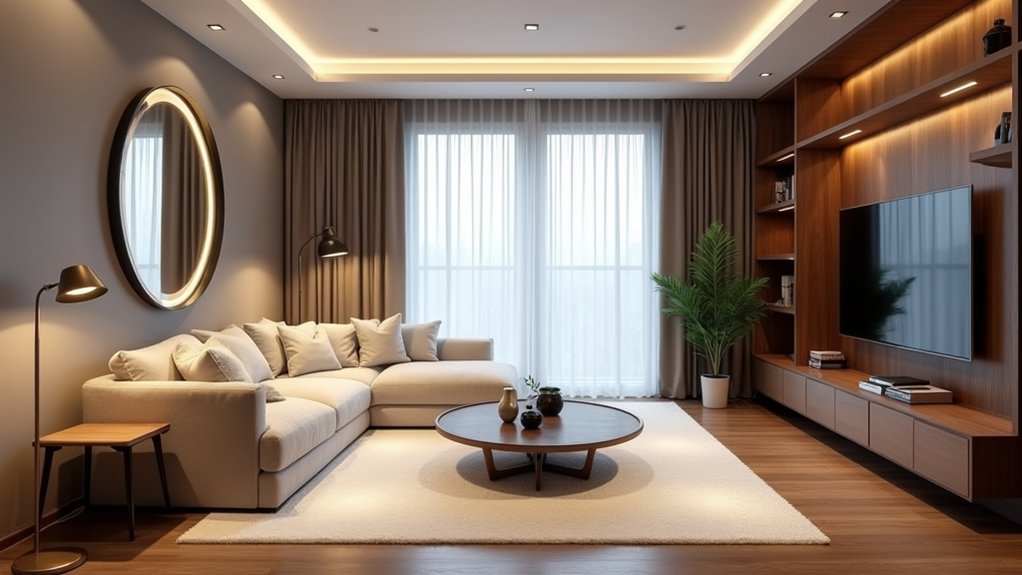
If your living room feels dim, you don’t need a full remodel to fix it—you need a smarter lighting plan and a layout that lets light travel. Start by spotting what’s blocking daylight, then layer high-CRI LEDs for ambient, task, and accent coverage to cut shadows fast. Shift furniture away from windows, add reflective surfaces, and use mirrors with intent. The biggest gains usually come from one overlooked change…
Spot Why Your Living Room Feels So Dark
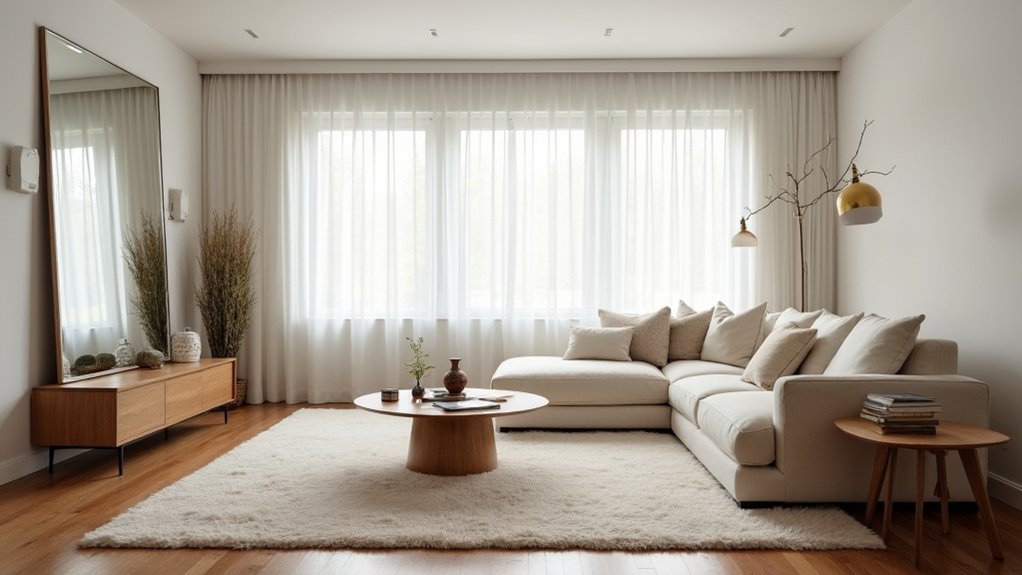
Three factors usually make a living room read as “dark”: weak daylight access, light-eating finishes, and bad layering.
Start by mapping daylight: note window size, direction, and what blocks it—trees, deep eaves, neighboring walls, or bulky furniture. Audit your window treatments; heavy drapes, dark shades, and overwide rods can cut usable glass and shrink perceived volume.
Next, review color schemes and reflectance: matte charcoal paint, dark rugs, and low-sheen ceilings absorb light and make even bright bulbs feel dim.
Check surfaces and layout too—tall bookcases near windows, glossy screens opposite seating, and cramped traffic lanes create visual “dead zones.” Fixing these root causes first saves money and prevents wasted lighting upgrades. It boosts resale appeal, too.
Layer Lighting to Brighten a Dark Living Room
Once you’ve pinpointed what’s stealing daylight, you can fix the “still feels dim” problem by stacking light sources instead of relying on one ceiling fixture. Start with ambient light, then add task lighting where you read, work, or play, and finish with accent lighting to lift corners and highlight art.
This layered plan delivers better perceived brightness without major construction, so you get a high-ROI upgrade renters and buyers notice.
Place floor lamps behind seating, add a pair of table lamps on opposite sides, and aim a small spotlight at the darkest wall to bounce light back into the room.
Tie it together with layering textures and choosing color schemes that support reflectivity—think lighter rugs, matte walls, and glossy accents—so every fixture works harder.
Pick Bulbs and Shades That Boost Brightness
Even the best lighting layout can still read gloomy if your bulbs and shades mute the output, so treat them like a quick ROI upgrade rather than an afterthought. Start with bulb selection: choose high-lumen LEDs (800–1600 lumens) and a warm-neutral color temperature around 2700–3500K for brightness without a sterile vibe. Look for high CRI (90+) so colors look richer, which makes the whole room feel lighter.
Skip bargain bulbs with low output; you’ll pay in disappointment, not savings. Next, audit shade design. Use light-colored, translucent shades that diffuse instead of absorb, and avoid smoked glass or heavy fabric that traps lumens. If you like dark shades, line them with reflective white to bounce light.
Match bulb shape to the fixture for maximum throw and fewer hotspots.
Rearrange Your Layout So Light Can Spread
If your furniture blocks the path of light, the room will stay dim no matter how strong your bulbs are. Start by pulling bulky pieces off the window wall and out of corners where lamps need clearance. Aim for a clean “light lane” from each fixture across the seating area, so illumination isn’t trapped behind a sofa back.
Next, tighten your furniture arrangement: float the couch a few inches from the wall, swap a solid coffee table for a glass or open-base option, and keep tall bookcases on the darkest side. This costs little and often beats buying more fixtures.
Finally, align your color schemes with the new layout—lighter rugs and throws near seating reflect light better and help your room feel larger without a remodel.
Use Mirrors and Windows to Amplify Natural Light
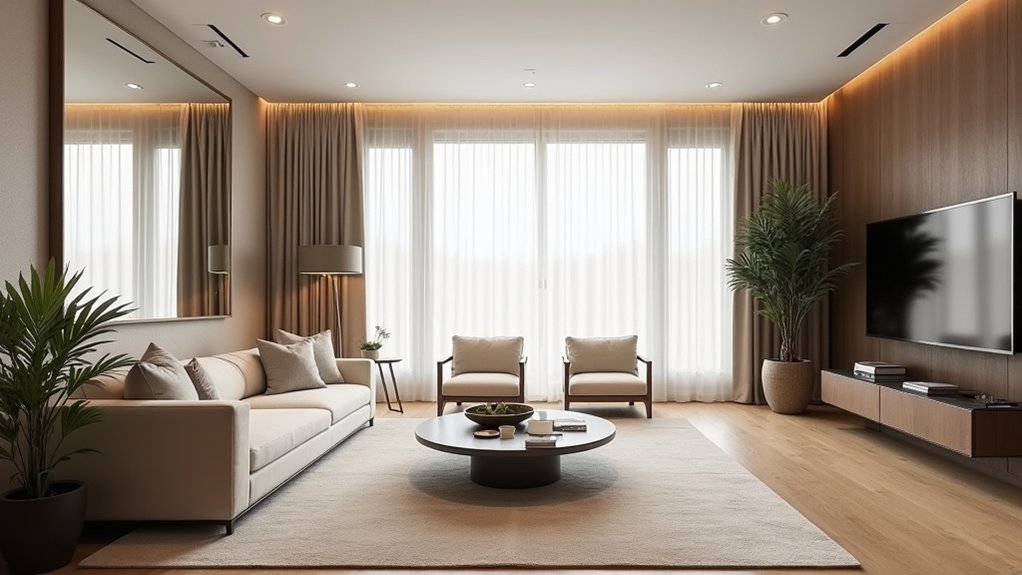
Because natural daylight is free and instantly improves how a room feels, you’ll get one of the highest returns by using mirrors and your existing windows to push that light deeper into the space.
Start with mirror placement: hang a large mirror opposite or adjacent to the brightest window to bounce light across the room, not back into the glass. If you can, angle it toward seating areas to brighten where you actually live. Skip tiny mirrors; one oversized piece usually delivers more impact per dollar and reads “intentional” to buyers.
Next, audit window treatments. Replace heavy drapes with light-filtering shades or sheer panels, and mount rods wider and higher so more glass stays exposed. Keep sills clear and trim nearby plants.
Frequently Asked Questions
How Much Does It Cost to Professionally Rewire Lighting in a Living Room?
You’ll typically pay $500–$2,500 to professionally rewire living room lighting, depending on access, permits, and fixture count. You protect Electrical safety, support Wiring upgrades, and boost resale appeal with cleaner, code-compliant installs.
Do Smart Lights Really Make a Dark Living Room Feel Brighter?
Yes, smart lights can make your dark living room feel brighter—why waste money on rewiring? You’ll boost perceived brightness with Smart bulbs’ higher lumens and better color temps, plus lighting automation scenes maximizing existing fixtures.
What Paint Colors and Finishes Best Brighten a Dark Living Room?
Choose warm whites, soft greiges, or pale taupes with high LRV to brighten fast. Use satin or eggshell Finish options for bounce, matte on ceilings. Stick to simple Color schemes; you’ll boost perceived space and resale value.
Are There Renter-Friendly Lighting Upgrades That Don’T Require Drilling?
Yes—you can add renter-friendly lighting without drilling: use Temporary fixtures like plug-in sconces with adhesive mounts, and pick cordless options like rechargeable puck lights. You’ll boost brightness fast, keep deposits safe, and raise appeal.
How Can I Improve Lighting Without Increasing My Electric Bill?
You can boost brightness without higher bills: LEDs use about 75% less energy than incandescents. Maximize Natural sunlight with sheer curtains and mirrors, then add targeted decorative lamps with LEDs, dimmers, and timers.