

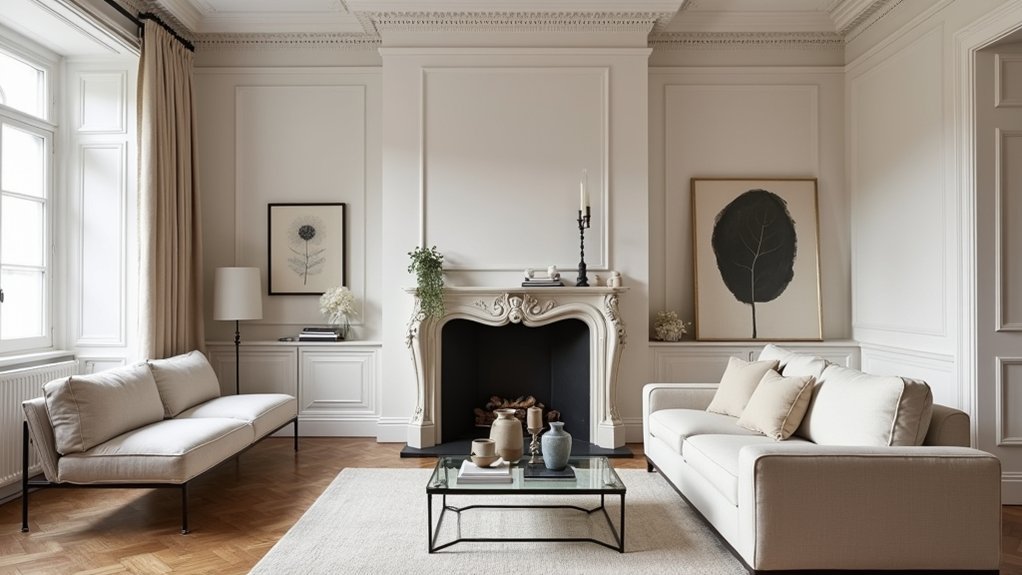
You probably don’t know that the fastest way to make a period room look cheap is trying to “match” new pieces to old details. You’ll get better ROI when you treat original features—fireplaces, cornices, sash windows—as fixed anchors and let modern choices do the supporting work. Use a tight palette, repeat materials, and aim lighting at what can’t be replaced. But the real payoff comes from one layout rule most people ignore…
Start With Period Features as Your “Anchors
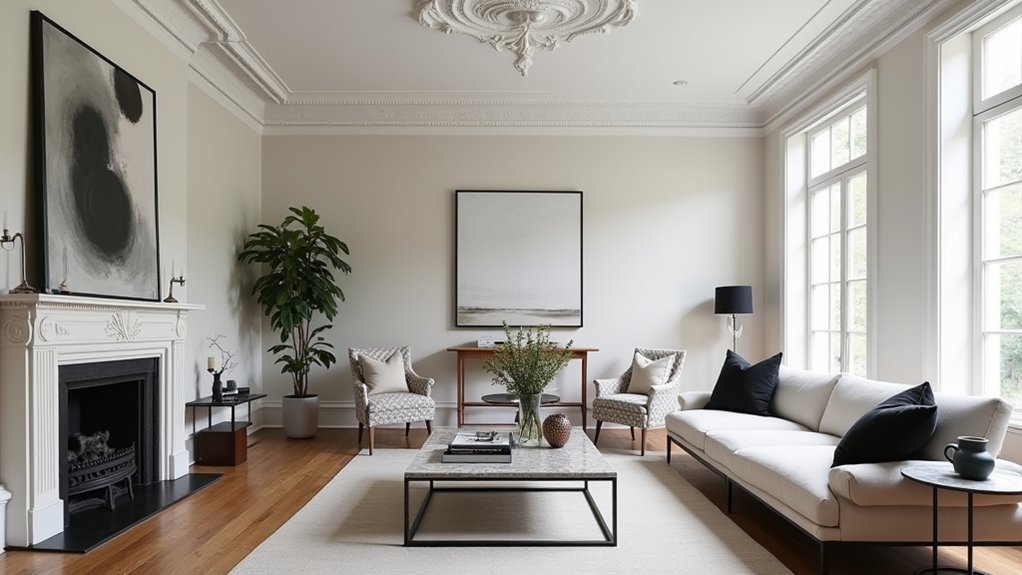
If you want modern updates to feel intentional (and protect resale value), start by treating your home’s original features—fireplaces, cornices, ceiling roses, sash windows, exposed beams—as fixed “anchors” you design around.
Photograph each room, list what’s original, then ring-fence budget to clean, repair, and highlight those elements first. You’ll get better ROI from fixing a sticky sash or revitalizing decorative moldings than from swapping trendy accessories.
Use lighting and paint to frame anchors: lighter walls lift ceilings; targeted uplights make beams and cornices read as premium.
When you add antique furniture, place it to echo the architecture’s symmetry and sightlines, not to fight them. Measure proportions, keep pathways clear, and let new purchases stay secondary to the period bones.
Pick a Modern Decor Style That Plays Nice
Once you’ve locked in your period “anchors,” choose a modern style that won’t compete with them—think quiet, timeless, and easy to update. Aim for clean-lined Contemporary furniture, simple silhouettes, and restrained detailing so original features stay the hero. Skip ultra-trendy looks that date fast and drag down resale.
Build your modern layer with a tight “capsule” approach: one sofa, one rug, one statement chair, and streamlined storage. Buy the biggest pieces in durable mid-range finishes; you’ll replace them less often and protect your ROI.
Then add Vintage accents sparingly—one mirror, a pair of lamps, or a side table—to echo the home’s era without turning it into a theme set. Keep it cohesive, flexible, and buyer-friendly.
Use Color, Materials, and Lighting to Bridge Eras
Although your home’s period features set the tone, you’ll get the best ROI by using a tight palette, compatible materials, and layered lighting to make the old and new feel intentional.
Start with 2–3 Color palettes that echo what’s already there: warm whites for plaster, muted greens for woodwork, or charcoal to ground ornate trim. Then repeat those tones in modern pieces so nothing feels like an afterthought.
Match Material textures, not eras: pair polished brass with aged brass, matte black with wrought iron, and oak with walnut. You’ll spend less by swapping hardware, faucets, and frames before replacing big furniture.
Finish with lighting in layers—ambient, task, accent—using warm LEDs (2700–3000K) to flatter old finishes and keep new lines cozy.
Balance Scale and Layout So Nothing Competes
Because your period details already draw the eye, you’ll get a better ROI by keeping modern pieces quiet in scale and giving them room to breathe. Choose one streamlined sofa instead of a bulky sectional, and keep its legs exposed so floors and trims stay visible.
Map the sightlines: don’t block fireplaces, bay windows, or ornate cornices. Float furniture a few inches off walls to frame architectural details, then anchor the room with a single rug sized to the main seating zone.
Limit statement items to one per wall; everything else should support it. Use slim storage and wall-mounted lighting to free floor space without renovation costs.
Finally, cluster Vintage accessories in small vignettes rather than scattering them, so they read intentional and you avoid buying extra “filler” decor.
Frequently Asked Questions
How Do I Update Classic Features in a Rented or Listed Home?
You update classic features in a rented or listed home by using reversible fixes: peel-and-stick, washable paint, and removable hardware. Add vintage accents and tight color coordination. Keep receipts and store originals, protecting ROI and deposits.
What’s the Best Budget Split Between Restoring Period Details and Buying Modern Furniture?
You’ll usually get best ROI with a 60/40 budget allocation: 60% to period restoration priorities, 40% to modern furniture. Restore fireplaces, plaster, floors first; buy versatile, modular pieces you can move later.
Which Modern Smart-Home Devices Look Appropriate in Period Interiors?
You’ll get the best period-appropriate look with hidden Smart lighting modules, retrofit dimmers, and discreet sensors; 62% of buyers value smart features. Choose low-profile Voice assistants, in-wall controls, and neutral finishes—they boost resale ROI without costly alterations.
How Can I Mix Modern and Antique Pieces Without Hurting Resale Value?
You’ll protect resale value by keeping changes reversible: let modern furniture float, preserve original trim, and avoid bold built-ins. Use Vintage lighting and Antique textiles as accents, and store originals. Photograph updates for buyers.
Where Can I Source Authentic Period Replacements That Match Existing Details?
You’ll find authentic period replacements at architectural salvage yards, reclamation dealers, and local demolition sales; you can also check heritage auctions and specialist joiners. Prioritise authentic sourcing, verify period matching, and compare costs to resale ROI.