

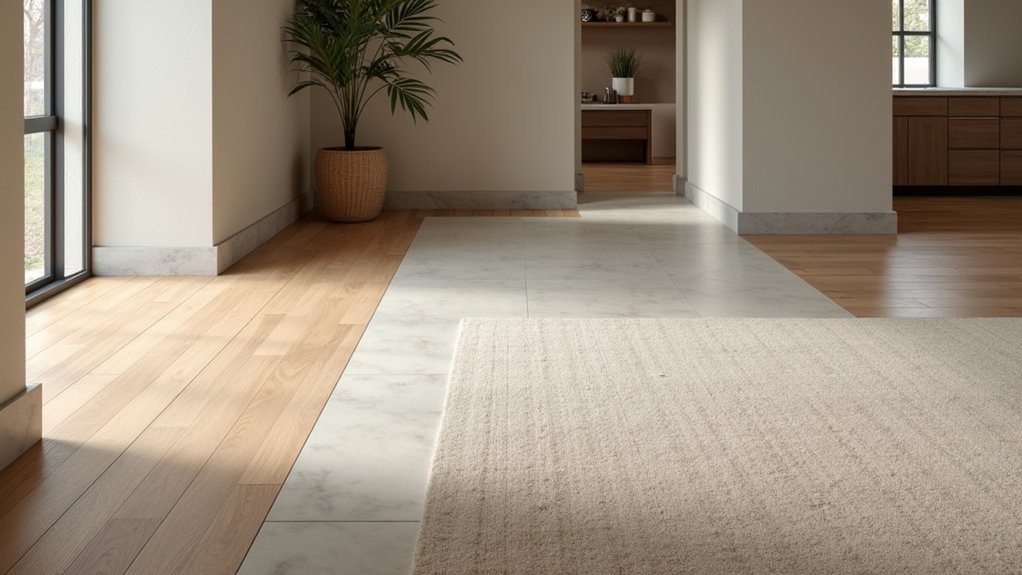
You’ll get the best return on flooring when you match each room’s demands to the right material instead of chasing one “whole-house” look. Start by pricing durability for high-traffic paths, water resistance for wet zones, and comfort where you’ll stand or sleep the most. Factor in maintenance time and replacement cycles, not just the upfront quote. The trade-offs shift fast once you compare kitchens, baths, and basements against living spaces—so what should you prioritize first?
Match Flooring to Traffic, Moisture, and Comfort
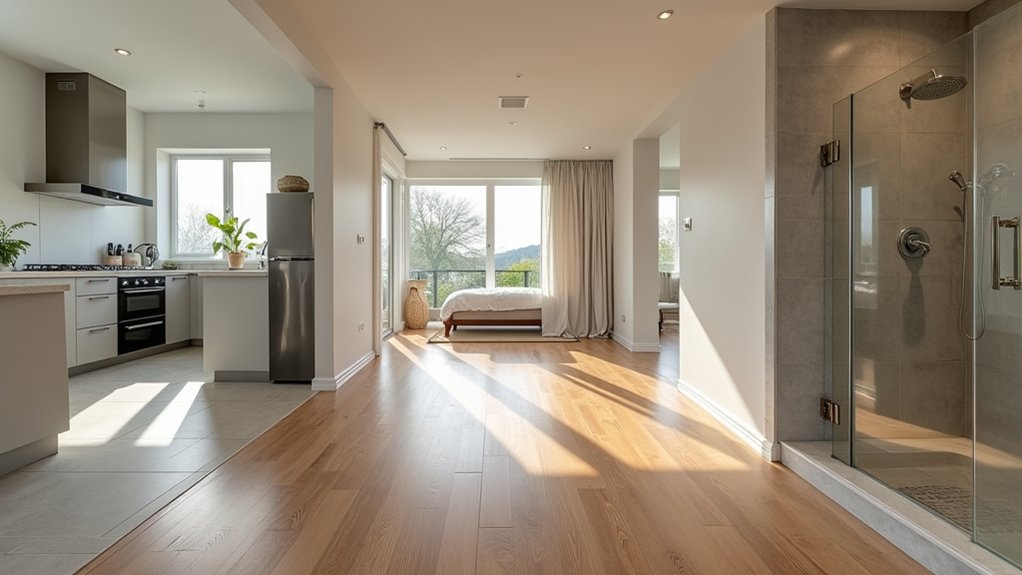
Because every room “spends” flooring differently, you’ll get the best ROI by matching material to traffic, moisture, and underfoot comfort before you shop brands or colors. Map your home like a wear chart: entries, halls, and play spaces demand Durability considerations such as thicker wear layers, harder species, or tougher finishes so you replace less often.
In quieter bedrooms, you can prioritize comfort and acoustics with carpet tiles or cork, saving money while improving livability.
If a space gets occasional dampness from boots, pets, or houseplants, choose water-resistant cores and sealed edges to avoid costly swelling.
Keep maintenance costs in mind: matte textures hide scratches, while lighter tones mask dust. Then narrow Aesthetic options that still meet performance targets.
Best Flooring for Kitchens, Baths, and Laundry Rooms
When spills, steam, and splashes are part of daily life, you’ll get the best ROI by choosing floors for kitchens, baths, and laundry rooms that resist water, clean fast, and won’t swell at the seams. Porcelain tile and sheet vinyl deliver top value: both shrug off puddles, handle detergents, and stay stable over time.
Luxury vinyl plank is a strong middle option if you want faster flooring installation and fewer grout lines, but pick a fully waterproof core and sealed edges. Skip solid hardwood and low-grade laminate; they fail at seams and drive up replacement costs.
Control total spend by using a simple pattern, minimizing connections, and buying 10% extra for cuts. For flooring maintenance, sweep grit daily and wipe spills immediately to protect wear layers.
Best Flooring for Living Rooms, Bedrooms, and Halls
Although living rooms, bedrooms, and halls don’t face constant water, they take the most foot traffic and show wear fast, so your best ROI comes from choosing flooring that looks good in broad daylight, feels comfortable underfoot, and holds up to scuffs.
For value, consider midrange luxury vinyl plank or quality laminate: you’ll get durable wear layers, easy cleanup, and broad aesthetic options that mimic oak or stone without the price.
If you want warmth and quiet, carpet in bedrooms boosts comfort and can be replaced cheaply when it mats.
Prefer hardwood? Choose factory-finished, harder species and refinish later to extend life.
Save on labor by picking click-lock installation techniques for straight runs, and pay extra only where passage or stairs demand precision.
Use felt pads to prevent gouges.
Best Flooring for Entryways, Mudrooms, and Basements
Three spaces punish flooring faster than any other: entryways, mudrooms, and basements. You’ll get the best ROI by choosing moisture-proof, scratch-resistant surfaces that won’t demand constant repairs.
In entryways, porcelain or ceramic tile delivers long wear, easy cleaning, and strong resale appeal. Use Decorative patterns to hide grit and add style without pricey rugs.
For mudrooms, luxury vinyl plank (LVP) is a budget win: it’s waterproof, quiet underfoot, and DIY-friendly, cutting labor costs.
In basements, avoid solid hardwood; instead, pick LVP, sealed concrete, or engineered tile over a vapor barrier to prevent cupping.
Want eco friendly options? Choose cork with a waterproof finish or recycled-content rubber; both handle traffic and pay back in durability.
Frequently Asked Questions
How Long Does Professional Flooring Installation Usually Take per Room?
You’ll usually need 4–8 hours per room for pro installation, or 1–2 days with subfloor prep. To protect ROI, prioritize flooring durability, confirm the installation timeline, and avoid rush fees or rework.
What Flooring Options Are Best for Households With Pets?
Pick luxury vinyl plank, porcelain tile, or sealed concrete: tough as nails and easy to clean. These Pet friendly materials deliver Scratch resistant options, cut repairs, and boost resale ROI. Add durable underlayment, trim nails, use rugs.
How Do I Choose Flooring That Reduces Noise Between Rooms?
Choose acoustic flooring materials that add mass and cushioning: cork, rubber, or carpet tiles with dense underlayment. Use soundproofing options like acoustic mats and sealed subfloors. You’ll cut noise, boost comfort, and protect resale.
Can I Install New Flooring Over Existing Tile or Hardwood?
Yes, you can, if the surface is flat and stable. Test the theory that overlaying saves money: sometimes Tile removal boosts ROI. Over hardwood, skip Hardwood refinishing, add underlayment, and prevent door/height issues.
What Are the Typical Costs per Square Foot for Each Flooring Type?
You’ll typically pay: vinyl $2–$7/sq ft, laminate $2–$6, carpet $3–$8, engineered wood $6–$15, hardwood $8–$20, tile $10–$30. Use this cost comparison for budget planning and ROI decisions.