


You don’t need a full room reset to mix vintage with contemporary—start with one solid vintage statement piece, like a sideboard or lounge chair, and build around it with modern “bridge” items such as simple lighting and streamlined textiles. Pay attention to scale so nothing looks out of place, then keep your palette tight and finishes balanced to avoid visual clutter. The tricky part is making it feel intentional without spending much… and that comes down to a few key choices.
Start With One Vintage Statement Piece

If you’re trying to blend vintage into a contemporary room without blowing your budget, start with one standout piece and build around it. Choose something with strong lines—a sideboard, lounge chair, or dining table—so it earns its keep as both function and focal point.
Shop estate sales and local auctions, then set a hard ceiling price and walk away if bidding spikes. Inspect joints, drawers, and veneer before you buy; repairs can erase savings fast.
Prioritize Antique preservation: keep original hardware, clean gently, and stabilize rather than over-refinish. If it needs work, plan targeted Furniture restoration like tightening frames or reupholstering in a durable neutral.
Place it where you’ll use it daily, and let it define the room’s layout.
Use Modern “Bridge” Elements to Tie It In
Once you’ve anchored the room with that vintage statement piece, use a few modern “bridge” elements to make it look intentional rather than accidental. Start with low-cost swaps that read contemporary: crisp pillow covers, a simple solid-color rug, or matte-black hardware on nearby cabinetry.
Next, lean on mixing textures to smooth the transition—pair aged wood with sleek metal, nubby linen, or a glass-top side table you can find secondhand. Add one or two lighting accents that feel current, like a slim floor lamp or an LED picture light aimed at the vintage piece.
Keep finishes consistent (one metal tone, one wood tone) so the room feels edited. If you’re on a tight budget, prioritize lighting first—it upgrades everything it touches.
Match Scale and Proportion, Not the Era
Even when your vintage piece screams a different decade, it’ll look right at home when its scale matches the room and the furniture around it. Measure first: height, depth, and overall mass. If your sofa sits low, choose a vintage coffee table with a similar profile, not a towering trunk that overwhelms traffic flow.
Keep proportions consistent—pair slender legs with other light pieces, or anchor a chunky sideboard with equally substantial seating.
Use historical context as a guide, not a rulebook: a petite mid-century chair can still work if it doesn’t look lost beside today’s wider sectionals.
For design consistency on a budget, “right-size” with simple fixes—swap to shorter feet, add discreet risers, or move the piece to a smaller wall.
Balance Color, Wood Tones, and Finishes
While your vintage find might bring the charm, it won’t blend in unless you control the room’s color, wood tones, and sheen. Start with Color harmony: pull one or two hues from the piece (warm walnut, brass, olive paint) and repeat them in cheap swaps like cushions, a throw, or art mats. Keep your main wall color neutral so the old and new don’t compete.
Next, edit wood tones. You don’t need a full match, but stay within a temperature: mostly warm woods or mostly cool. If you’ve got mixed tones, bridge them with a mid-tone tray, frame, or side table.
Finally, aim for finish consistency—limit high-gloss to one area, then echo with affordable spray varnish or wax.
Style Vintage Furniture So It Feels Curated
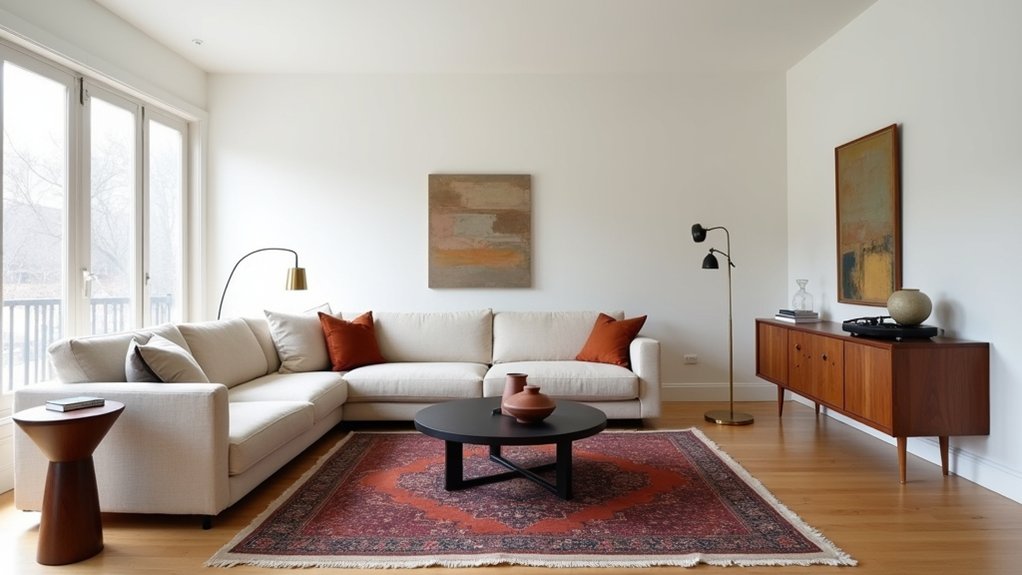
If your vintage piece looks like it landed in the room by accident, a few low-cost styling moves will make it feel intentional. Start by giving it a “buddy”: pair a modern lamp or sleek side table beside it so it reads as a planned contrast. Keep your styling tight—three to five items max—so the silhouette stays the hero.
Build a small vignette using Antique accessories that echo your room’s metals or wood tones, like a brass tray, a ceramic bowl, or a single candlestick. Then add Retro artwork above or near the piece to create a visual anchor; thrifted frames and printable downloads keep costs down.
Finish with one texture layer (throw, linen runner) that repeats your main accent color. Rotate pieces seasonally instead of buying more.
Frequently Asked Questions
How Do I Verify a Vintage Piece’s Authenticity Before Buying?
Check maker’s marks, joinery, hardware, and wear patterns, then request paperwork for Provenance confirmation. Compare comps through Antique valuation resources, get a quick appraiser consult, and negotiate pricing if details don’t match.
What’s the Best Way to Clean and Preserve Vintage Wood Finishes?
Use gentle Cleaning techniques: dust with microfiber, wipe with barely damp cloth and mild soap, then dry fast. For Preservation tips, skip silicone sprays, apply affordable paste wax sparingly, keep out of sun, control humidity.
How Can I Reupholster Vintage Seating Without Losing Its Character?
You can reupholster vintage seating and keep character by saving original details, matching silhouettes, and reusing trim. Choose durable Fabric choices like wool blends. Use hand-tied springs, webbing repairs, and traditional Upholstery techniques to cut costs.
Where Should I Shop for Affordable Vintage Furniture Locally and Online?
Shop locally at an Antique market, estate sales, and charity shops for Thrift store finds; negotiate and inspect. Online, use Facebook Marketplace, Craigslist, and eBay; set alerts, bundle pickups, and compare shipping versus drive.
What Safety Checks Should I Do for Lead Paint or Structural Issues?
Like my $20 dresser that nearly collapsed, you’ll save by checking first: use a $10 swab for lead paint hazards, then do structural integrity checks—wiggle joints, inspect cracks, test drawers, tighten screws.