

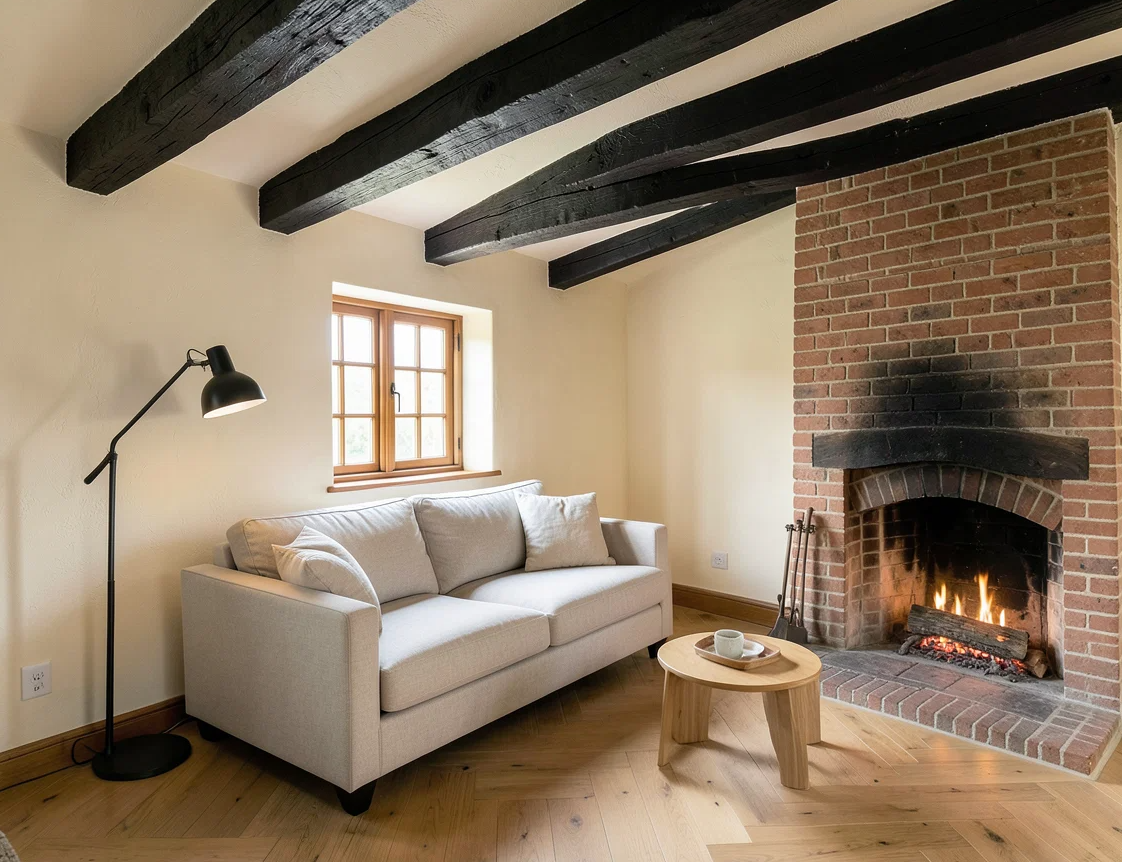
When you restore Tudor beams, you’re bringing strong history into a space that still needs to feel current. You can’t fight their weight or their darkness, so you balance them with brighter neutrals, crisp lines, and lighting that skims the grain instead of flattening it. Your walls, floors, and furniture choices matter more than you think, and a few common missteps can make the room feel heavy fast—but there’s a clean way through it.
Prep Restored Tudor Beams for a Modern Look
Before you blend restored Tudor beams into a modern interior, how do you prep them so they feel crisp, clean, and intentional? Start by assessing condition: probe for rot, insect damage, and loose joints, and bring in a timber specialist if anything’s suspect.
Strip grime gently with a vacuum, soft brush, and low-moisture cleaner; avoid soaking old oak. Remove failing varnish or soot with controlled sanding or dry-ice blasting, keeping tool marks and chamfers sharp.
Fill cracks sparingly with color-matched epoxy or lime-based filler, then plane back flush so repairs don’t telegraph. Treat active pests, then stabilize humidity to prevent fresh checking.
Finish with a clear, matte sealant that locks down dust without adding shine. Mask edges for clean, modern lines.
Pick a Modern Palette That Brightens Dark Beams
Although dark Tudor beams bring instant character, you can stop them from weighing down a modern room by choosing a palette that reflects light and keeps contrast intentional.
Start with warm whites, pale greiges, or soft stone on walls and ceilings to widen the room visually. Keep trim crisp and slightly brighter than the wall so edges read clean against the timber.
Add matte black or bronzed accents sparingly to echo the beams without turning the whole scheme heavy. Balance the darkness with mid-tone woods, oat linens, and textured neutrals that feel current, not rustic.
If you want color, choose muted sages, dusty blues, or clay pinks; they complement aged oak while keeping the mood airy. Limit bold hues to art and ceramics.
Lighting Ideas That Flatter Exposed Tudor Beams
When you light exposed Tudor beams with intention, you highlight their texture and rhythm instead of casting the ceiling into shadow. Start with warm-dim LED lamps (around 2700K) so the wood reads rich, not orange.
Add slim, adjustable track heads aimed across the beam faces; grazing light reveals tool marks and age without glare.
Recess small downlights between bays to keep the room evenly lit while letting the timbers stay prominent.
Use wall-washers near the perimeter to lift the ceiling plane and reduce contrast.
Hang a contemporary pendant or linear chandelier below the beams, not tight to them, so it feels deliberate and avoids harsh shadows.
Finish with discreet picture lights for art to keep focus away from clutter.
Walls and Floors That Balance Rustic Timber
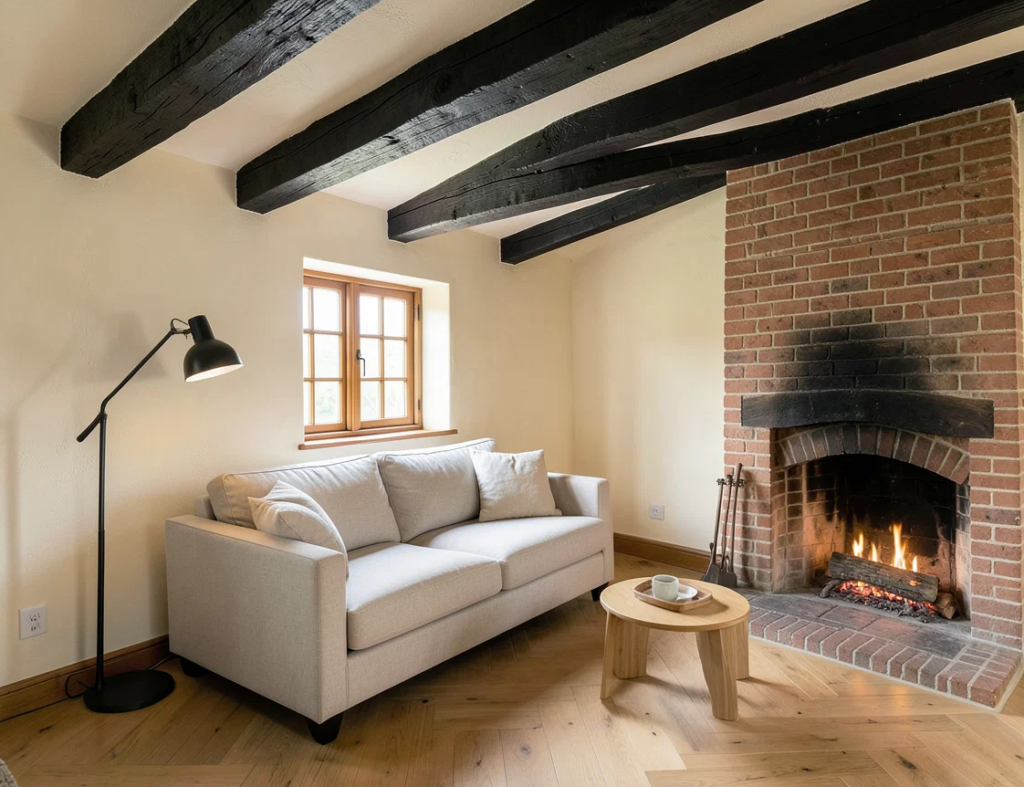
Good lighting makes Tudor beams pop, but the surfaces that surround them decide whether the room feels cozy or heavy. Keep walls calm so the timber reads as intentional, not overpowering. Choose warm whites, soft greiges, or clay-toned limewash to echo age without looking dated.
If you want color, go deep and matte on a single wall, then balance it with lighter adjacent planes. Skip busy prints and high-gloss finishes that fight the grain.
On floors, you can either harmonize or contrast. Wide-plank oak or reclaimed boards create a seamless, heritage feel, while pale timber, polished concrete, or large-format stone lightens the room and sharpens the beam silhouette.
Use simple, low-pile rugs to soften echoes and unify tones.
Furniture Styles That Complement Tudor Beams
To keep Tudor beams from dominating the room, choose furniture with clean lines, low profiles, and a quiet material palette that lets the timber stay in focus.
Mid-century pieces work well because tapered legs and slim arms feel airy beneath heavy rafters.
Contemporary sofas in wool, linen, or textured cotton soften the room without competing with the grain.
Pair them with light oak, ash, or matte-black tables to echo the structure in a restrained way.
If you want contrast, add glass or stone tops that reflect light and visually “lift” the ceiling.
Built-in bench seating or modular storage keeps sightlines open and highlights the beam rhythm.
Finish with a few sculptural chairs to add modern character without clutter.
Common Tudor Beam Mistakes to Avoid
Although Tudor beams bring instant character, a few common missteps can make the room feel dark, cramped, or overly “themed.” Avoid painting or over-staining the timber into a flat, heavy block, and don’t pair it with equally bulky furniture that competes for attention.
Don’t ignore scale: if your ceiling is low, you’ll want lighter walls, clear sightlines, and minimal visual clutter so the beams read as texture, not weight.
Don’t mix too many rustic finishes; limit reclaimed wood, distressed metals, and farmhouse accessories, or you’ll lose the contemporary edge.
Skip harsh spotlights that exaggerate cracks and knots; use layered, warm lighting to soften shadows.
Finally, don’t “fake Tudor” with decorative straps or props—let authentic craftsmanship stay the focal point.
Conclusion
You can blend restored Tudor beams with contemporary design by letting the timber lead and keeping everything else calm. Stick to light, reflective neutrals—soft whites, greiges, and muted clay—to lift the room and offset dark oak. Use warm, adjustable lighting that grazes the beams to show their texture without glare. Choose clean-lined, low-profile furniture and restrained textiles, then add small matte black or bronzed accents. Avoid busy walls, heavy floors, and competing focal points.