

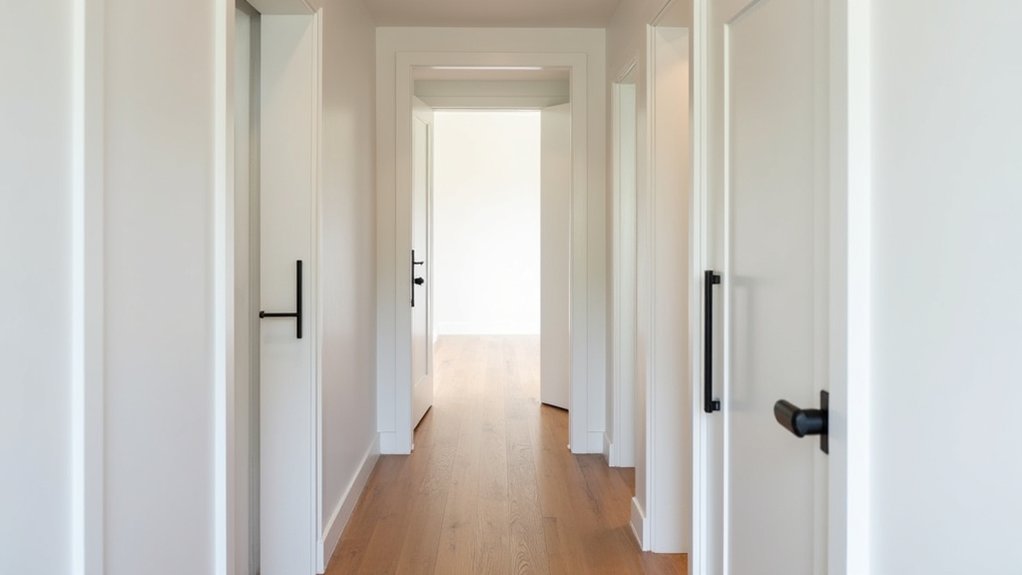
If your interior doors look dated, you’re leaving value on the table. You can get a contemporary upgrade without a full remodel by standardizing clean door styles, switching to solid-core where it counts, and tightening up finishes with modern paint, hardware, and flat trim. Done right, it improves daily use and signals “updated” to buyers fast. The key is choosing what to change everywhere—and what to reserve for select rooms…
Pick Interior Door Styles That Feel Contemporary
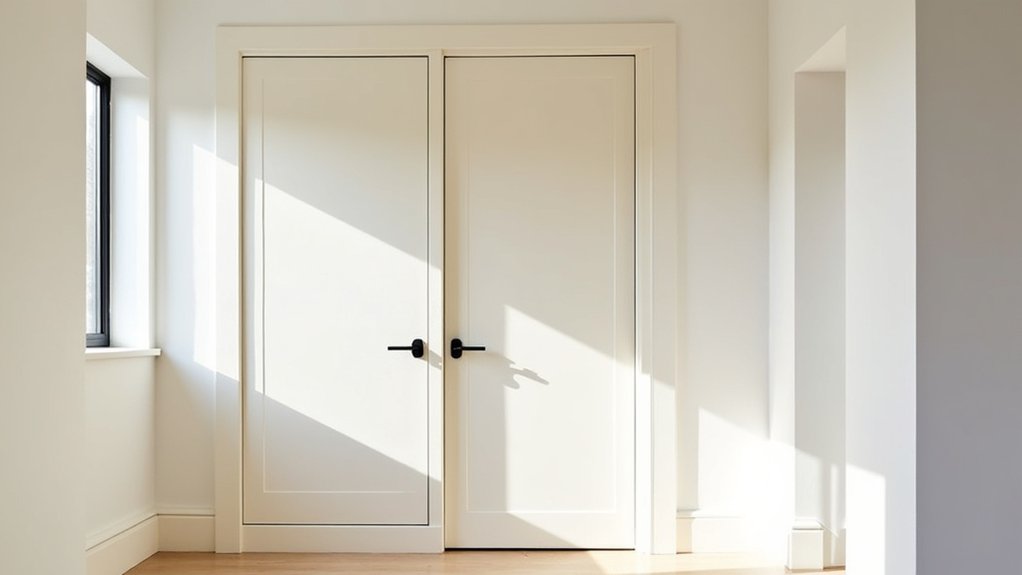
If your goal is to modernize your home without a full renovation, start by choosing interior door styles that read clean, current, and intentional. Favor simple shaker profiles, slim rails, or flat panels that photograph well and align with today’s buyer expectations.
Keep sightlines consistent by repeating one style across main-level rooms, then use a subtle variation for offices or bedrooms to signal purpose without visual noise.
Use Artistic door designs sparingly: a reeded-glass insert, arched top, or bold panel layout can create a focal point that upgrades perceived value.
Let historical door influences guide proportion—think Craftsman balance or midcentury minimalism—while staying streamlined.
Skip fussy carvings and busy grids; they date quickly and can weaken resale appeal. Choose timeless geometry to protect ROI.
Upgrade Interior Door Materials and Construction
While style gets the attention, door materials and construction determine how premium your home feels day to day—and what buyers notice at showings. Swap hollow-core slabs for solid-core MDF or engineered wood to boost heft, durability, and perceived quality without the cost of solid hardwood.
If you’re renovating for resale, prioritize consistent cores across bedrooms and baths; it signals a thoughtful, upgraded package. Add quality hinges and a reinforced latch block so doors close cleanly and resist sagging, which reduces future service calls.
In busy households, invest in soundproofing options like solid cores, perimeter seals, or automatic door bottoms to cut noise and increase privacy—two features buyers pay for.
For a tailored upgrade, consider subtle custom door engravings that read bespoke, not trendy.
Choose Interior Door Finishes for a Modern Look
Solid-core upgrades give your doors weight and performance, but the finish is what sells the “new-build” look at a glance. Pick a sheen and color that aligns with your walls and floors so buyers read the home as updated, not piecemeal.
For most interiors, a sprayed satin or matte enamel looks cleaner than brush marks and hides minor dents better than high-gloss.
Use Color schemes to control visual flow: match doors to trim for a seamless, upscale envelope, or go two to three shades darker for contrast without shrinking rooms.
If you’re refinishing stained doors, choose light, neutral tones that photograph well and reduce dated orange undertones.
Test samples under day and night Lighting accents so the finish stays consistent and premium.
Modernize Interior Doors With Hardware and Trim
Because buyers notice the touchpoints first, swapping dated knobs, hinges, and casing can make standard interior doors read as “fully updated” without the cost of replacement. Start with consistent finishes: matte black, brushed nickel, or satin brass across every door, including hinge color, so your updates look intentional in listing photos and walkthroughs.
If you’ve got Vintage hardware worth keeping, clean it, tighten plates, and pair it with a simpler lever for a curated mix, not a mismatch.
Next, replace narrow, beat-up casing with flat stock trim for a crisp shadow line; it’s inexpensive and fast for a carpenter. Skip fussy Ornamental moldings unless you’re matching historic interiors, because they can date a flip.
Caulk, fill nail holes, and repaint for a high-return finish.
Frequently Asked Questions
Will Upgrading Interior Doors Increase My Home’s Resale Value?
Yes, upgrading interior doors can boost resale value—like curb appeal’s indoor cousin. You’ll signal quality with Decorative hardware and modern Door finishes, helping buyers pay more or choose you over comps, especially in midrange, move-in-ready markets.
Do I Need a Permit to Replace Interior Doors?
You usually don’t need a permit to replace interior doors, but you’ll check local rules if you change framing, fire-rated units, or egress. Choose durable door materials and aesthetic considerations to maximize ROI and appeal.
How Long Does a Typical Interior Door Upgrade Take?
You’ll typically finish an interior door upgrade in 2–4 hours per door, depending on door materials and installation techniques. You’ll boost resale appeal faster by batching rooms, pre-hanging doors, and minimizing trim, paint, or hardware changes.
Can I Upgrade Doors Without Replacing Existing Frames?
Yes, you can upgrade doors without replacing frames if you confirm door frame compatibility and hinge locations. Choose cost-effective door material options like solid-core or MDF. You’ll cut labor, reduce mess, and boost resale appeal.
What Is the Average Cost to Upgrade All Interior Doors?
You’re looking at $2,000–$8,000 on average to upgrade all interior doors; it’s not pennies on the dollar. You’ll boost ROI by choosing durable Door hardware and a quality Paint finish, reducing callbacks.