

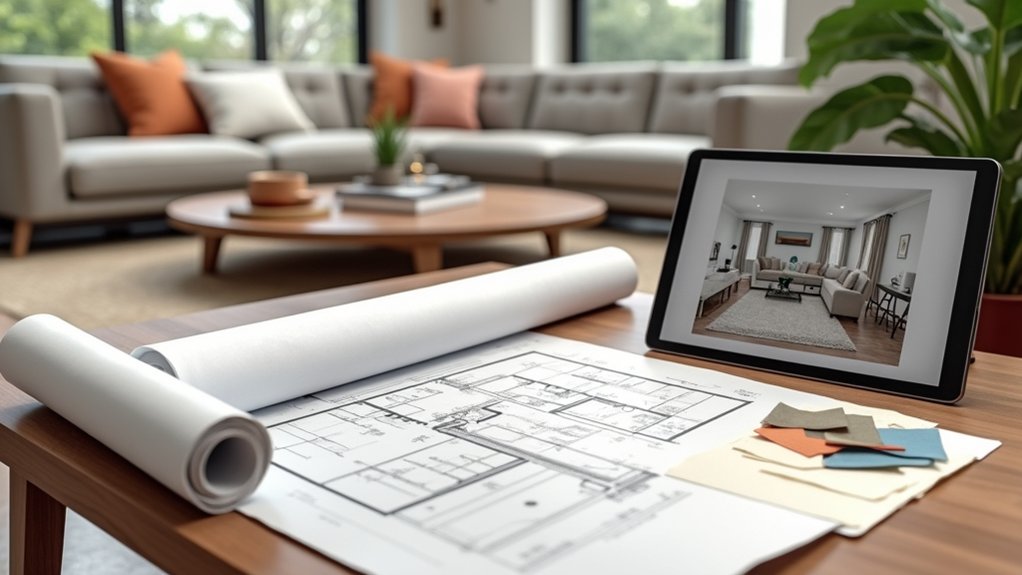
You don’t need a full renovation to make your home feel intentional—you need a clear plan. Start by choosing three mood words and a simple “why” (calm mornings, better hosting, easier upkeep), then audit each room for what supports or fights that goal. Lock in a tight color palette, repeat a few finishes, and use lighting and textiles to add depth without big spend. The key is knowing what to change first—and what to leave alone…
Define Your Home Style Mood and “Why
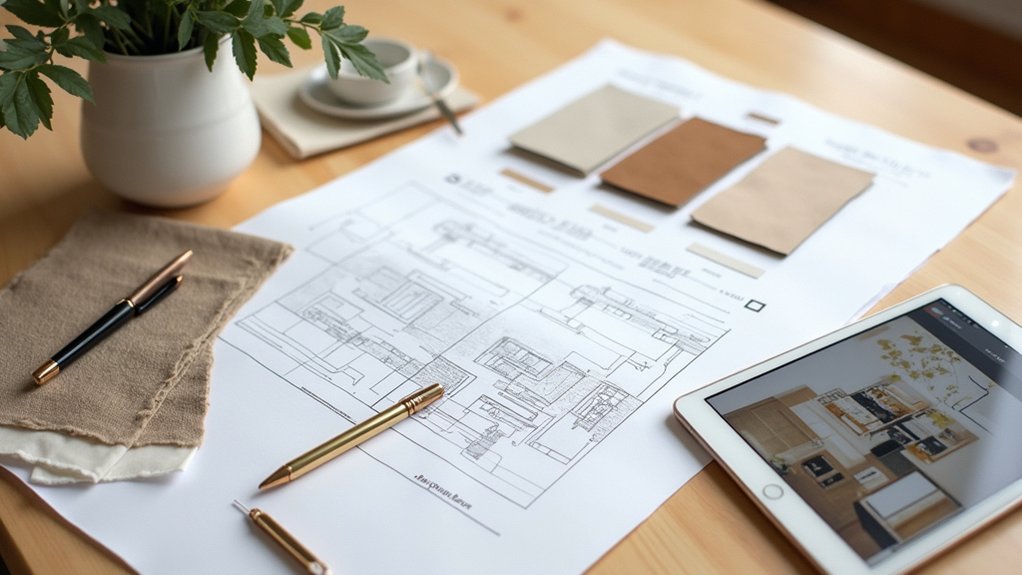
Before you buy a single pillow or paint sample, ask yourself: what mood do you want your home to create—and why? That “why” protects your budget because it stops impulse buys and returns.
Pick 3–5 mood words (calm, energized, grounded, polished) and tie each to real life: better sleep, easier mornings, smoother hosting, focused work.
Then audit your rooms and label what supports the mood and what fights it. Keep the winners; relocate, sell, or donate the rest to fund upgrades.
Create a one-page style brief with your mood words, preferred materials, and “no” list. This keeps personal expression intentional, not random, and it drives stylistic consistency across purchases, so every dollar moves you closer to a finished look.
Build a Cohesive Home Color Palette
Once you’ve nailed your mood and “why,” build a tight color palette so every purchase plays well together and you don’t waste money on mismatched pieces. Pick one neutral base for most walls and large items, then choose one main color and one accent that show up in small, repeatable ways.
Use the 60/30/10 rule to control spending: keep the 60% neutral, invest selectively in the 30% main color, and refresh the 10% accent cheaply with paint or textiles.
Test swatches in your real light before you commit. If you want drama without redoing everything, add an Accent wall.
For modern structure, try Color blocking on built-ins or trim to define zones and make budget furniture look intentional.
Repeat Materials and Finishes for Cohesion
Although colors set the mood, repeated materials and finishes make your home look “designed” without buying all-new furniture. Pick 2–3 core finishes—like matte black, brushed nickel, or warm oak—and echo them in each room through small, swappable pieces: hardware, frames, stools, shelves, and planters.
This material repetition creates instant continuity and makes mismatched items feel intentional, which protects resale appeal and reduces replacement spending.
Balance sameness with texture contrast so spaces don’t feel flat. Pair smooth metals with woven baskets, polished stone with nubby ceramics, or sleek glass with aged wood.
Audit what you already own, then “fill the gaps” only where the finish breaks the pattern. Aim for repeatable, durable surfaces you can touch up, not trendy ones you’ll redo.
Pull It Together With Lighting and Textiles
Repeating finishes gives your rooms a consistent backbone, but lighting and textiles are what make that backbone feel finished and lived-in. Use layered lighting to control mood and function: overhead for general use, task lamps for work zones, and a plug-in sconce or two for glow. Keep bulb color consistent (2700–3000K) so rooms read as one plan.
Then unify with textile textures that repeat across spaces—linen, boucle, jute, wool—without matching sets. Pick one “anchor” neutral and one accent color, then echo them in pillows, throws, curtains, and a rug.
Swap covers seasonally instead of replacing furniture; it’s the highest-impact refresh per dollar. Finish with a dimmer and blackout lining where you sleep.
Frequently Asked Questions
How Do I Create Cohesion in an Open-Concept Layout With Multiple Zones?
Treat your open-concept like a reality show: every zone wants spotlight, but you’re the producer. Use color coordination to repeat tones, and furniture arrangement to define paths; you’ll buy fewer pieces, maximize flow, and avoid costly clutter.
What’s the Best Way to Mix Different Design Styles Without Clashing?
Start with a dominant style, then layer one accent style in controlled doses. Lock in color harmony through a shared palette, and keep texture balance with repeat materials. You’ll avoid costly misbuys and boost resale appeal.
How Can I Make New Furniture Work With Existing Sentimental Pieces?
Don’t fix what isn’t broken: anchor new furniture around sentimental pieces with Color coordination and repeated materials. Use neutral staples, then add Vintage accents that echo shapes. You’ll avoid costly mistakes and maximize value.
Which Common Decorating Mistakes Make a Home Feel Disjointed?
You make a home feel disjointed when you ignore color harmony, buy mismatched scales, skip furniture balance, overmix patterns, and scatter styles room-to-room. You’ll waste money rebuying fixes, so plan a palette, measure, and edit clutter.
When Should I Hire an Interior Designer Versus DIYING the Plan?
Hire an interior designer when you’re “saving money” by buying three wrong sofas—satire aside, pros boost ROI on complex renovations, tight timelines, or resale. DIY vs professional works when Budget considerations dominate and choices stay low-risk.