

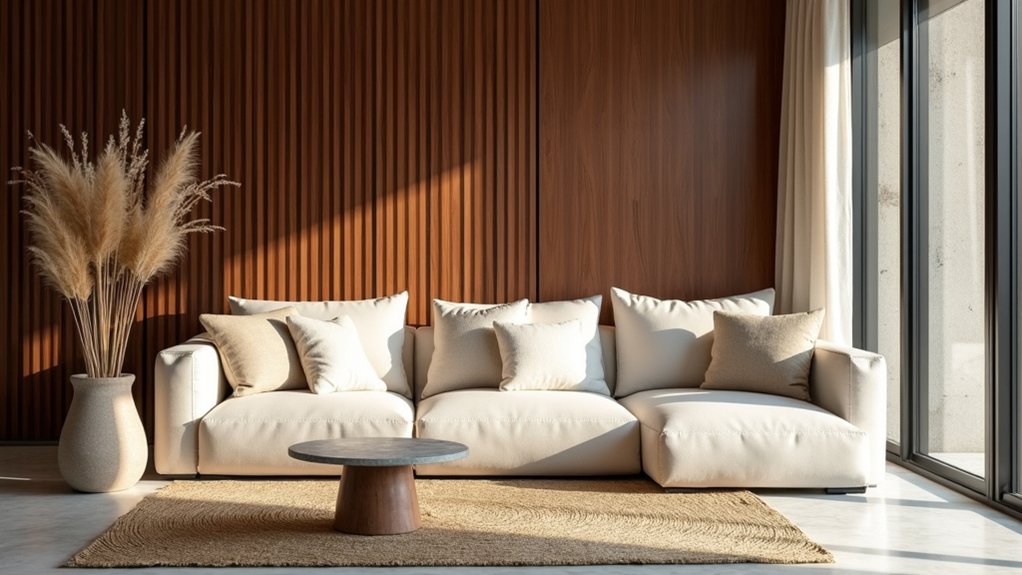
If you want a modern space that doesn’t feel cold, you can boost both comfort and resale appeal by weaving in natural textures with intent. Start with one “anchor” material—oak, linen, stone—and repeat it in a few high-visibility spots so the look stays clean and cohesive. You’ll get more depth without adding clutter, but only if you balance scale, color, and placement the right way…
Pick Natural Textures That Suit Your Modern Style
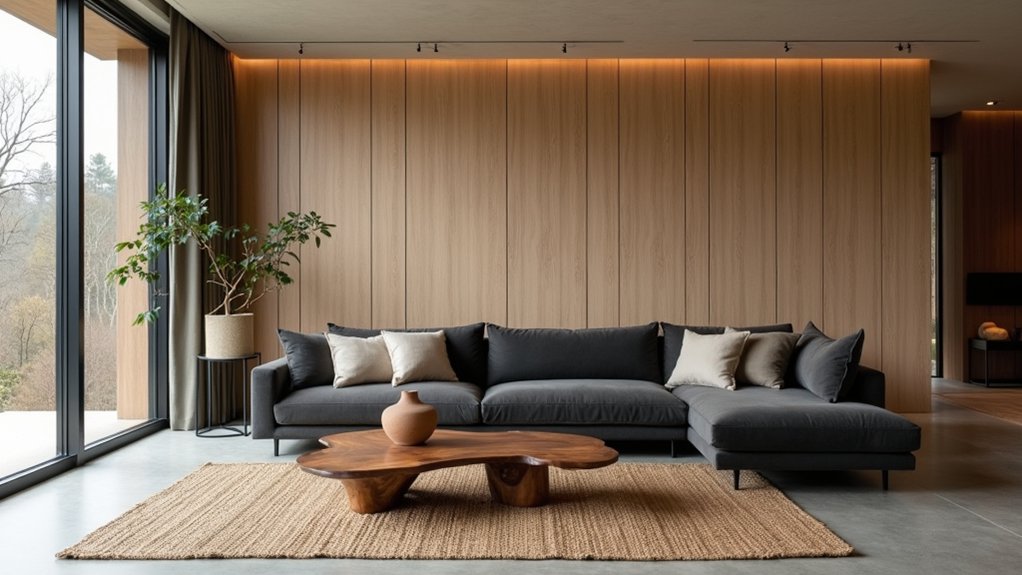
While modern spaces thrive on clean lines, you can boost warmth and perceived value fast by choosing natural textures that match your home’s tone and upkeep needs. Start with one hero material: oak, walnut, linen, jute, or honed stone, then repeat it twice for cohesion buyers notice.
Pick finishes that perform—sealed wood, washable linen blends, and stain-resistant rugs—so you won’t spend your gains on maintenance. If you already rely on synthetic fabrics for durability, layer in a natural texture through a wool throw, cane chair back, or wood side table to soften the look without raising replacement risk.
Keep minimal accessories and let texture do the work, reducing clutter and styling time for showings.
Balance Modern Clean Lines With Organic Warmth
After you’ve chosen a few natural textures that fit your lifestyle, the next win comes from pairing them with modern clean lines so the space reads premium, not busy. Anchor the room with streamlined silhouettes—flat-panel cabinetry, slim metal frames, low-profile sofas—then add one or two organic elements that soften the edges, like a live-edge console or wool rug.
You’ll get instant texture contrast without sacrificing a crisp, contemporary feel.
Keep finishes disciplined: matte black or brushed nickel hardware makes wood grain and stone veining look intentional, which boosts perceived value for buyers and guests. Prioritize sustainable sourcing for statement pieces; it protects your budget long-term, reduces replacement cycles, and gives you a story that sells.
Use warm neutrals to bridge materials and keep sightlines clean.
Layer Natural Textures Without Making It Feel Cluttered
Because buyers and guests read layered texture as “intentional” only when it’s edited, you’ll get the best ROI by limiting yourself to three texture families per room—one hard (wood or stone), one soft (wool, linen, boucle), and one accent (rattan, leather, jute)—and repeating each at least twice.
Keep the color palette tight so textural contrast comes from surfaces, not competing hues. Anchor with your hard texture in larger planes, then add soft texture at mid-scale, and finish with a small, high-impact accent.
Maintain visual harmony by varying scale: one chunky knit, one smooth linen, one nubby jute. If it starts to feel busy, remove the smallest item first.
Finally, leave negative space so textures read as premium, not piled up.
Use Natural Textures Room by Room for Impact
If you want natural textures to read as high-end (and photograph well for listings), tailor them to each room’s function instead of repeating the same materials everywhere.
In the entry, add a slim wood console and a jute runner for instant warmth and durability.
In the living room, prioritize touch points: linen upholstery, a wool rug, and a stone side table that signals quality on camera.
In the kitchen, use sealed wood stools and matte ceramic tile—easy to clean, visually rich, and buyer-proof.
In bedrooms, go softer with cotton, boucle, and woven shades to sell comfort.
In baths, lean on teak slats, pebble accents, and plaster-look finishes that resist trends.
Choose Eco friendly materials and highlight Sustainable sourcing to justify upgrades and boost perceived value.
Frequently Asked Questions
How Do I Protect Natural Materials From Moisture and Everyday Spills?
Sure, let spills “respect” your surfaces—then seal them. Use Natural sealants on wood, stone, and cork, and choose Spill resistant fabrics. Wipe fast, recoat yearly, and add trays; you’ll protect value and replacements.
What’s the Best Way to Mix Natural Textures With Smart-Home Technology?
Choose concealed devices and unified controls for Smart integration, then use Texture contrast to highlight natural surfaces. You’ll boost perceived value, reduce clutter, and speed installs by planning wiring early, matching finishes, and standardizing platforms.
Are There Budget-Friendly Alternatives to Stone, Wood, and Linen?
Yes—you’ve got Affordable alternatives: you can use faux natural materials like luxury vinyl plank, porcelain tile, laminate, and microfiber “linen” blends. You’ll cut install and upkeep costs, still deliver premium looks, and boost resale appeal.
How Can I Incorporate Natural Textures in a Rental Without Permanent Changes?
Layer Natural fiber rugs, add peel-and-stick grasscloth accents, and style Indoor plant arrangements for instant texture without damage. Use removable hooks for woven wall art and linen curtains. You’ll boost perceived value, photos, and resale appeal.
Which Natural Materials Are Most Sustainable and Ethically Sourced?
Choose FSC-certified wood, recycled metal, organic linen/hemp, cork, bamboo, and reclaimed stone. Like a shrewd merchant, you’ll seek Eco friendly sourcing and Ethical material certification, reducing risk, boosting resale appeal, and durability.