

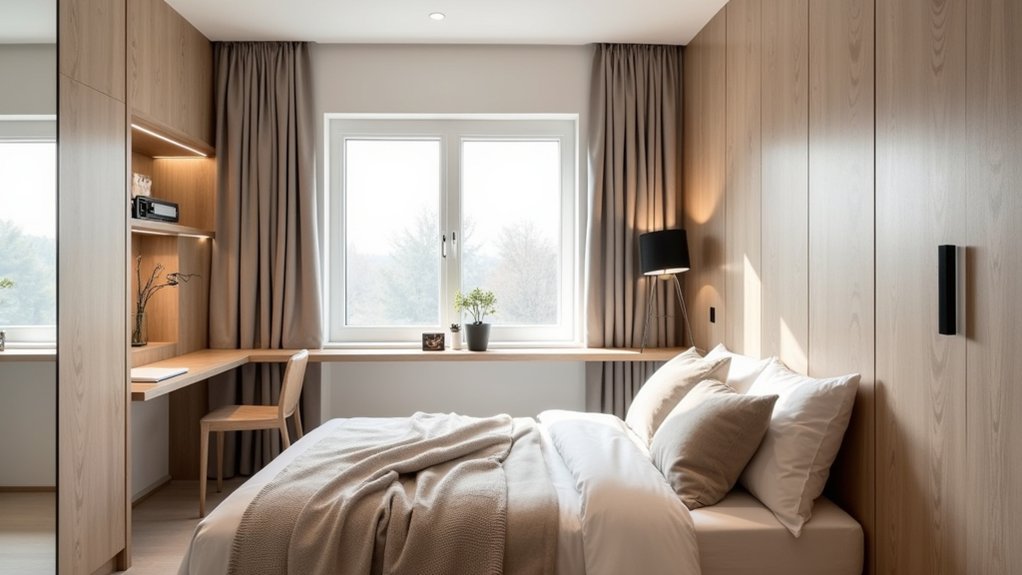
Nearly 30% of homeowners say lack of storage is their biggest bedroom frustration, and small rooms feel it most. You can get more comfort without a full gut job if you measure first, protect a 24–30 inch walkway, and spend where it pays back—like a storage bed, wall-mounted lighting, and built-ins that replace bulky dressers. The catch is choosing the right layout before you buy anything, because one wrong move can shrink the room overnight…
Measure Your Small Bedroom and Set Goals
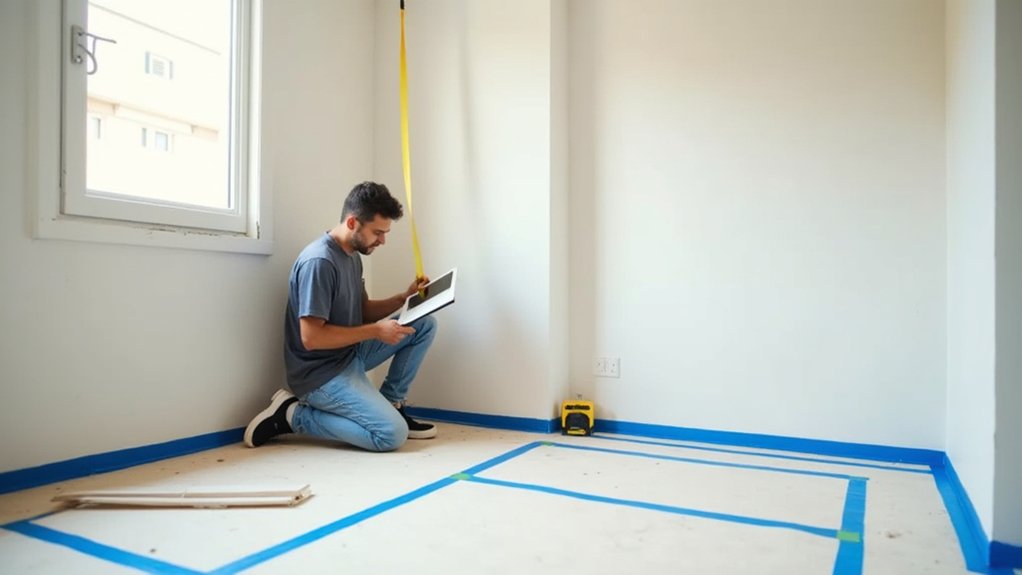
Before you buy anything, measure your small bedroom and decide what “better” means—more storage, a larger-looking space, or a more functional layout. Measure wall-to-wall lengths, ceiling height, window and door widths, and the clearance around your bed and closet.
Sketch a quick floor plan and note outlet locations so you don’t waste money on furniture that blocks access. Set two or three goals you can verify, like “add 12 cubic feet of storage” or “keep 30 inches of walking space.”
Price your biggest pain points first; small changes can deliver high ROI. A smarter wall color can brighten the room, and budget window treatments can boost light control and privacy without major construction costs.
Plan a Small Bedroom Layout That Breathes
Although your room’s square footage won’t change, the right layout can make it feel bigger and work harder without spending much. Start with a quick sketch and mark doors, windows, vents, and outlets so you don’t fight the room’s fixed constraints.
Push the bed to the longest uninterrupted wall, then keep a clear 24–30 inch walkway on the main path to reduce daily friction.
Use Furniture arrangement to create zones: sleep, dress, and a single “drop spot” for keys and laundry, so clutter doesn’t spread.
Balance visual weight by centering the bed and aligning edges to simplify sightlines.
Apply Color psychology: keep the largest surfaces light and consistent to extend depth, then add one darker accent behind the bed to anchor the space.
You’ll gain comfort without costly changes.
Choose Space-Saving Furniture for a Small Bedroom
When every inch has to earn its keep, space-saving furniture gives you the biggest ROI because it adds storage and function without increasing your footprint. Start with a bed that works harder: choose a platform with drawers, a lift-up storage base, or a daybed that doubles as seating.
Skip bulky nightstands and use a slim table, wall-hung shelf, or rolling cart you can tuck away.
Shop for multi-functional furniture like an ottoman with hidden storage, a fold-down desk, or nesting tables that replace a dresser in a pinch.
Use compact design tips: measure clearances, pick pieces with legs to show floor, and favor vertical headboards over wide frames.
Buy fewer, better items, and you’ll spend once and gain daily space.
Add Built-Ins to Boost Small Bedroom Storage
If you want the biggest storage upgrade without stealing floor space, built-ins give you a high-ROI solution that looks custom but can stay budget-friendly.
Start with built-in shelving around the bed or above a dresser to use vertical space and reduce the need for extra furniture. Keep costs down by using stock cabinets, plywood boxes, and trim for a “custom” look, then spend on good hardware where it counts.
Add custom cabinetry only where it solves a real problem: a shallow wardrobe wall, a desk niche, or a tight corner that wastes square footage.
Paint everything one color to look intentional and hide seams. Measure carefully, anchor to studs, and leave access to outlets so the upgrade feels seamless.
Use Hidden Storage to Keep the Room Calm
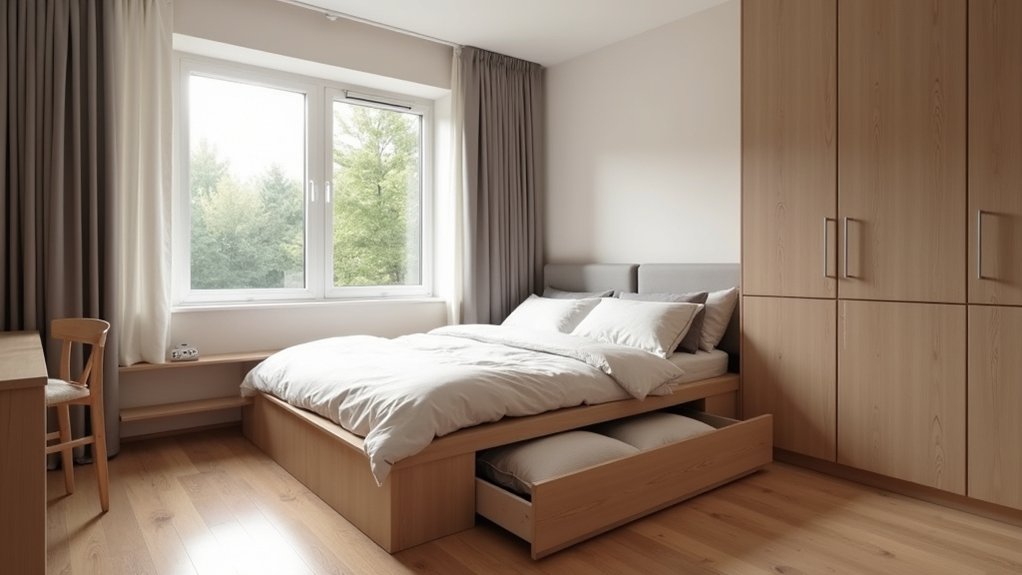
Where can you stash the everyday clutter so your small bedroom stays visually quiet? Start by turning dead space into storage with high ROI: under-bed bins, a lift-up mattress platform, or drawers that replace a bulky dresser.
Add hidden compartments inside a nightstand (false-bottom tray) or behind a headboard shelf so chargers, meds, and remotes disappear fast.
For cheap clutter concealment, mount a slim shelf above the door with matching boxes, or install a curtain on tension rods to hide open shelving.
Choose furniture that multitasks: an ottoman with storage, a bench with flip-top lid, or a mirror cabinet that doubles as jewelry storage.
Label what’s hidden so you don’t rebuy duplicates.
Pick Small Bedroom Colors That Feel Bigger
Because color controls how far the walls seem to “push back,” the smartest small-bedroom upgrade is a cheap, light-reflective palette that makes the room read larger without moving a single stud.
Start with soft whites, pale greiges, or airy cool neutrals; Color psychology says they lower visual clutter and feel calmer.
Keep the ceiling 10–20% lighter than the walls to lift perceived height, and match trim to wall color to blur edges and widen sightlines.
If you crave color, limit it to one muted accent wall or textiles so you don’t shrink the footprint.
Choose paint finishes that earn ROI: eggshell on walls hides scuffs, satin on trim cleans easily, and flat on ceilings masks flaws.
Sample large swatches before buying gallons.
Layer Lighting to Brighten a Small Bedroom
Even with the right paint, a small bedroom can still feel tight when you rely on a single overhead fixture, so layer lighting to spread brightness without spending big.
Start by swapping to an LED ceiling bulb with higher lumens and warm color temperature for efficient ambient glow.
Add two plug-in wall sconces or slim bedside lamps to pull light to the edges and reduce shadows; you’ll get a bigger-looking room for a modest cost.
Use task lighting where you actually work: a clamp lamp for reading, or a small desk lamp if you’ve got a corner setup.
Put everything on dimmers or smart plugs so you can tune levels and cut energy waste.
Prioritize simple fixtures with replaceable bulbs for better long-term ROI.
Finish With Textiles and Decor That Stay Minimal
Finish strong by choosing light, layered textiles—think a breathable duvet, simple throw, and a washable rug—to add comfort without crowding the room or your budget.
Keep decor tight: a few coordinated pieces read intentional and help your spend show up in the final look.
Make every item earn its spot by adding purpose, like blackout curtains for better sleep or wall hooks that free up floor space.
Choose Light, Layered Textiles
To make a small bedroom feel bigger without spending on major upgrades, choose light, layered textiles that add comfort without visual weight. Start with breathable cotton or linen sheets in pale, solid tones; they reflect more light and look cleaner longer.
Layer a thin quilt plus a lightweight throw instead of a bulky comforter, so you can adjust warmth and keep the bed streamlined. Keep textile patterns subtle—small stripes or tone-on-tone weaves add interest without shrinking the room.
Buy one quality set for daily use and rotate a backup to extend lifespan. For strong ROI, prioritize easy fabric maintenance: machine-washable pieces, stain-resistant covers, and duvet inserts you can air out to cut cleaning costs and replacement cycles.
Limit Decor, Add Purpose
Because every extra object competes for attention in a tight room, keep decor minimal and make each piece earn its space. Skip knickknacks and invest in two or three high-impact items that also work: a mirror that bounces light and doubles as a dressing check, a wall-mounted shelf that replaces a nightstand, or a lidded basket that hides clutter.
You’ll get better ROI by choosing Decorative accents that solve problems, not just fill surfaces.
Limit frames to a small gallery above the bed, or one oversized print to reduce visual noise. Add personal touches through textiles: one throw, two pillow covers, and a simple rug, all in a tight color palette.
Keep your dresser top mostly clear so the room feels larger and easier to clean daily.
Frequently Asked Questions
Do I Need Permits for a Small Bedroom Renovation?
You might need permits if you move walls, alter electrical/plumbing, or add windows. Check local building codes and the permit process. Skipping permits risks fines and resale issues, hurting your ROI and budget.
How Much Should I Budget for Renovating a Small Bedroom?
You should budget $1,500–$6,000 for a small bedroom renovation. HomeAdvisor reports midrange projects average about $3,500. Prioritize Furniture arrangement and Lighting improvements; they deliver comfort and ROI. You’ll avoid overspending.
How Long Does a Typical Small Bedroom Renovation Take?
You’ll typically finish a small bedroom renovation in 1–3 weeks, depending on permitting and material lead times. You’ll speed ROI by planning furniture placement early and choosing lighting strategies that avoid rewiring and delays.
Can I Renovate a Small Bedroom Without Hiring a Contractor?
Yes, you can—if you’re worried about permits and safety, you’ll hire pros only for electrical or structural work. Use DIY tips and budget friendly ideas: paint, lighting, closet organizers, and refinishing for better ROI.
What Are the Best Soundproofing Options for Small Bedrooms?
You’ll get the best results by sealing gaps, adding door sweeps, and using dense Soundproofing materials like mass-loaded vinyl. Layer Acoustic treatments—thick rugs, blackout curtains, and wall panels—for high ROI, low-cost noise reduction.