

Most families repaint interior walls every 3–5 years, and the wrong finish can cut that timeline fast. You can save money and time by matching sheen to traffic, moisture, and the kind of messes your home actually gets. Satin and semi-gloss wipe clean in busy zones, while eggshell keeps bedrooms and living spaces looking sharp without highlighting flaws. But the real payoff comes when you map finishes room by room—starting with…
Paint Finish 101: Sheen, Durability, and Washability
Although color grabs your attention first, the paint finish is what decides how well your walls handle real family life. Sheen is simply how much light the surface reflects, and that reflection affects durability and washability.
Higher-sheen options resist moisture, staining, and scuffs better because they form a tighter, harder film. Lower-sheen finishes hide dents and uneven drywall, but they can burnish or mark when scrubbed.
When weighing Gloss vs. matte, pick gloss for maximum wipe-down performance and matte for better flaw masking on a tighter prep budget.
Don’t get distracted by novelty like metallic vs. satin; metallic highlights imperfections and costs more, while satin gives a balanced look with solid cleanability. Check scrub ratings and stick to quality.
Match Paint Finishes to Family-Room Traffic Zones
Now that you’ve narrowed down sheen by durability and washability, map those finishes to how your family room actually gets used so you don’t overpay for gloss where you don’t need it—or regret matte where hands and toys hit daily.
Start at the entry path and around switches, outlets, and media consoles: use satin or semi-gloss for quick wipe-downs. On the main “touch wall” behind the sofa and near toy bins, choose a scrubbable eggshell to balance cost and cleanability.
Reserve matte for low-contact areas like upper walls, niches, or above chair rails to hide scuffs and keep glare down.
Use Color psychology to steer zones—calm tones for the reading corner, energizing accents for play.
Pick Eco friendly options with low-VOC formulas in higher-sheen lines.
Best Paint Finish for Living Rooms and Bedrooms
Because living rooms and bedrooms see less constant grime than kitchens or hallways, you can usually save money and still get a durable result by choosing eggshell for most walls, stepping up to satin only where hands touch often (switch areas, kid-height walls), and using flat/matte in bedrooms when you want maximum softness and minimal glare—especially on imperfect walls.
For living rooms, eggshell balances cleanability and a low-sheen look that won’t spotlight patches. Use satin on trim if you want sharper wipe-downs without paying for high-gloss everywhere.
In bedrooms, flat/matte helps you relax and hides bumps; pair it with smart Color psychology choices to set mood.
When you shop, compare Eco friendly paints with low-VOC labels so air stays cleaner, and repainting won’t disrupt sleep.
Durable Paint Finishes for Kitchens and Bathrooms
In kitchens and bathrooms, you can’t risk flat paint—choose a moisture-resistant sheen that sheds steam and splashes.
Pick a scrub-friendly finish so you can wipe grease and toothpaste without wearing through the color, saving you from premature repainting.
For long-term results, you’ll also want built-in mold and mildew protection to keep walls cleaner between deep cleans.
Moisture-Resistant Sheen Choices
When steam, splashes, and daily wipe-downs hit your walls, the right sheen matters as much as the paint quality. In kitchens and baths, choose satin or semi-gloss to repel moisture and resist swelling, blistering, and staining.
Satin gives you a softer look for larger wall areas, while semi-gloss handles shower zones, backsplashes, and trim where water lingers. Skip flat and matte here; they can absorb humidity and show water marks faster.
To keep air cleaner and costs predictable, look for Eco friendly coatings and Low VOC options that still list mildew resistance on the label. Pair your sheen with good ventilation—use an exhaust fan and caulk gaps—so the finish lasts longer.
Scrub-Friendly Finish Options
Even if you’ve picked a moisture-resistant sheen, you’ll still want a finish that can take real scrubbing without going dull or patchy. For kitchens and baths, choose a premium acrylic in satin or semi-gloss labeled “scrubbable” or “washable,” not just “wipeable.” You’ll get tighter film formation and better stain release, so grease and toothpaste lift faster with less cleaner.
To keep costs down, spend on the topcoat and use a value primer where needed. If you prefer Eco friendly options, look for low-VOC, waterborne enamels that still meet scrub-cycle ratings.
In high-traffic zones, consider textured finishes on lower walls to hide nicks and unevenness, then cap them with a compatible scrubbable topcoat for easier cleanup.
Mold And Mildew Protection
Scrubbability keeps walls looking clean, but kitchens and bathrooms also need paint that won’t feed mold in damp corners and along grout lines. Choose a satin or semi-gloss acrylic with built-in mildewcides; it sheds moisture better than flat paint and wipes down fast.
Don’t skip prep: wash with a mildewcide cleaner, let surfaces dry fully, then spot-prime stains so they don’t bleed through. For recurring dampness, use mold resistant primers on drywall, repaired patches, and around tubs before your topcoat. You’ll save money by preventing peel-back and repainting.
Pair coatings with ventilation improvements: upgrade the bath fan, run it 20 minutes after showers, and keep cabinet toe-kicks clear so air moves. Re-caulk gaps to block moisture too.
Paint Finish Picks for Kids’ Rooms and Playrooms
Because kids’ rooms and playrooms take the most abuse—sticky fingers, marker “art,” scuffed baseboards—you’ll get the best results by choosing a finish that cleans easily without highlighting every dent.
Go with eggshell for most bedroom walls: it’s affordable, forgiving, and wipes clean better than flat. Use satin on trim, doors, and built-ins where hands land constantly; it resists scuffs and stands up to frequent cleaning.
In high-traffic play areas, consider satin on walls too, especially around toy bins and reading nooks, since it handles repeated wipe-downs.
Save semi-gloss for trim only unless you want shine that shows bumps. These choices support your Kids’ room decor and flexible Playroom themes while keeping maintenance fast and budgets steady.
How to Get a Durable Paint Finish (Prep + Paint)
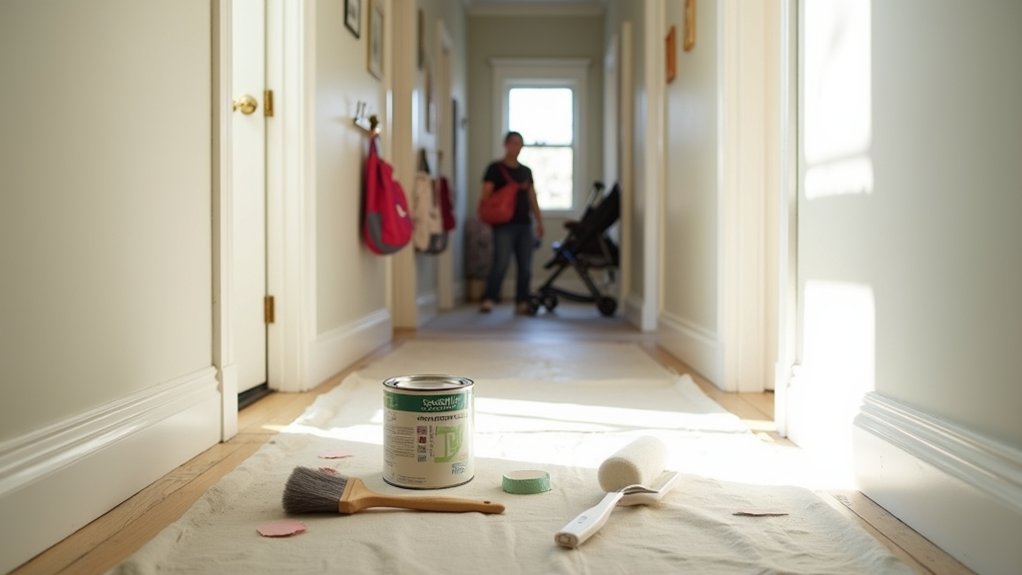
If you want your paint to hold up to daily wear, focus less on the sheen label and more on what happens before the roller hits the wall. Wash grime with a degreaser, scrape loose paint, and sand glossy spots so the new coat bonds. Patch dents, caulk gaps, then dust and vacuum. Prime stains and repairs; it’s cheaper than extra finish coats.
Choose a washable, scrub-resistant interior paint and don’t skimp on quality where hands hit most. Use Eco friendly options like low-VOC acrylics that still cure hard. Apply two thin coats, keep a wet edge, and let each coat dry fully.
For touch-ups, label leftovers and use color matching techniques to verify the batch before you paint.
Frequently Asked Questions
How Long Should Paint Cure Before Heavy Cleaning or Moving Furniture Back?
Wait 7 days before heavy cleaning or moving furniture back; paint feels dry sooner, but it hasn’t cured. Keep cleaning frequency light for two weeks, and expect fewer paint touch ups and scuffs, saving money.
Can I Paint Over Old Semi-Gloss Without Sanding First?
You can, but you shouldn’t—like my neighbor’s “shortcut” that peeled in a week. For results-driven savings, do surface preparation: degrease, scuff lightly, then prime for paint compatibility; skipping sanding risks failure.
Do Low-Voc Paints Hold up as Well as Traditional Formulas?
Yes—today’s low-VOC paints can hold up as well as traditional formulas if you choose quality Eco friendly options and prep right. You’ll get comparable durability, fewer odors, and safer VOC levels without paying extra.
What’s the Best Way to Remove Scuffs Without Dulling the Finish?
You might worry scrubbing will haze paint, but you won’t if you start gentle. For scuff removal, use a damp microfiber with a drop of dish soap, rinse, blot dry. Test first for finish preservation.
Should I Use Primer When Switching From Dark to Light Wall Colors?
Yes, you should prime when switching dark to light. It speeds the color changeover, cuts coats, and prevents bleed-through. For primer necessity, use tinted stain-blocking primer, spot-prime repairs, and you’ll save paint and time.