

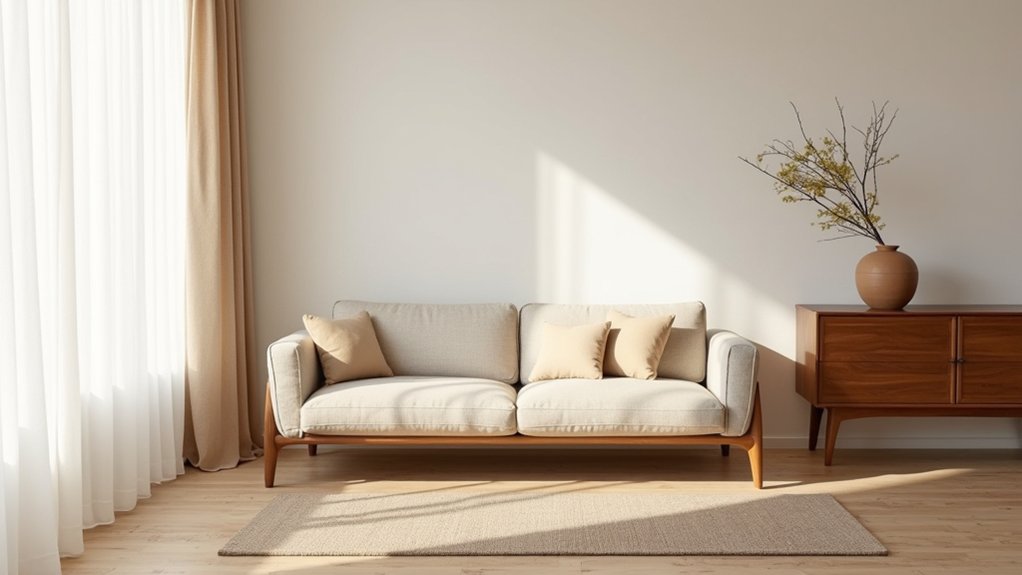
You don’t need pricey designer pieces to make minimalism feel warm and personal. You start with a tight, warm-neutral palette, then keep only what earns its place through daily use or real meaning. You let negative space create calm, not emptiness, and you add character with layered textiles, consistent wood tones, and a few intentional objects. If your home still feels cold or flat, the next small tweaks will change that.
Start With a Warm Minimalist Interior Palette
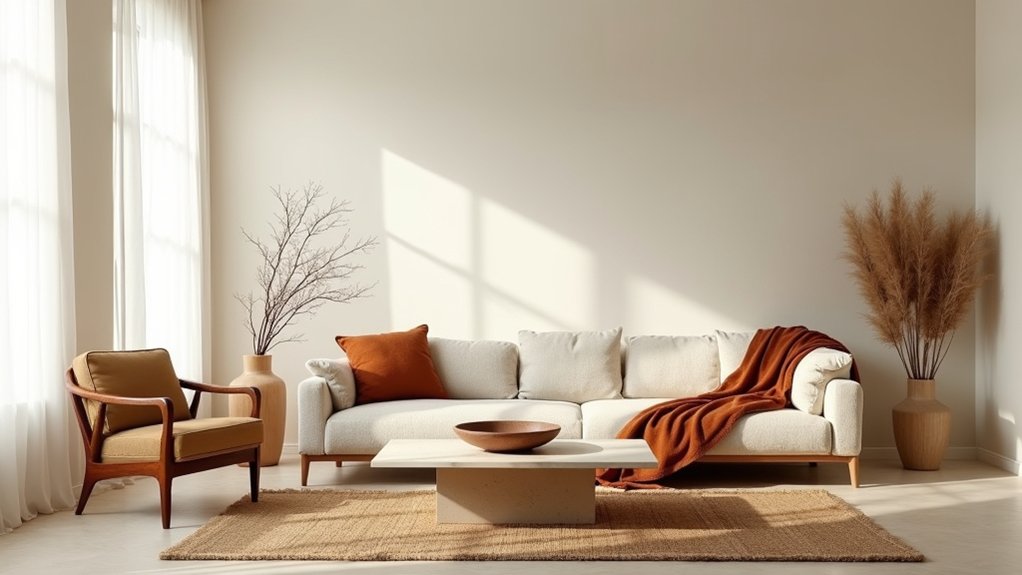
If you want warm minimalist style without a cold, “white box” feel, you’ve got to start with a palette that does more work with fewer pieces. Pick one warm neutral for walls (creamy white, greige, or sand) and one deeper anchor (clay, olive, or charcoal) for contrast. Add a single wood tone and stick to it to avoid costly mismatches.
Use Color psychology to steer the mood: warm whites feel inviting, earthy reds add coziness, and muted greens calm you down. Keep accents to 10–15% so the room stays clean.
Then support the palette with furniture arrangement: float seating on a rug, align major pieces, and repeat your anchor color twice for balance. You’ll look intentional, not sparse.
Edit Your Stuff Without Erasing Character
Although minimalism gets framed as “getting rid of everything,” warm minimalism works best when you edit with a filter, not a purge: keep the pieces that earn their space through daily use, comfort, or a real story, and let go of duplicates and “maybe someday” items that create visual noise.
Start by grouping like items—mugs, throws, frames—then set a realistic “keep” number based on your storage, not your wishful life. If you’ve got three similar vases, keep the one with the best shape or memory and donate the rest.
Repair before you replace; a $10 hardware fix can beat a $60 new buy. Store sentimental overflow in one labeled box, not five. This builds Character preservation without clutter and keeps Design authenticity grounded in what you actually use daily.
Use Negative Space to Feel Calm, Not Empty
You don’t leave space because you ran out of decor—you plan “breathing room” so your best pieces look better without spending more. Balance those open areas with low-cost texture like a woven rug, linen curtains, or a matte throw so the room feels warm, not bare.
Then anchor the emptiness with one clear focal point—art you already own, a statement lamp, or a plant—so the calm reads intentional.
Define Intentional Breathing Room
When every surface competes for attention, even good decor starts to feel like clutter. You don’t need more storage; you need rules for what stays visible. Pick one “hero” zone per room—a console, a coffee table, or a shelf—and leave the rest intentionally clear for spacious breathing.
Create mindful openness by measuring gaps, not buying stuff. Aim for 6–10 inches of bare surface around decor, and keep at least one wall mostly empty.
Limit displays to odd-number groupings (1, 3, or 5 items) and cap them at a single material or color family. Store the backups in a labeled box so you can rotate seasonally without shopping.
This keeps your home calm, character-rich, and budget-smart.
Balance Open Areas With Texture
Clearing surfaces gives your rooms breathing room, but too much blank space can read cold instead of calm. To keep negative space soothing, layer low-cost texture where your eye naturally travels: a nubby throw on a plain sofa, a woven basket under a console, or a flatweave rug that softens footsteps without visual clutter.
Use contrasting materials to add quiet depth—matte walls with a satin lamp, smooth glass beside raw wood, or linen curtains against a metal rod. If you love urban landscapes, echo them with simple, tactile elements: concrete-look planters, ribbed ceramics, or blackened steel paired with warm oak.
Shop secondhand for textiles and baskets, and rotate pieces seasonally so open areas stay intentional, not empty.
Anchor Space With Focal Points
One strong focal point per zone keeps a minimalist room feeling calm—not bare—so let the negative space frame something worth noticing. Pick an inexpensive anchor: a large thrifted artwork, a simple pendant, or a solid-wood coffee table you can refinish. Place it where you naturally look first—across from the entry, above the sofa, or centered on a wall.
Then build Visual hierarchy with two supporting pieces, not ten: a small plant, a textured throw, or one ceramic vase. Keep surrounding surfaces clear so the eye rests. Repeat the focal material once elsewhere (wood tone, black metal, linen) to connect the room without adding clutter.
Your Focal points should earn their footprint: useful, durable, and easy to update.
Layer Textures for a Warm Minimalist Interior
Even if you keep your color palette tight and your furniture streamlined, texture stops a minimalist room from feeling flat. Start with layered textiles: a nubby throw on the sofa, a flatweave rug underfoot, and linen curtains that move.
Stick to two or three materials so it feels intentional, not busy.
Add tactile accents that cost little but change everything. Swap smooth pillow covers for bouclé or cotton slub, bring in a woven basket for storage, and set a handmade ceramic bowl on your coffee table.
Mix matte and natural finishes—wood, stone, rattan—so surfaces don’t look sterile. Shop thrift stores, remnants, and end-of-roll bins, then repeat the same texture in two spots to make it feel curated.
Choose Warm Lighting for Minimalist Interiors
Texture brings the coziness; warm lighting makes it actually feel inviting once the sun goes down.
Start with bulbs: choose 2700K or 3000K LEDs for a soft, candlelike tone, and skip harsh 4000K “office” light. Add dimmers where you can; they’re cheap and instantly give you control over mood and energy use.
Build an ambient glow with three sources instead of one bright ceiling light: a floor lamp, a table lamp, and a small plug-in sconce or wall-wash.
Keep fixture choices simple—linen shades, opal glass, matte metal—so the room stays minimal but not cold.
Use warm-white under-cabinet strips to soften edges and highlight surfaces without clutter.
Add Character With Art and Personal Objects
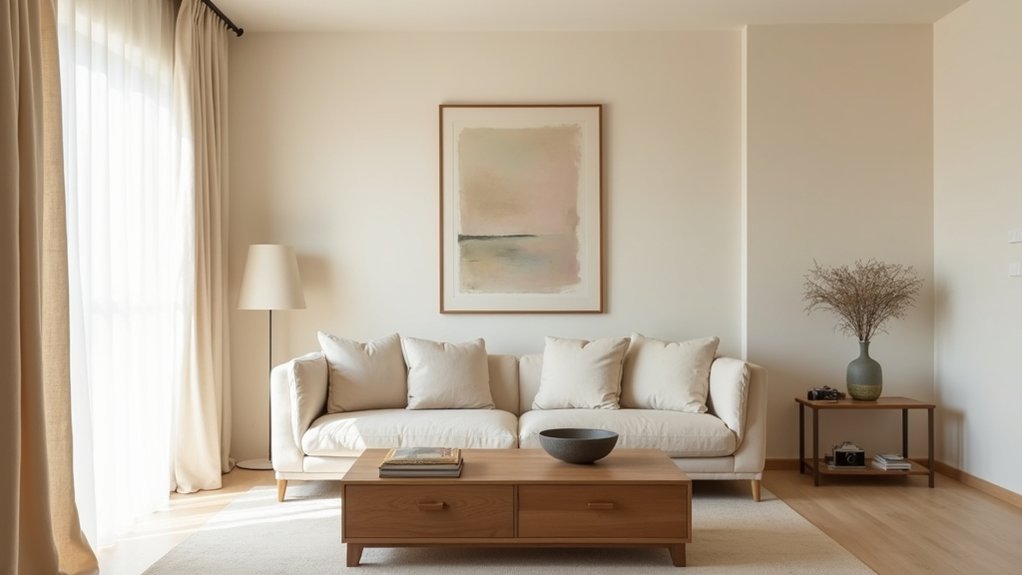
Where does the “you” factor show up in a minimalist room? It’s in the few pieces you choose to keep visible. Start with one strong artwork you actually love—print, thrifted painting, or a framed page from an old book. Go larger rather than adding many small items; it looks intentional and costs less than filling a wall.
Use Personal expression to guide your edits: display a handmade bowl, travel photo, or heirloom vase, but limit it to a small cluster. Keep the rest stored so the room stays calm.
Add Artistic accents through texture: a matte frame, linen mat, or simple sculpture. Rotate objects seasonally instead of buying more, and you’ll keep character high and clutter low.
Pick Minimalist Furniture With Soft Silhouettes
You can keep a minimalist look and still warm up the room by choosing furniture with rounded edges instead of sharp, boxy lines. Shop for curved coffee tables, oval mirrors, and softly contoured cabinets—these silhouettes add character without adding clutter or cost.
Then anchor the space with low-profile, cozy seating that feels inviting, fits smaller rooms, and gives you the most comfort per dollar.
Rounded-Edge Furniture Choices
If your minimalist room feels a little cold, rounded-edge furniture fixes it fast without adding clutter or cost. Swap one sharp-corner piece for a table, console, or nightstand with curved edges; the softer outline instantly reads warmer while staying clean-lined.
Shop smart: look for secondhand rounded furniture in light wood, matte lacquer, or stone-look laminate so you get durability without premium pricing. Prioritize pieces you touch daily—coffee tables, desk corners, and dresser fronts—because rounded profiles make tight walkways feel safer and more spacious.
Keep finishes consistent with your existing palette, and let the shape do the work instead of extra decor. One or two swaps deliver the biggest value and keep your minimalist character intact.
Low-Profile Cozy Seating
Ever wonder why a minimalist room can look polished yet still feel uninviting? Often it’s the seating: tall, rigid pieces read formal, not friendly. Fix it with low-profile cozy seating that keeps sightlines clean but invites you to sink in.
Choose a low profile lounge chair or sofa with soft silhouettes—rounded arms, loose back cushions, and a deeper seat. You’ll get comfort without visual clutter.
On a budget, prioritize one great upholstered piece, then add warmth with washable slipcovers or a textured throw instead of buying more furniture. Look for solid frames and removable covers on resale sites; reupholstery costs more than you think.
Create cushioned niches by pushing a bench under a window and topping it with foam and two pillows. Your room stays minimal, but feels lived-in.
Keep a Warm Minimalist Interior Clutter-Free Daily
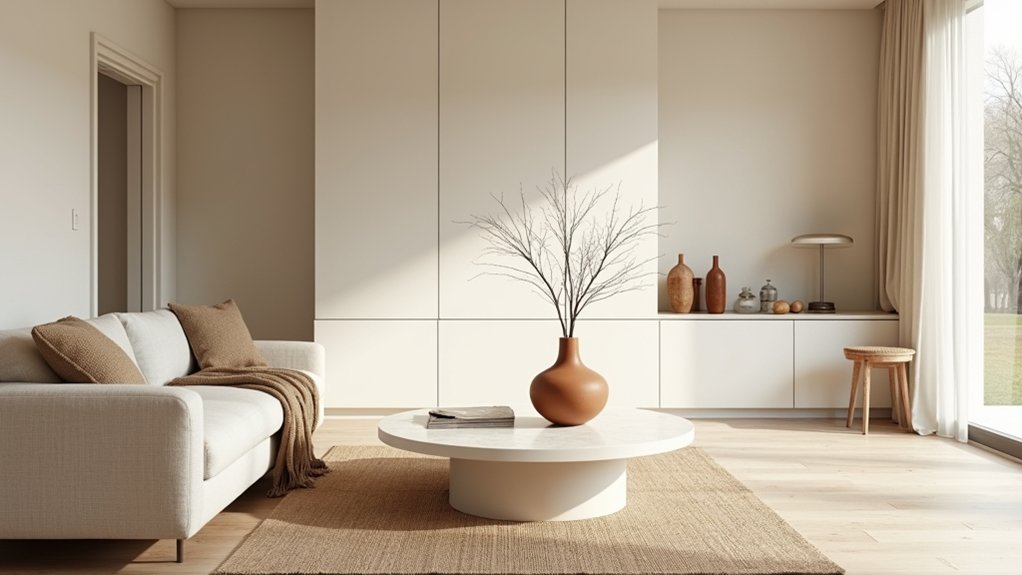
While warm minimalism looks effortless, it only stays that way when small reset habits prevent clutter from piling up. Do a five-minute sweep morning and night: return mugs, fold throws, and clear surfaces so wood, linen, and light can breathe.
Keep a “landing zone” by the entry with one tray for keys, one hook for bags, and a slim shoe mat—cheap, tidy, effective.
Use Organizational techniques that cost nothing: assign every item a home, label with painter’s tape, and follow a one-in, one-out rule for decor and textiles.
Pick Storage solutions that hide mess without adding bulk: lidded baskets, under-sofa bins, and a single drawer divider for chargers.
When something doesn’t fit, donate it that week.
Frequently Asked Questions
How Do I Make a Warm Minimalist Interior Kid-Friendly and Durable?
Keep it “lived-in” yet calm: choose warm, wipeable Color palettes, then add Texture layering with washable rugs and slipcovers. You’ll pick closed storage, rounded furniture, and tough finishes, so messes won’t linger or cost much.
Can I Achieve Warm Minimalism in a Rental Without Painting Walls?
Yes, you can. Use Rental decor like warm textiles, layered rugs, and wood accents. Choose Wall alternatives: peel-and-stick wallpaper, removable hooks, oversized art, and mirrors. Keep costs down by thrifting and swapping covers.
What Are Budget-Friendly Ways to Create Warm Minimalism?
Like a cozy campfire, you’ll build warm minimalism on a budget by decluttering, shopping secondhand, and layering thrifted textiles. Use Color coordination with neutrals, add wood tones, and choose a few Decorative accents, sparingly.
How Do I Blend Warm Minimalism With Existing Traditional Architecture?
You blend warm minimalism with traditional architecture by preserving original trim, then simplifying furnishings. Use textural contrast via linen, wool, and aged wood, and maintain color harmony with warm neutrals. You’ll save by refinishing, not replacing.
Which Plants Work Best for Warm Minimalist Spaces With Low Light?
Choose Low light plants like snake plant, ZZ plant, pothos, and cast-iron plant. You’ll get Indoor greenery with minimal fuss. Buy small starters, reuse simple pots, and cluster them to stretch impact.