

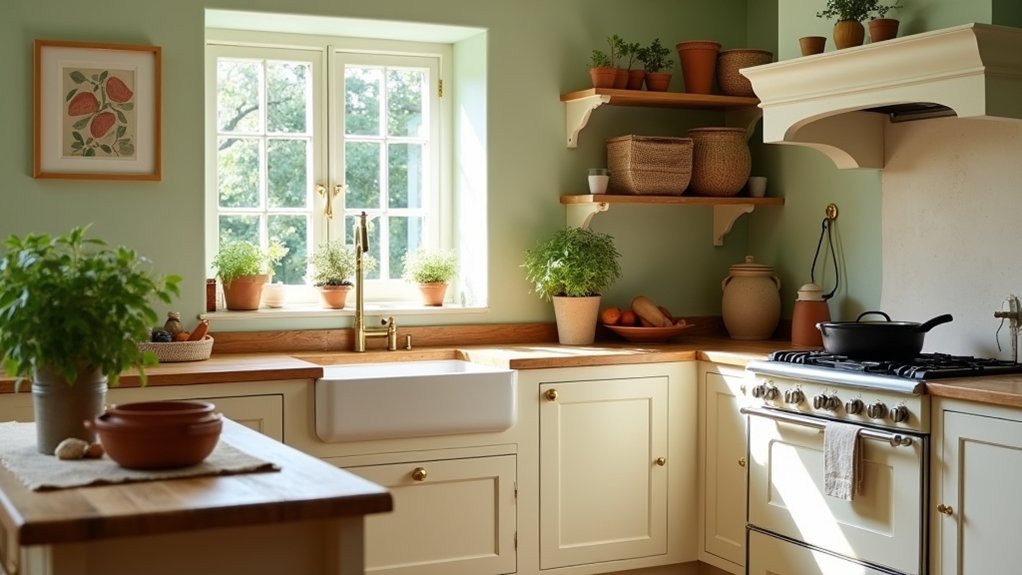
Pick the wrong paint, and your country kitchen can feel like a chilly showroom forever. You’ll save money and regret by starting with what you can’t easily change—floors, worktops, and timber tones—then choosing a warm base like creamy off-white or soft greige that works with them. You’ll also need to watch how daylight and warm bulbs shift every shade. Next, you’ll decide where colour belongs most…
Start With Your Country Kitchen’s Fixed Finishes
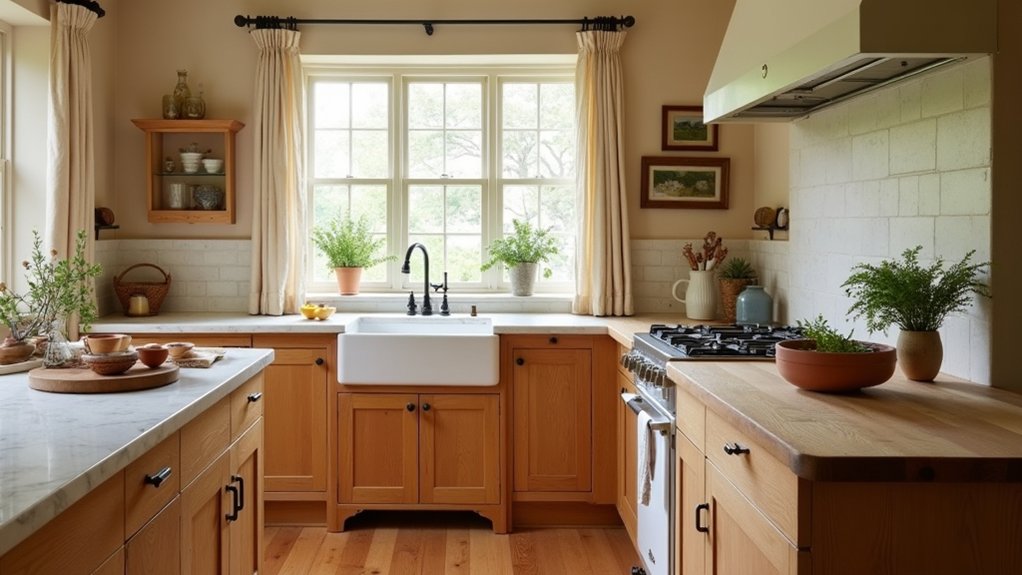
Before you buy a single paint sample, take stock of the finishes you can’t (or don’t want to) change—your countertops, flooring, cabinets, backsplash, and even big appliances. Write down their undertones (warm, cool, or neutral) and dominant materials, then decide what must coordinate instead of clash.
If your counters skew creamy, don’t fight them with icy grays; if your floors read orange, avoid pink-leaning stains nearby. Use what you’ve got: lean into rustic textures like knotty wood, matte stone, or tumbled tile, and let them set your limits.
Refresh on a budget with swaps that don’t require labor—hardware, lighting, and vintage accents. When fixed finishes feel cohesive, every later colour choice gets easier and cheaper.
Pick a Warm Country Kitchen Base Colour
Once you’ve noted your fixed finishes, choose one warm, low-contrast base colour that can cover the largest surfaces—usually walls, sometimes cabinets—without making the room feel busy.
Aim for creamy off-white, soft oatmeal, gentle greige, or a muted clay tone that sits comfortably beside stone, tile, and metal.
Test three paint samples on poster board, move them around, and check them against your countertop and flooring before you buy gallons.
Pick the shade that keeps rustic wooden accents looking richer, not orange, and that doesn’t fight vintage ceramic patterns on dishes or a backsplash.
If cabinets are in good shape, repainting them in the same base colour can save money and unify the room; update hardware later when budget allows.
Build a Country Kitchen Palette Around Light
Because light changes every colour you put in the room, let your kitchen’s natural and artificial lighting decide whether your warm base leans creamy, sandy, or clay. Watch the room for a day: morning glare, midday coolness, evening warmth.
North-facing light often dulls yellows, so you’ll want warmer bulbs and reflective finishes to keep a rustic farmhouse feel. South-facing rooms can handle deeper, earthier accents without turning gloomy.
At night, swap harsh cool LEDs for affordable warm-white bulbs (2700K–3000K) and add under-shelf strips to cut shadows on worktops.
Test paint swatches on cardboard and move them around; it’s cheaper than repainting. Balance brightness with vintage charm by using matte textures and a few softly reflective metals to bounce light.
Choose Cabinet and Wall Colours That Match
Now that you’ve clocked how your kitchen’s light shifts from cool to warm, pick cabinet and wall colours that stay friendly in every part of the day. Start with a warm off-white, soft cream, or gentle greige on walls; they’re forgiving, easy to touch up, and keep resale appeal.
Then choose cabinets one step deeper or lighter than the walls so the room feels layered, not busy. If you’ve got rustic wood worktops or open shelves, match undertones: honey wood likes creamy whites, while cooler oak suits greige or muted sage-leaning neutrals.
Use paint samples on foam board and move them around for a few days instead of repainting twice. Tie everything together with consistent hardware finishes so your vintage accessories look intentional, not scattered.
Add Accent Colours for a Lived-In Country Look
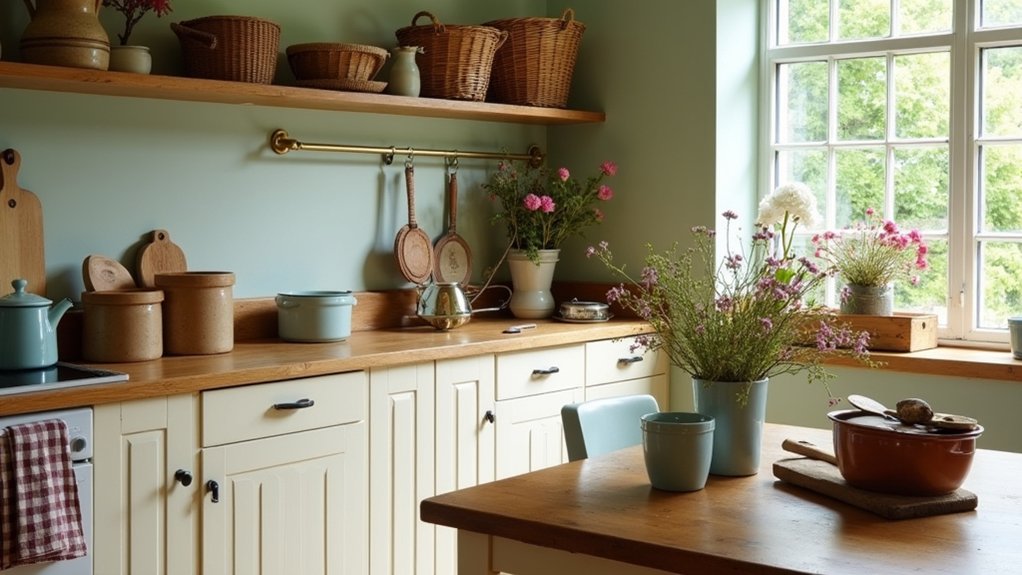
When your walls and cabinets sit in a calm neutral, you can add accent colours to bring in that lived-in country warmth without spending much or locking yourself into a bold paint job. Pick two or three shades and repeat them in small hits—tea towels, canisters, stools, and open-shelf dishes—so the room feels collected, not chaotic.
Start with Rustic textiles like checked curtains, grain-sack pillows, or a washable runner to add colour and soften hard surfaces.
Then layer in Vintage accessories: enamel jugs, old scales, amber bottles, or a framed seed packet. Shop thrift stores, flea markets, and your own cupboards first. If something clashes, you can swap it fast and cheap, no repainting needed.
Aim for patina, not perfection.
Frequently Asked Questions
How Do I Choose Country Kitchen Colours for a North-Facing Room?
Choose warm, light country kitchen colours to offset north light: creamy whites, soft yellows, warm greige. Add Farmhouse accents in oak and brass. Use Rustic color schemes sparingly, test samples, repaint only feature walls.
What Paint Sheen Works Best for Country Kitchen Walls and Cabinets?
Choose eggshell or satin on walls for easy cleaning, and use satin or semi-gloss on cabinets for tougher wear. Compare paint finish options by scrubbability; better durability of paint costs more upfront, saves repainting.
How Can I Make a Small Country Kitchen Feel Larger With Colour?
Sure, paint it dark everywhere—then you’ll really notice the squeeze. Instead, you’ll use light warm whites, match trims, and add rustic wood accents plus muted vintage appliance colours for depth without clutter.
How Do I Coordinate Country Kitchen Colours With Open-Plan Adjoining Rooms?
You’ll coordinate open-plan country colours by repeating one neutral across spaces, then echoing an accent in textiles and Vintage accessories. Keep Rustic wood tones consistent. Use budget paint samples, thrifted finds, and similar metals.
How Often Should I Repaint a Busy Country Kitchen to Keep It Fresh?
You can repaint every 3–5 years, sooner for high-traffic zones. Test the theory that washable paints last longer—they usually do. Refresh Furniture styles and Decorative accents first; then spot-repair and repaint only worn walls.