

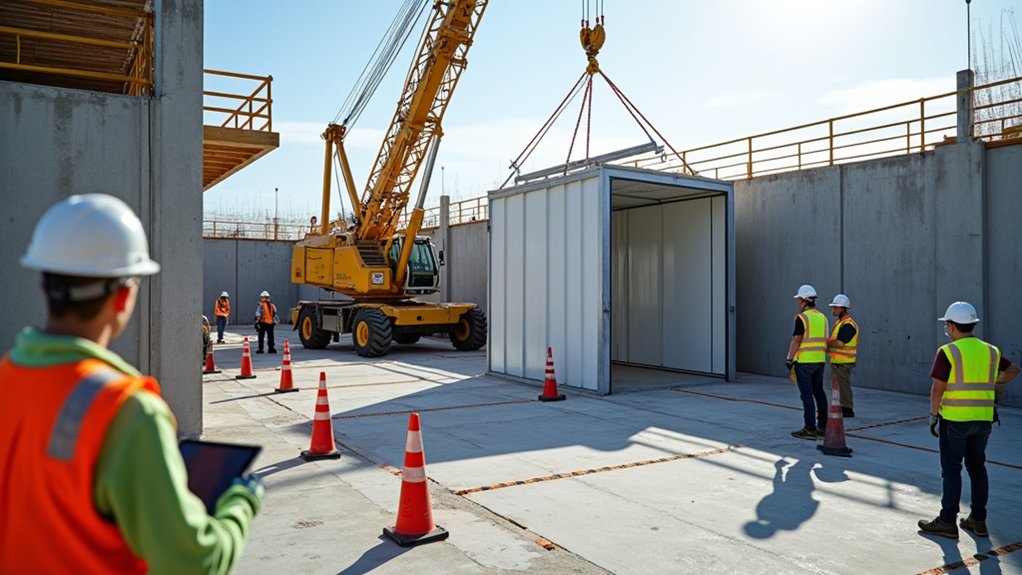
When you adopt modern methods of construction (MMC), you shift risk away from the live site and into controlled, audited processes. You’ll cut work-at-height exposure through off-site fabrication, reduce manual handling with modular assemblies, and limit traffic hazards via consolidated deliveries and defined logistics plans. With BIM-led sequencing and clash detection, you’re less likely to create rework-driven hazards. The question is how you evidence that control for RAMS, permits, and inspections…
How Does MMC Improve Construction Site Safety?
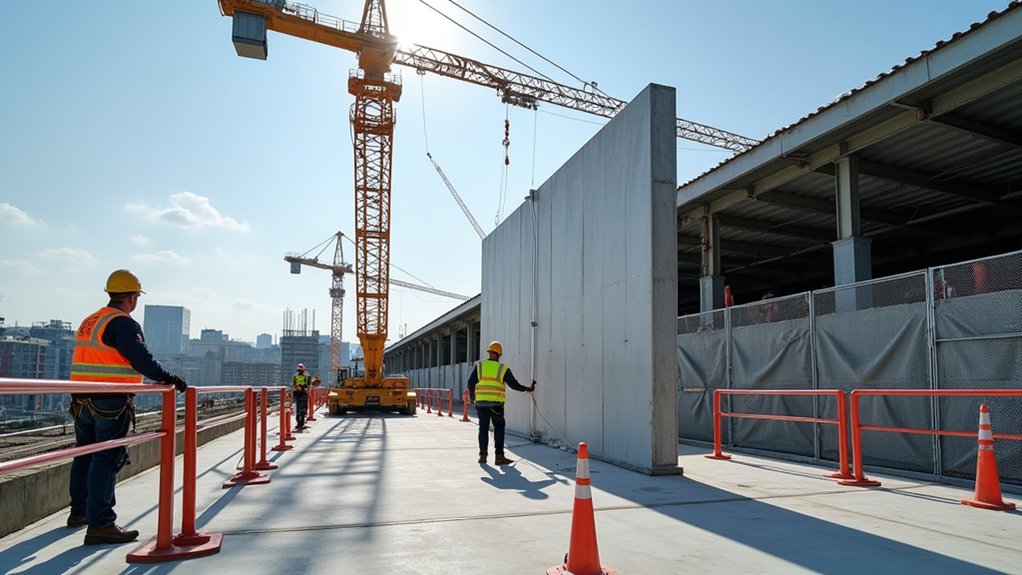
Although construction will always carry risk, Modern Methods of Construction (MMC) reduce your exposure by moving high-hazard tasks off-site into controlled factory conditions. You’ll cut working-at-height, hot works, and manual handling through preassembled modules, standardized interfaces, and repeatable processes.
Factory QA/QC, documented inspections, and tighter tolerances help you demonstrate due diligence against CDM-style expectations and client audit requirements.
You’ll also reduce site congestion and plant movements by sequencing deliveries just-in-time, which lowers collision potential and improves emergency access.
With Construction innovation, you can embed lifting points, edge protection fixings, and service zones into designs so crews install safely the first time.
When you build a safety culture around method statements, digital checklists, and traceable components, you make compliance predictable.
Which On-Site Safety Duties Does MMC Help Meet?
Because MMC shifts risk out of the workface and standardizes what remains, you can meet core on-site safety duties more consistently—planning and resourcing safe systems of work, coordinating trades, maintaining a tidy and segregated site, and verifying competence and controls before installation.
With fewer bespoke tasks, you can issue clearer RAMS, brief crews faster, and enforce safety protocols without constant rework.
Standard delivery and lift plans help you control interfaces, exclusion zones, and traffic management, reducing Worksite hazards from congestion and conflicting activities.
You can also strengthen pre-install checks: confirm tolerances, fixings, temporary works, and permit conditions before modules arrive.
Finally, MMC supports traceable assurance—inspection records, product certification, and digital sign-offs—so you can evidence compliance during audits and client reviews.
How Off-Site Manufacturing Reduces Work-at-Height Risks
Where do most work-at-height incidents start—on the scaffold, at the edge, or during last-minute installs? You can eliminate many of those triggers by shifting fabrication into a controlled factory setting.
Off-site manufacturing lets you complete MEP racks, façade panels, and roof cassettes at ground level, so your crews spend less time exposed to falls on live edges. You also standardise temporary works and lifting points, enabling predictable installation sequences and fewer unplanned returns to height.
With innovative techniques such as pre-installed guardrail interfaces and engineered connection details, you’ll align more easily with Work at Height Regulations and CDM expectations for risk elimination.
Material innovation supports lighter, stronger assemblies that maintain performance while reducing time aloft. You’ll document repeatable methods and inspections.
How Modular MMC Cuts Manual Handling Injuries
When you shift to modular MMC, you cut manual handling exposure by moving factory preassembly upstream, so fewer heavy lifts happen under site time pressure.
You’ll also reduce on‑site material moves, helping you stay aligned with manual handling and risk assessment duties while keeping productivity predictable.
You then rely on mechanized installation—cranes, hoists, and purpose-built lifting points—so you control loads, standardize lift plans, and reduce strain injuries.
Factory Preassembly Reduces Lifting
As projects tighten programmes and regulators keep a close eye on manual-handling risk, factory preassembly through modular MMC lets you shift heavy, repetitive lifts off the site and into controlled production. You specify modules with integrated MEP, risers, and prewired containment so teams aren’t repeatedly lifting and positioning awkward components at height.
In the factory, you standardise jigs, use mechanical aids, and apply documented lifting plans, helping you evidence compliance with manual-handling assessments and reducing strain, crush, and pinch incidents. You also cut rework by testing assemblies before delivery, a core element of prefabrication advantages and improved construction efficiency.
With fewer ad‑hoc lifts, you keep site operatives focused on guided installation and supervision, aligning RAMS with real work and reducing reportable injuries.
Fewer On‑Site Material Moves
How much manual-handling risk on your project comes from simply moving materials around the site? With modular MMC, you cut those low-value moves because components arrive in sequenced loads and go straight to their work zones. That reduces repeated lifts, carries, and twists that trigger strains and reportable injuries under manual-handling and OSHA/HSE expectations.
You also tighten Material storage: fewer pallets staged “just in case,” less re-stacking, and clearer exclusion zones, which helps you control slip, trip, and impact hazards. Better planning improves Site accessibility, so routes stay open for emergency egress, inspections, and deliveries without ad hoc detours.
When you document delivery plans, laydown limits, and handling procedures, you demonstrate foreseeable-risk control and keep supervisors focused on compliance, not chasing materials.
Mechanized Installation Boosts Safety
Reducing on‑site moves already cuts a big share of strains, but the larger safety gain comes from mechanized installation. You lift volumetric modules, bathroom pods, and MEP racks with cranes, telehandlers, and guided lifting frames, so crews avoid repetitive carries, awkward postures, and pinch points that drive manual‑handling claims.
You also control the lift: you pre‑plan weights, centers of gravity, and pick paths, then enforce exclusion zones, tag lines, and certified slings to meet CDM duties and LOLER/PUWER requirements.
With fewer hands in the danger area, you reduce dropped‑object exposure and slips during positioning. This safety innovation supports risk mitigation because you standardize lifts, log inspections, and verify competence, giving auditors clear evidence and helping you hit programme targets without compromising compliance.
How MMC Logistics Reduce Site Traffic and Congestion
When you shift to MMC logistics, you schedule consolidated deliveries that align with your lifting plans, traffic management plan, and permit conditions.
You cut the number of arrivals and tighten delivery windows, so you control gate checks, pedestrian interfaces, and reversing movements.
With fewer vehicle movements on-site, you reduce congestion hotspots and make compliance easier to evidence during audits and inspections.
Consolidated Deliveries Scheduling
On busy urban projects, what stops the gate from turning into a bottleneck isn’t more space—it’s tighter control of deliveries. With MMC, you schedule consolidated loads to match crane slots, laydown capacity, and permit windows, so you don’t stack vehicles or materials at the perimeter.
You also set pre-booked time bands, QR check-ins, and “no slot, no entry” rules that support CDM compliance and your traffic management plan.
You’ll get better supply chain predictability by bundling components from approved suppliers and locking release dates against the master programme.
Strong delivery coordination lets you verify documentation in advance—RAMS, lifting plans, vehicle specs, and certifications—so arrivals clear quickly, keep pedestrian routes protected, and reduce interface risk at access points.
Fewer Vehicle Movements On‑Site
Once you’ve locked in pre‑booked slots and “no slot, no entry” controls at the gate, the next win is cutting the number of vehicles you let anywhere near the workface.
With MMC, you shift bulk deliveries to a consolidation centre and bring in fewer, fuller loads, so you reduce reversing, banksman time, and collision exposure. You’ll keep segregated pedestrian routes intact and maintain compliant traffic-management plans under CDM expectations.
Fewer engines idling and fewer delivery peaks also cut construction site noise, supporting local conditions and neighbour constraints. When you remove stop-start vehicle interactions, you reduce interruptions, limit dust re-suspension, and keep lifting zones clear.
That steadier pace lowers worker fatigue and helps supervisors enforce permits, inductions, and PPE checks without pressure.
How BIM Supports Safer MMC Sequencing and Planning
Because modern methods of construction (MMC) rely on tight tolerances and just-in-time deliveries, you can’t afford sequencing gaps that create uncontrolled lifting, access, or temporary works risks.
BIM lets you plan MMC installs in 4D, linking programme dates to modelled components so you can verify crane reaches, load paths, exclusion zones, and handover points before anything arrives on site.
You use clash detection to protect safe access routes and to confirm openings, edge protection, and platform interfaces match the manufacturer’s tolerances.
Digital collaboration keeps designers, suppliers, and the principal contractor aligned on the latest model, while stakeholder coordination helps you lock delivery slots, storage limits, and lifting plans into one coordinated sequence.
You reduce rework, avoid last-minute improvisation, and meet CDM duties through predictable, controlled workflows.
How to Prove Compliance With RAMS, Audits, and MMC Data
A coordinated 4D sequence only protects you if you can evidence that it’s been followed, checked, and updated in line with CDM requirements and your client’s assurance process.
Link your RAMS to modelled tasks, plant movements, and delivery slots, then time-stamp approvals and revisions in a controlled document system. Keep each Risk assessment versioned, with clear triggers for change: design updates, supplier swaps, or method changes.
Prove implementation by capturing digital permits, induction records, and toolbox talks, plus competency and safety training matrices mapped to operatives on the programme.
Use MMC production data—QA sign-offs, batch numbers, lifting points, and logistics scans—to show components met spec before arriving on site.
Close the loop with audit trails: nonconformance actions, photos, and re-inspection dates aligned to RAMS.
Frequently Asked Questions
How Does MMC Affect Construction Insurance Premiums and Liability Coverage?
MMC can lower premiums when you prove factory controls; it’s a safety beacon. Yet transport, interfaces, and warranties can raise costs. You’ll manage insurance implications and liability considerations with certified QA, compliant documentation, and clear contractual risk.
What Training or Certifications Do Workers Need for MMC Installations?
You’ll need trade-specific worker certification for your MMC system, plus manufacturer installation accreditation. You must complete safety training: CSCS, IPAF/PASMA for access, lifting/rigging, asbestos awareness, and RAMS/toolbox talks to satisfy regulators and clients.
Does MMC Change Fire Safety Strategies During Construction and Handover?
Yes—MMC reshapes fire safety strategies during build and handover. You’ll plan precise, pre‑protected panels, control combustible storage, verify firestopping, and document tests. You’ll align construction strategies with codes, maintain audit trails, and train teams consistently.
How Do MMC Projects Manage Noise, Dust, and Local Community Impacts?
You manage noise, dust, and community impacts by shifting work off-site, scheduling deliveries, and using quieter tools. You’ll run Environmental monitoring, maintain dust suppression, and prioritize Community engagement to meet permits, complaints procedures.
What Are the Typical Costs and Programme Impacts of Switching to MMC?
Like switching engines mid‑race, you’ll see Cost implications: higher design/manufacture upfront, lower site labour and waste; net varies. Expect Schedule adjustments: longer preconstruction, faster install, fewer delays—align procurement and compliance sign‑offs.